Anago Meshi (Grilled Conger Eel on Seasoned Rice)
Anago-meshi (Grilled Conger Eel over Rice)
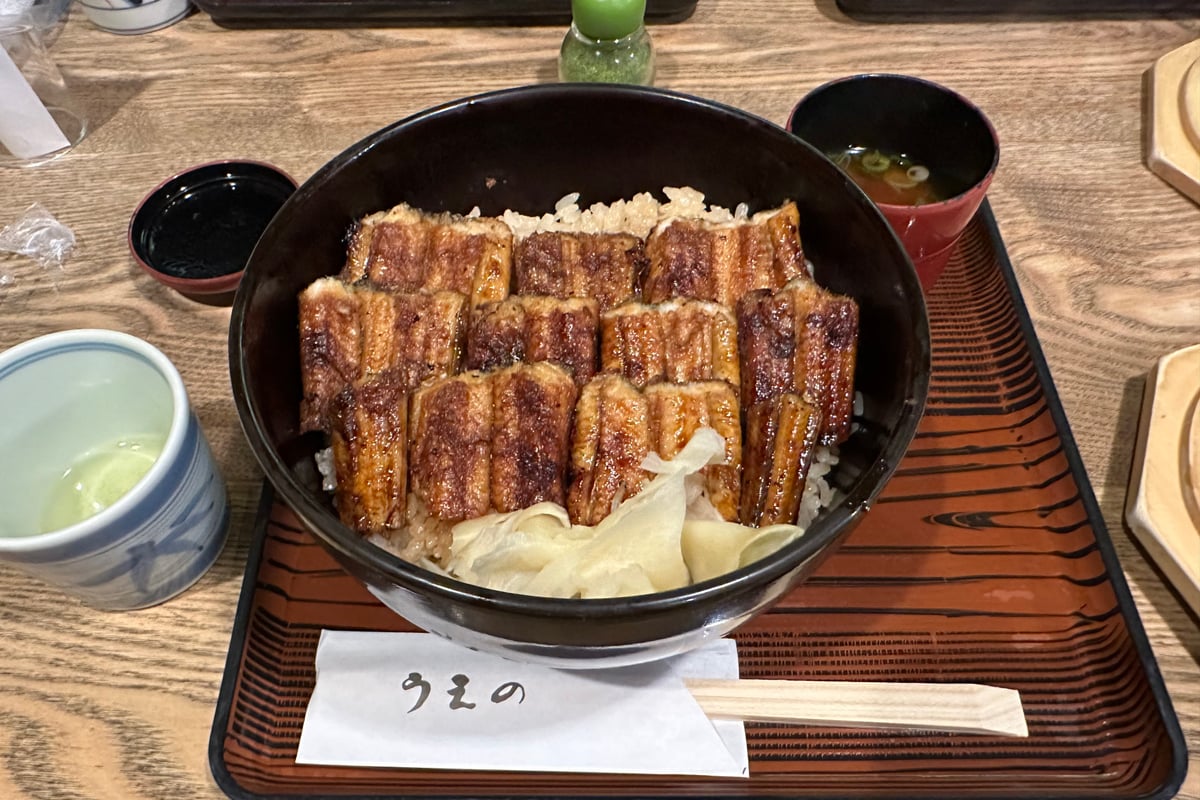
Image: Wikimedia Commons
Anago Meshi is a specialty of Miyajima and Miyajimaguchi in Hatsukaichi City, Hiroshima Prefecture, in which grilled anago (conger eel) is laid over rice with no gaps. Miyajimaguchi, across the water from Miyajima, is regarded as its birthplace, and it became widely known after being sold as an ekiben (station boxed lunch) in the Meiji era. A distinctive feature is that the rice is not plain white rice but is cooked with soy sauce and a broth made from the heads and bones of the anago. On top, anago grilled until fragrant while being basted with tare (sauce) is spread out. The savory aroma of the grilled anago is enjoyed together with rice that has soaked up the broth and sauce. The waters around Miyajima have long been known as good fishing grounds for anago. Today there are many specialty shops and eateries in Miyajimaguchi and on Miyajima itself, and it is enjoyed as a meal by worshippers and tourists visiting Itsukushima Shrine, as well as a boxed lunch to take away.
Origin
The Geihan Tsushi, a topography compiled by the Hiroshima Domain in the late Edo period, says of anago: 'All are produced around this island, and their taste is considered fine.' Anago from the waters off Miyajima have long been known for their good flavor. It is said that locally, rice bowls topped with anago were eaten as a local dish. Ueno Tanikichi (上野他人吉), who dealt in rice on Miyajima, opened a teahouse on the approach road in front of the station at Miyajimaguchi and served anago rice bowls, and this is said to have been the origin of anago meshi.
History
In 1897 (Meiji 30), Miyajima Station on the Sanyo Railway (now JR Miyajimaguchi Station) opened. Tanikichi replaced the white rice of his anago bowl with soy-flavored rice cooked with anago trimmings (ara) and sold it as an ekiben, which earned a good reputation. Sources differ on when the ekiben began, giving either 1897 or 1901. It was temporarily discontinued during the war due to rice shortages but was revived after the war, and in the Showa 30s (1955–1964) it also became popular as a 'basuben' (bus boxed lunch) for tour bus passengers.
Features
The anago is first grilled plain without seasoning (suyaki), then finished by repeatedly coating it with tare and grilling it. The rice is takikomi gohan (seasoned cooked rice) made with soy sauce and a broth simmered from the heads and bones of the anago. The umami of the tare and the anago spreads throughout the rice, so it tastes good even when cold. It is also said that a boxed lunch is at its best two to three hours after it is made, once the flavors have melded, rather than freshly made. In recent years, poor anago catches have continued, and even the originating shop says its daily supply is limited.
Main Ingredients
Food Culture
There are many shops serving anago meshi on Miyajima and in Miyajimaguchi, and each shop makes it differently. Besides shops that top it with grilled anago, there are shops that use steamed anago for a soft, fluffy finish and shops that steam it in its container and serve it hot, so comparing them is also enjoyable.
Famous Shops
あなごめし うえの 宮島口本店
広島県廿日市市宮島口1-5-11
The shop where anago meshi originated, founded in 1901 (Meiji 34). It is now run by the fourth generation. A travel information site (updated 2024) lists anago meshi (jo, premium) in the shop at 2,800 yen and the boxed lunch (regular) at 2,700 yen. On the second floor there is also 他人吉 (Tanikichi), a restaurant serving anago kaiseki cuisine.
View details →ふじたや
広島県廿日市市宮島町125-2
A shop in a residential area near Itsukushima Shrine, described as founded in 1902. Wild anago is finished by grilling it two or three times over. A travel information site (updated 2024) gives the price of anago meshi as 3,000 yen. Because it sometimes closes when sold out or due to poor catches, visiting early is recommended.
いな忠
広島県廿日市市宮島町507-2
A shop said to have been the first on the island of Miyajima to sell anago meshi boxed lunches for takeaway. Grilled anago is served on rice cooked in anago broth, and oyster dishes are also available. Prices vary by season, so it is best to check at the shop.
| Anago Meshi Bento (うえの) | The anago meshi boxed lunch of うえの (Ueno), which began as an ekiben at Miyajimaguchi. Besides the Miyajimaguchi main shop, it is also sold at the shop on the first basement floor of Hiroshima Mitsukoshi in Naka Ward, Hiroshima City. A travel information site (updated 2024) gives the regular size at 2,700 yen and notes that boxed lunches can also be reserved on the same day.Where to buy →PR |
|---|