Okuizumo Tatara (Traditional Japanese Iron Smelting)
Okuizumo Tatara (Traditional Japanese Iron Smelting)
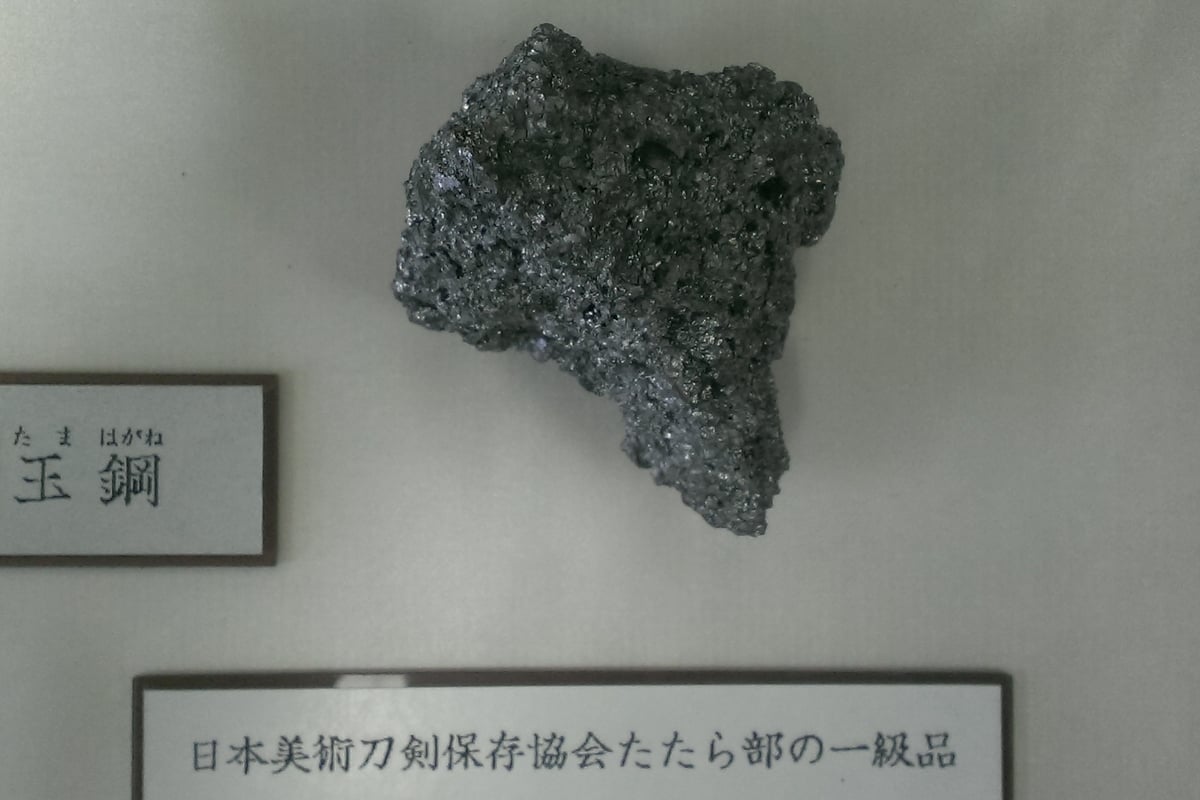
Image: Wikimedia Commons
Tatara ironmaking is an ironmaking method that developed uniquely in Japan, in which iron sand and charcoal are put into a furnace built of clay and iron is produced while air is blown in with bellows (fuigo). The Okuizumo area of Shimane Prefecture is blessed with iron sand and forest resources, and ironmaking has flourished there since ancient times. According to Shimane Prefecture materials, until the mid-Meiji era this area is said to have supplied about 70 percent of Japan's demand for iron. In the modern era it died out, pushed aside by Western-style ironmaking, but in 1977 (Showa 52) the Society for the Preservation of Japanese Art Swords (Nittoho) revived it as 'Nittoho Tatara' in 大呂, Okuizumo Town. Today it is the only operation in Japan that continues traditional tatara ironmaking: in winter, the furnace is fired for three days and nights to produce tamahagane, the material for Japanese swords, which is supplied to swordsmiths. In 2016, the history of ironmaking in Yasugi City, Unnan City and Okuizumo Town was recognized as the Japan Heritage story '出雲國たたら風土記' (Izumo Province Tatara Fudoki). Tatara ironmaking is not a craft product in itself but a technique that produces material for crafts.
Origin
The Okuizumo area is known as the setting of the legend of Yamata no Orochi recorded in the Kojiki, and ironmaking has flourished there since ancient times. The iron sand used as raw material was collected by kanna-nagashi, in which earth and sand cut from the mountains were washed in water so that the heavy iron sand would settle and could be separated out. Because this muddied the rivers downstream, the work is said to have been done during the agricultural off-season, between the autumn and spring equinox weeks (higan). Charcoal for fuel was obtained from the area's rich forests.
History
In the late 1800s, with the influx of Western ironmaking technology and a sharp rise in demand for iron, the tatara ironworks could not compete and were closed in the 1920s. In 1933, tatara ironmaking was temporarily revived to make tamahagane for military swords, but it was abolished again after the war. With only about 5 to 6 tons of tamahagane remaining, Nittoho, with support from the Agency for Cultural Affairs, built a clay furnace in a takadono (the working hall for tatara ironmaking) in Okuizumo in 1977 and resumed operations. Since then, it has been responsible for preserving and passing on the technique and for providing a stable supply of tamahagane to swordsmiths.
Features
In tatara ironmaking, iron sand and charcoal are put into the furnace, and it is kept burning for three days and nights while air is continuously blown in with bellows. At Nittoho Tatara, one operation is described as using about 12 tons of charcoal and producing a mass of iron called kera (steel bloom) weighing about 2.5 tons. The finest part of this kera is tamahagane. Tamahagane is highly tenacious and can be forged by repeated folding and hammering, so it becomes the material for strong Japanese swords with beautiful hamon (temper patterns) and for other blades.
Techniques
Murage (master smelter)
The technical director who oversees a tatara operation is called the murage. The murage adjusts the amount of iron sand added while watching the strength and color of the flames. Because the technique was long kept secret, at Nittoho Tatara, 安部由蔵 and 久村勧治, who had worked at ironmaking furnaces in their youth, served as murage and passed the skills on to 木原明 and 渡部勝彦. In July 2024, 堀尾薫 became murage.
Forging tamahagane
The process in which a swordsmith repeatedly heats, folds and hammers tamahagane to refine the quality of the steel. Shimane Prefecture describes the Okuizumo swordsmith brothers 小林貞俊 and 小林力夫 as skilled in selecting high-quality tamahagane and in decarburization and carburization treatment, and as experienced in makuri forging (まくり鍛え), in which soft iron is wrapped in hard iron.
Materials Used
Production Process
- 1
Preparation and furnace building
Preparations begin in mid-December, and a furnace is built of clay inside the takadono.
- 2
Lighting the furnace
Around mid-January, a fire-lighting ceremony is held, the furnace is lit, and operations begin.
- 3
Charging iron sand and charcoal
Iron sand and charcoal are put into the furnace at the murage's judgment, and air is continuously blown in with bellows.
- 4
Three days and nights of operation
The furnace is kept burning for three days and nights without anyone taking their eyes off it. At Nittoho Tatara, this is done three times (三代) in one winter.
- 5
Removing and sorting the kera
The kera formed inside the furnace is taken out, broken up and sorted by quality. The sorted tamahagane is delivered to swordsmiths throughout Japan.
| Main Production Areas |
|
|---|
Artisans & Workshops
日刀保たたら(日本美術刀剣保存協会)
An operation in 大呂, Okuizumo Town, that is the only one in Japan continuing traditional tatara ironmaking. It was revived in 1977 by the Society for the Preservation of Japanese Art Swords. With the aims of preserving and passing on the technique and providing a stable supply of tamahagane to swordsmiths, it carries out three operations every year from mid-January, and deputy murage and trainees hone their skills there.
小林貞俊・小林力夫
Swordsmith brothers living in Okuizumo Town who are holders of the Shimane Prefecture Intangible Cultural Property 'Japanese Swords' (日本刀). They have been involved in swordmaking since childhood under their father. They specialize in the Bizen tradition with choji (clove-shaped) hamon and also give swordmaking demonstrations at 奥出雲たたらと刀剣館.
How to Buy
- 奥出雲玉鋼工芸組合
- A cooperative at 63-5 稲原, Okuizumo Town (tel. 0854-52-1797). It is registered as a manufacturer of the Shimane Prefecture Furusato Traditional Craft '奥出雲玉鋼工芸品' (Okuizumo tamahagane crafts), and makes Japanese swords and kozuka (small utility knives) forged from tamahagane and wa-tetsu (Japanese iron) produced by tatara. It serves as a point of contact for questions about products.Where to buy →PR
Hands-on Experiences
奥出雲たたらと刀剣館
島根県仁多郡奥出雲町横田1380-1
A facility that introduces the history of tatara ironmaking, the operations of Nittoho Tatara and tamahagane, and also serves as a Japan Heritage guide center. Admission is 530 yen for adults. On the second Sunday and fourth Saturday of every month, local swordsmiths demonstrate the forging of Japanese swords, and admission on those days is 1,270 yen for adults. Closed on Tuesdays.
View details →菅谷たたら山内
島根県雲南市吉田町吉田
It is said to be the only place in Japan where a takadono, the working hall for tatara ironmaking, survives in its original form. It was designated a National Important Tangible Folk Cultural Property in 1967. Shimane's tourism site しまね観光ナビ lists admission as 350 yen for general visitors and states that it is closed on Mondays.
View details →和鋼博物館
島根県安来市安来町1058
A museum in Yasugi City with tatara ironmaking and wako (Japanese steel) as its theme. It is within walking distance of JR Yasugi Station. A tourism information site lists admission as 310 yen for adults.
FAQ
Q. Is tatara ironmaking a craft?
A. Tatara ironmaking itself is not a craft but an ironmaking technique that produces tamahagane, the material for Japanese swords and other items. Japanese swords and kozuka made by forging tamahagane are designated the Shimane Prefecture Furusato Traditional Craft '奥出雲玉鋼工芸品' (Okuizumo tamahagane crafts).
Q. Can I see an operation at Nittoho Tatara?
A. Nittoho Tatara is normally not open to the public. Its operations are introduced through panels and videos at 奥出雲たたらと刀剣館. At the same facility, you can also watch swordsmiths demonstrate the forging of Japanese swords.