 1 / 2
Image: Wikimedia Commons
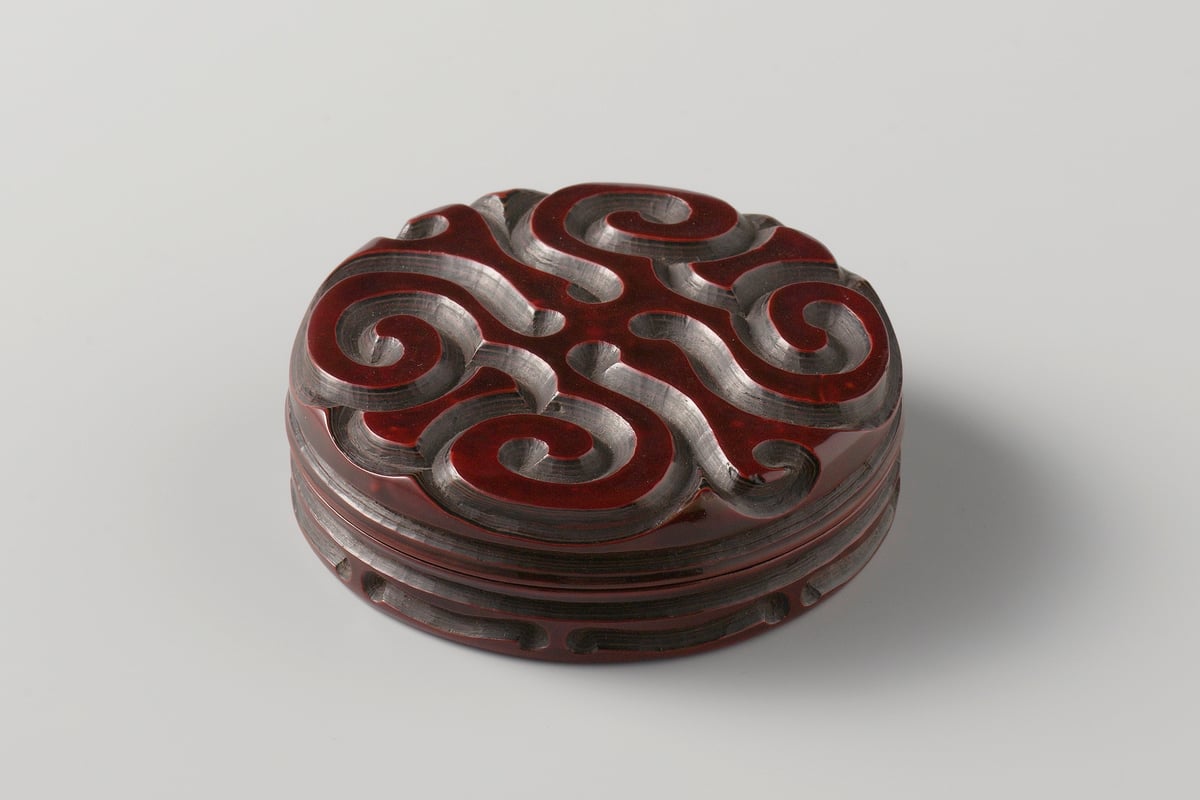
Kagawa Lacquerware (Kagawa Shikki) is lacquerware made mainly in Takamatsu City, Kagawa Prefecture. According to Kagawa Prefecture materials, it is said to have begun in the Edo period, when the Matsudaira family, lords of the Takamatsu domain, promoted and protected lacquer art together with the tea ceremony and calligraphy. In the late Edo period, Tamakaji Zokoku, said to be the founder of Kagawa Lacquerware, added his own innovations to techniques that had come from China and Southeast Asia. Today five techniques are carried on: kinma, zonsei, choshitsu, Zokoku-nuri and Goto-nuri. In 1976 (Showa 51), it was designated a national Traditional Craft. It includes both vivid decoration using colored lacquers and finishes whose luster deepens the more they are used, and pieces range from trays, teacup saucers and confectionery containers to furniture. There are 20 certified Traditional Craftspeople (dento kogeishi) (as of February 2026). At the Sanuki Lacquer Art Museum in Takamatsu City, visitors can also try choshitsu.
Origin
Kagawa Lacquerware is said to have its origins in the Edo period, when the Matsudaira family, lords of the Takamatsu domain, promoted and protected lacquer art as an accompaniment to the tea ceremony and calligraphy. Matsudaira Yorishige, the first domain lord, who entered Takamatsu in 1642 (Kan'ei 19), is also said to have had a deep interest in lacquerware and carving. In the late Edo period, Tamakaji Zokoku, who was born into a family of sayanuri-shi (scabbard lacquerers), took over the family trade and mastered the skills of lacquering and carving.
History
Tamakaji Zokoku encountered karamono (imported Chinese-style) lacquerware in Kyoto and studied Chinese choshitsu and zonsei as well as Southeast Asian rantai kinma (kinma on a woven bamboo base). After returning home, he established his techniques while working on the conservation and repair of the Takamatsu domain's treasures, and he is said to have been granted the surname 'Tamakaji' by the domain lord. His works were also used as gifts to the shogun and daimyo. His techniques were passed on to his younger brother and his children, and in 1954 (Showa 29) the Kagawa Prefectural Lacquer Art Research Institute was established as Japan's first research facility for lacquer art.
Features
Its major characteristic is decoration that combines carving techniques with colored lacquers. Because patterns are expressed in colored lacquers such as vermilion, yellow and green, pieces are finished in rich, vivid colors. On the other hand, there are also subdued finishes such as Zokoku-nuri and Goto-nuri, whose luster and hue change the more they are used. Kagawa has also produced holders of Important Intangible Cultural Property (Living National Treasures) in kinma, including Yamashita Yoshito and Otani Hayato of the Kagawa Prefectural Lacquer Art Research Institute.
Techniques
Kinma (Incised and Color-Filled Lacquer)
Patterns are carved with a blade called a kinma-ken into the surface of a vessel coated with many layers of lacquer. Colored lacquer is filled into the grooves, and when the surface is polished flat, the pattern appears. The name is said to derive from the Thai word 'kinma,' and it is the representative technique of Kagawa Lacquerware.
Zonsei (Painted and Incised Lacquer)
A technique in which patterns are painted with colored lacquer and, once dry, their outlines and details are engraved in fine lines with a blade. There is also a method of filling the incised lines with gold powder or gold leaf. The technique came to Japan in the Muromachi period, and Kagawa Prefecture uses the spelling '存清' that Tamakaji Zokoku used.
Choshitsu (Carved Lacquer)
Lacquers of different colors are applied in dozens to hundreds of coats to build up a thick layer, which is then carved down so that the pattern stands out in relief. It is said that 100 coats make a layer about 3 mm thick. Depending on the depth of the carving, the colored layers beneath are revealed, creating a three-dimensional effect and contrasting colors.
Zokoku-nuri (Zokoku Lacquer Finish)
A technique in which, after layers of lacquer are applied, powder of makomo (Manchurian wild rice), a plant that grows at the water's edge, is sprinkled on, and more lacquer is rubbed in to finish. The name comes from Tamakaji Zokoku. It has subdued tones, and its luster and shading are said to deepen the more it is used.
Goto-nuri (Goto Lacquer Finish)
A finish using vermilion lacquer, with patterns known as 'tataki-Goto' (tapped Goto) and 'nade-Goto' (stroked Goto). It is said to have been devised by Goto Taihei, a samurai of the Takamatsu domain in the late Edo period, and the technique is named after him. Its distinguishing feature is that the tone of the vermilion changes the more it is used.
Materials Used
Production Process
- 1
Making the Base
The base that forms the prototype of the vessel is made. In addition to wood bases made by turning wood on a lathe, bending it or carving it, bases woven from thin bamboo strips in an ajiro (wickerwork) pattern are also used. Craftspeople who make wood bases are called kijishi, and a shortage of successors is a challenge in Kagawa Prefecture.
- 2
Groundwork (Shitaji)
Raw lacquer (kiurushi) is rubbed in to harden the base, and the work of filling weave gaps and crevices with a filler called kokuso and then polishing is repeated. This is an important step to level the surface and prevent damage and deformation.
- 3
Lacquering
Lacquer is applied many times to build up a thick lacquer film, and the surface is smoothed. Lacquer brushes made of human hair set with lacquer are used. Some techniques, such as choshitsu, involve applying lacquers of different colors dozens or hundreds of times.
- 4
Decoration
The surface is decorated using techniques such as kinma, zonsei and choshitsu. Patterns are carved and filled with colored lacquer, or built-up layers are carved down, to create the richly colored patterns characteristic of Kagawa Lacquerware. Dedicated blades and carving knives are used for each step.
| Main Production Areas |
|
|---|
Artisans & Workshops
一和堂工芸
A maker of Kagawa Lacquerware with a workshop and store in Yashima-higashi-machi, Takamatsu City. It is said to have been founded about 100 years ago, and it makes trays, confectionery containers, furniture and more, ranging from traditional items to pieces with contemporary designs. It also exhibits at Kagawa Prefecture's traditional crafts fair.
中田漆木(中田陽平)
A lacquer workshop that serves as the contact point for experiences at the Sanuki Lacquer Art Museum in Takamatsu City. 中田陽平, a Traditional Craftsperson (dento kogeishi), is a craftsman who has worked with lacquer for more than 17 years, and the museum offers choshitsu experiences under his instruction.
How to Buy
- 一和堂工芸 (Yashima-higashi-machi, Takamatsu City)
- A workshop and store handling Kagawa Lacquerware trays, confectionery containers, furniture and more. It is said to be about a 3-minute walk from Kotoden Furutakamatsu Station. It is listed as closed on Sundays and national holidays, with irregular closures on Saturdays, so it is best to check before visiting.
- かがわ物産館 栗林庵 (Kagawa Bussankan Ritsurin-an)
- A Kagawa Prefecture products shop next to the East Gate of Ritsurin Garden. Besides traditional crafts such as Kagawa Lacquerware and Takamatsu Hariko (Papier-Mâché), it also carries Sanuki Udon, wasanbon (fine Japanese sugar) and more. The selection of crafts varies depending on the season.
- Kagawa Lacquerware Traditional Craftspeople Festival
- An exhibition and sale whose organizers include the Kagawa Lacquerware Industry Cooperative. In October 2024, the 40th edition was held at the Commerce and Industry Promotion Hall in Ritsurin Garden, featuring works by Traditional Craftspeople. The timing of the event varies from year to year.
Hands-on Experiences
讃岐漆芸美術館
香川県高松市上福岡町2017-4
Under the guidance of Traditional Craftspeople, visitors can try experiences such as choshitsu, carving a design of their choice into a small plate coated with layers of lacquer. According to a 2022 news report, the small-plate choshitsu experience cost 3,000 yen, and reservations were accepted by phone (087-802-2010). Fees range from about 3,000 yen to about 5,000 yen depending on the plan.
FAQ
Q. What is the difference between the 'three techniques' and the 'five techniques' of Kagawa Lacquerware?
A. Kinma, zonsei and choshitsu, established by Tamakaji Zokoku, are called the 'three techniques of Kagawa,' and their preservation and transmission are carried out at the Kagawa Prefectural Lacquer Art Research Institute. These three plus Zokoku-nuri and Goto-nuri make up the five techniques of Kagawa Lacquerware as a national Traditional Craft.
Q. Who was Tamakaji Zokoku?
A. A lacquer craftsman of Takamatsu active from the late Edo period through the bakumatsu (the final years of the shogunate), whose real name was Fujikawa Tamezo. Commissioned by the domain lord Matsudaira Yorihiro to produce works, he served the domain and is said to have been granted the surname 'Tamakaji.' His birth year is given as anywhere from 1805 to 1807 depending on the source, and he died in 1869.