Iwami Kagura Men (Iwami Kagura Washi Masks)
Iwami Kagura Men (Iwami Kagura Washi Masks)
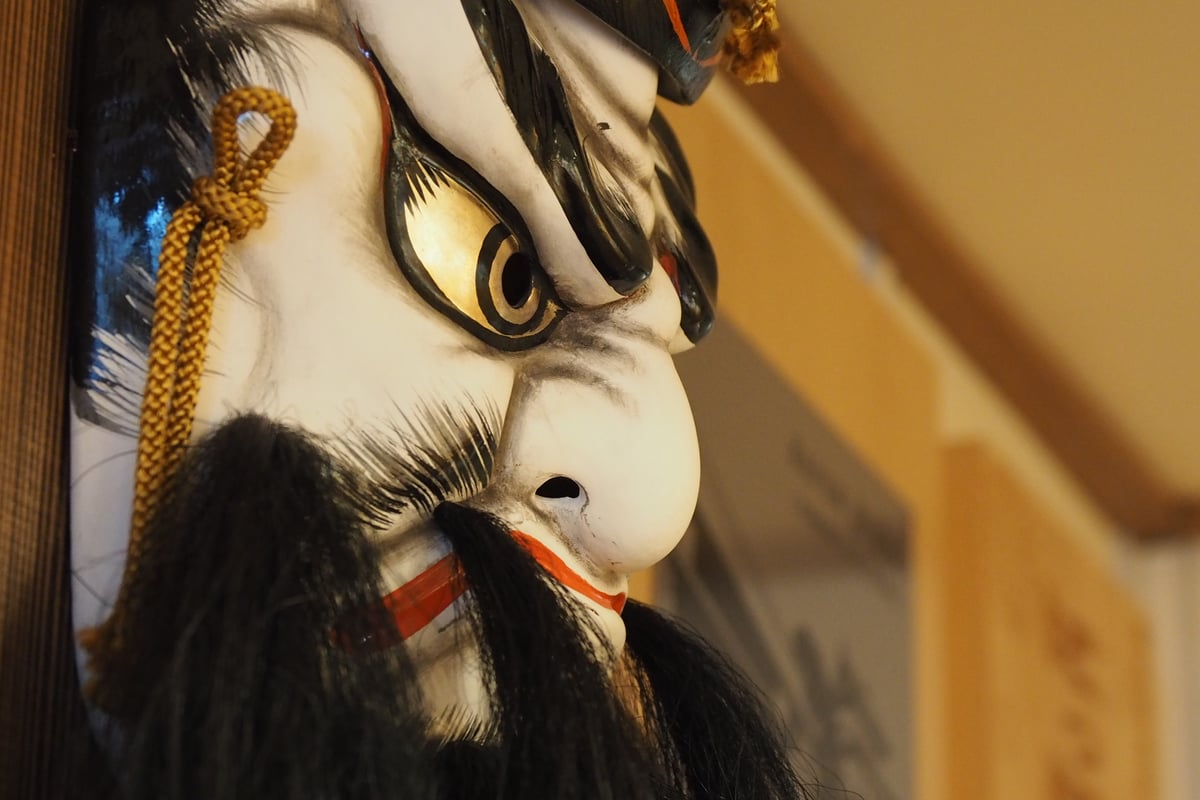
Image: Wikimedia Commons
Iwami Kagura Men are masks used in Iwami Kagura, a local performing art handed down in the Iwami region of western Shimane Prefecture. The main production areas are Hamada City and Gotsu City. Many layers of tough Sekishu Washi are pasted onto a clay mold with paste containing kakishibu (persimmon tannin); after drying, the clay inside is broken and removed, and the mask is painted and finished. In the Edo period, carved wooden masks were used, but washi masks are said to have originated with a doll maker who made Nagahama dolls in the Nagahama district of Hamada City and is regarded as the founder of the craft. Washi masks have been made since the late Edo period. Light and durable, washi masks support the fast, powerful dances of Iwami Kagura. Besides kagura masks, hannya masks, tengu masks, Shoki masks and the heads of the giant serpent (orochi) are also made, and they are popular as talismans against evil for new homes and shop openings, as good-luck charms and as interior decorations. They are designated a Shimane Prefecture Furusato Traditional Craft and are also listed as a component cultural property of the Japan Heritage story '神々や鬼たちが躍動する神話の世界' (A World of Myths Where Gods and Demons Come Alive).
Origin
According to Shimane Prefecture materials, carved wooden masks were used in the Edo period, when kagura was performed mainly by Shinto priests. The founder of today's washi masks is considered to be a doll maker who made Nagahama dolls in the Nagahama district of Hamada City. This doll maker is said to have created washi masks by applying the dakkatsu kanshitsu (hollow dry lacquer) technique of lacquer craft. A craftsperson who carries on the work says that this technique took root here because strong Sekishu Washi was available locally.
History
Hamada City explains that from the Meiji era onward, kagura culture such as the revised kagura (八調子神楽, eight-beat kagura) and the standardized Iwami Kagura scripts (校定石見神楽台本) flourished in Hamada. Along with this, the making of Iwami Kagura masks, serpent bodies, costumes and other items also flourished and spread to various areas. Iwami Kagura has also been recognized as a Japan Heritage story centered on the kagura of the Iwami region. Its component cultural properties include Nagahama dolls and Sekishu Washi as well as Iwami Kagura masks. In March 2025, a workshop in Gotsu City was newly designated a manufacturer of Shimane Prefecture Furusato Traditional Crafts, and the craft continues to be passed on.
Features
Iwami Kagura Men are papier-mâché (hariko) masks made by pasting layers of washi over a mold made of clay. Because the number of washi layers determines the thickness of the mask, craftspeople paste them while picturing the finished form. Since the mold is broken to remove it, only one mask can be made from each mold, but in return the technique makes it easy to express complex forms. The masks are lighter and more durable than carved wooden masks and suit vigorous dances. Creating the facial expression with paint is the most difficult task and is regarded as the true test of a craftsperson's skill.
Techniques
Washi pasting (an application of dakkatsu kanshitsu)
A technique in which many layers of Sekishu Washi are pasted onto a clay mold with paste mixed with kakishibu, and after drying, the clay inside is broken and removed. A Nagahama doll maker is said to have applied the idea of dakkatsu kanshitsu from lacquer craft to making washi masks. It is a production method found in few places in Japan.
Painting
The process of applying gofun (white pigment made from shells) to prepare the base and then adding color to create the mask's expression. Fine lines such as the beards, eyebrows and outer corners of the eyes of the gods are also drawn in with a brush. Shimane Prefecture materials describe this creation of expression as the most difficult process and the true test of a craftsperson's skill.
Materials Used
Production Process
- 1
Making the original model
The original model of the mask is made from clay.
- 2
Making the plaster mold
A plaster mold is made from the original model.
- 3
Casting and drying
A clay form is cast from the plaster mold and dried.
- 4
Pasting the mask
Sekishu Washi is pasted on with paste containing kakishibu and left to dry, and this is repeated.
- 5
Breaking out the clay
Once the washi has dried, the clay inside is broken and removed.
- 6
Applying kakishibu and cutting openings
Kakishibu is applied, and openings such as the eyes are cut.
- 7
Applying gofun
Gofun is applied to prepare the base for painting.
- 8
Finishing
The mask is painted, its expression is drawn in, and it is finished.
| Main Production Areas |
|
|---|
Artisans & Workshops
柿田勝郎面工房
A kagura mask workshop in 熱田町, Hamada City. 柿田勝郎 has made Iwami Kagura masks for many years and received the Support Award of the Regional Traditional Performing Arts Grand Prize in fiscal 2020. The successor, 柿田兼志, is from the Nagahama district and has been designated a manufacturer of Shimane Prefecture Furusato Traditional Crafts. The workshop also repairs and restores masks.
Official site →御面屋 惠木舞工房
A kagura mask workshop in 都治町, Gotsu City, headed by 惠木勇也. In March 2025, it was newly designated a manufacturer of Iwami Kagura masks under the Shimane Prefecture Furusato Traditional Craft program.
Official site →How to Buy
- Kagura workshops and shops on the Iwami Kagura official website
- The Iwami Kagura official website introduces kagura mask workshops and costume shops in Hamada City. Besides 柿田勝郎面工房, it lists shops with their addresses, such as 昌三庵 (washi and carved wooden kagura masks) and 日下義明商店 (kagura masks and Nagahama dolls) in Nagahama Town.Where to buy →PR
- 柿田勝郎面工房
- A workshop at 636-60 熱田町, Hamada City (tel. 0855-27-1731). Besides masks used in kagura, it also offers kagura masks as gifts. Its official website states that it is closed every Wednesday.Where to buy →PR
Hands-on Experiences
界 出雲「神楽面の絵付け体験」
島根県出雲市大社町日御碕604
An experience at the hot spring ryokan 界 出雲 in which you paint a kagura mask under the guidance of 柿田兼志 of 柿田勝郎面工房. It is held on the second and fourth Saturdays of odd-numbered months, and the fee is 15,000 yen per person (tax included, accommodation not included). Applications must be made at least 14 days before your stay.
View details →エクス和紙の館
島根県浜田市金城町波佐イ425-1
It is listed in the shop section of the Iwami Kagura official website as a facility that sells washi products and offers painting experiences for toy masks. Fees and dates could not be confirmed, so it is advisable to inquire in advance.
FAQ
Q. Why are the masks made of washi?
A. Because washi masks are lighter and more durable than carved wooden masks, they suit the fast, powerful dances of Iwami Kagura. The fact that tough Sekishu Washi was made locally is also considered one of the reasons this technique took root.
Q. Can I buy one even if I will not use it for kagura?
A. Yes. Iwami Kagura masks are also sought after as talismans against evil for new homes and shop openings, as good-luck charms and as interior decorations. Mask workshops in Hamada City and Gotsu City also make masks for gifts.