Kanzarashi (Chilled Rice Dumplings in Syrup)
Kanzarashi (Chilled Rice Dumplings in Syrup of Shimabara)
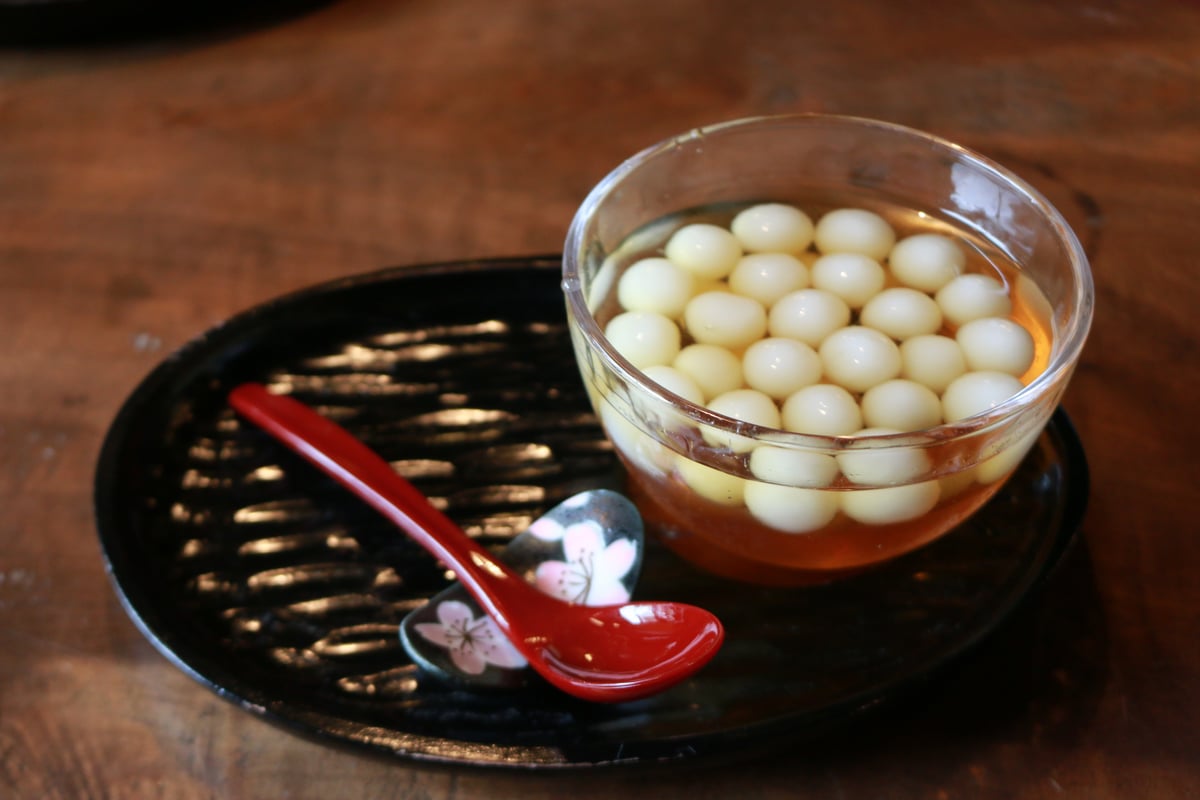
Image: Wikimedia Commons
Kanzarashi is a traditional sweet long handed down in Shimabara City, Nagasaki Prefecture. Small dumplings made from shiratamako (glutinous rice flour) are chilled in Shimabara's spring water and eaten with a syrup made from sugar or honey. Its appeal lies in the moist, chewy dumplings and the smooth, lightly sweet syrup. The name is said to come from the fact that shiratamako was made by exposing the raw glutinous rice to water around Daikan (the coldest time of the year). Shimabara is called the 'City of Water', and clear groundwater springs up in many places around town. The spring water, whose temperature stays the same all year round, was well suited to chilling the dumplings. It was once a special treat for entertaining guests in summer, but today it can be enjoyed at many eateries in the city. Ginsui (銀水), a renowned shop founded in the Taisho period, closed once but was revived by Shimabara City in 2016. In fiscal 2021 (Reiwa 3), it was certified as a '100-Year Food' by the Agency for Cultural Affairs.
Origin
According to the Ministry of Agriculture, Forestry and Fisheries, the common people of Shimabara could not eat the rice they paid as land tax, so they ground broken rice into rice flour and ate that. Because rice flour spoiled easily in summer, it is said they made it into dumplings and kept them in spring water. In 1792 (Kansei 4), the 'Shimabara Taihen' disaster occurred, in which the collapse of Mt. Mayuyama and other events caused great damage, and the resulting changes in the landscape led to many springs welling up in the area. Since sugar making was also flourishing, it is said that kanzarashi began when shiratama dumplings topped with syrup were served to guests in summer.
History
Ginsui, known as a renowned kanzarashi shop, was opened in 1915 (Taisho 4) by Irie Gin. It continued until the generation of Tanaka Hatsuyoshi, who took over the shop in 1955 (Showa 30), but it closed in 1997 (Heisei 9), and the building stood empty for nearly 20 years. Shimabara City acquired and restored the land and building, and revived it in 2016 as the 'Hamanokawa Spring Water Tourism Exchange Center Ginsui'. Since 2021, it has been run by Tamanoya, which was appointed by the city as its designated manager.
Features
Spring water is added to shiratamako and kneaded, and the dough is rolled into small balls and boiled. The dumplings that float to the surface are transferred to another vessel filled with spring water to chill. It is said that they are not refrigerated, because putting them in the refrigerator makes the centers hard and spoils the taste. The syrup is made from sugar or honey, but the proportions differ from shop to shop, and the flavors vary. It is said that the second-generation owner of Ginsui never taught anyone how to make the syrup.
Main Ingredients
Food Culture
When sugar was a luxury, kanzarashi was a special treat for entertaining summer guests. It is said that people often made it at home and handed it out to relatives. After sugar and honey became easier to obtain, it came to be eaten regularly. Today, it is said to be available at about 10 shops in the city.
How It Differs from Home Cooking
It is also made at home, and a recipe from the Nagasaki Dietetic Association introduces a syrup of zarame (coarse sugar) and sugar with a little light-colored soy sauce and salt added. The boiled shiratama dumplings are chilled in cold water. Shops are distinguished by kneading and chilling the shiratama dumplings with spring water whose temperature stays the same all year round. The syrup recipe is said to be each shop's secret.
Famous Shops
浜の川湧水観光交流館「銀水」
長崎県島原市白土桃山2-1093
A facility in which Shimabara City revived, in 2016, the 'original kanzarashi' shop founded in 1915. It uses the same water as the neighboring Hamanokawa spring. According to its official website, kanzarashi is 600 yen, and the Ginsui set, which comes with an accompanying sweet such as castella and a drink, is 1,300 yen. Takeout is also available. Prices are subject to change.
View details →しまばら水屋敷
長崎県島原市万町513-1
A café that makes use of a Meiji-period merchant's residence, with spring water flowing into the pond in its garden. It reportedly uses spring water for its kanzarashi as well, and keeps the syrup only lightly sweet. A travel guide lists kanzarashi at 440 yen. Prices are subject to change.
View details →| Kanzarashi Assortment by 玉乃舎 | Kanzarashi made by 玉乃舎 (Tamanoya) of Shimabara City, which runs Ginsui. There is a product that combines two kinds: kanzarashi eaten with syrup and zenzai (sweet red bean soup). One serving consists of 60g of dumplings and 70g of syrup, and the best-before date is 10 days from production at room temperature. It is offered as a return gift for Shimabara City's furusato nozei (hometown tax donation) program.Where to buy →PR |
|---|---|
| Kanzarashi by 喫茶ケルン | Kanzarashi from 喫茶ケルン (Kissa Kern), a café in an old house in Takashima, Shimabara City. The café makes use of a building more than 100 years old and is introduced as having been loved by the community for more than 40 years. A mail-order option delivers the kanzarashi served at the café frozen just as it is.Where to buy →PR |
FAQ
Q. What does the name 'kanzarashi' mean?
A. In Japanese it is written 寒ざらし, where 'kan' means cold and 'zarashi' means exposing (to water). In the past, broken glutinous rice, the raw material, was wet-ground with a stone mill around the day of Daikan, and the flour that settled was dried to make shiratamako. It is said to have come to be called 'kanzarashi' after this method of exposing rice to water in the cold season.