 1 / 2
Image: Wikimedia Commons
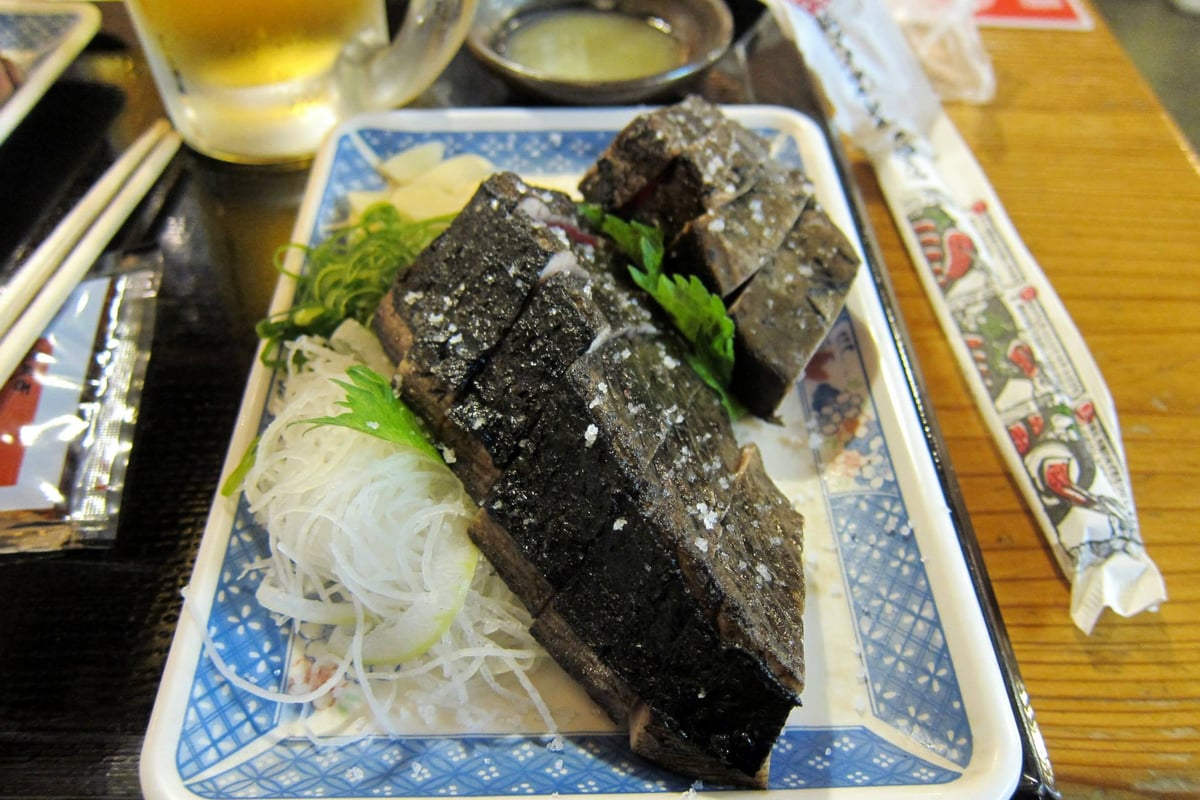
Katsuo no Tataki is a representative local dish of Kochi Prefecture. Only the surface of a loin block (fushi) of bonito, taken from a fish filleted into three pieces, is seared over a strong flame; it is then cut into thick slices and eaten with condiments such as garlic and green onion. The name 'tataki' (patting) is said to come from the action of sprinkling salt or sauce over the seared and sliced fish and patting it to let the flavor soak in. In Kochi, searing over a straw fire, which cooks the fish in one go over the flames of burning straw, is a specialty, and its toasty, savory aroma is its hallmark. The sauce is usually a mixture of soy sauce and vinegar, but shio-tataki (salt-seasoned tataki), eaten with salt instead of sauce, is also popular. There are several theories about its origin, including that fishermen made it on board their boats and that it came about because the Tosa domain banned eating fish raw. In 1988 (Showa 63), Kochi Prefecture designated the bonito as its prefectural fish, and in fiscal 2021 the dish was also certified as a '100-Year Food' by the Agency for Cultural Affairs. At places such as Hirome Market in Kochi City and Kure, Nakatosa Town, you can taste tataki freshly seared over straw.
Origin
There are several theories about its origin. Materials from Kochi City introduce a theory that at the end of the Sengoku (Warring States) period, when Chosokabe Motochika was bringing Shikoku under his control, bonito was grilled over kaya grass and eaten. Also well known is the theory that the Tosa domain banned eating fish raw to prevent food poisoning, and people kept eating it as grilled fish by searing only the surface. The timing of the ban differs depending on the source, and one theory attributes it to Yamauchi Kazutoyo, who entered Tosa after the Battle of Sekigahara. Another theory holds that pole-and-line fishermen who had grown tired of sashimi made it on board their boats; all of these are told as legends.
History
In Tosa in the late Edo period, bonito landed at the port of Usa, about 20 km from the castle town of Kochi Castle, is said to have been carried by men who ran without resting to deliver it to the castle town. This was a way to keep the fish fresh in an age without refrigeration. Tataki became a staple of Sawachi Ryori (Platter Cuisine) and an essential dish at weddings, funerals and other ceremonial occasions as well as at Shinto rituals. In recent years, shio-tataki, in which fresh bonito is eaten with salt, has also spread.
Features
At home, a method called yakikiri is common: the surface of the loin block is quickly seared, patted with salt and then sliced. Overcook it and it becomes grilled fish; undercook it and a fishy smell remains, so heat control is key. Searing over a straw fire uses intense heat to sear the surface instantly and transfer the toasty aroma of the straw to the fish. Sliced garlic is indispensable, and green onion, ooba (shiso leaves), myoga ginger and the like are added. The 'first bonito' (hatsu-gatsuo) of spring is said to be fragrant, and the 'returning bonito' (modori-gatsuo) of autumn rich in fat.
Main Ingredients
Food Culture
Kochi Prefecture is said to rank first in Japan by a wide margin in bonito consumption per household. The vinegar dressing differs by area: soy sauce and brewed vinegar are said to be used in the central part, soy sauce combined with mirin and other ingredients in the west, soy sauce and yuzu vinegar in the east, and sanbaizu (three-flavor vinegar) in the mountainous areas. Eating each slice in a single bite is said to be the Kochi way.
How It Differs from Home Cooking
At home, yakikiri, in which the surface of the loin block is seared over a stove flame or similar, is common. Specialty restaurants sear the surface in one go over the high-temperature flames of burning straw, giving it the distinctive toasty aroma of straw. Some restaurants demonstrate searing over a straw fire in front of customers and serve the freshly seared fish as shio-tataki.
Famous Shops
藁焼き鰹たたき 明神丸 ひろめ市場店
高知県高知市帯屋町2-3-1 ひろめ市場内
A popular shop in Hirome Market, a food-stall village of about 60 shops. It sears pole-and-line-caught bonito over straw at the storefront and recommends shio-tataki eaten with sun-dried salt and condiments. Travel guides list the shio-tataki bowl, thick slices of shio-tataki on rice (with miso soup), at 1,000 yen. Long lines form during major holiday periods. Prices may change.
明神丸 本店
高知県高知市本町1-1-2
The main shop, where bonito shipped directly from 明神水産 (Myojin Suisan) is seared over straw inside the restaurant. It is described as searing the surface instantly with intense heat that reaches about 1,000 degrees. It opens at 5 p.m. and is closed on Mondays (open in May, August and over the New Year holidays), and the budget is said to start from 4,000 yen.
View details →黒潮工房
高知県高岡郡中土佐町久礼8009-11
A shop on a hilltop overlooking the sea where you can try making straw-seared bonito tataki by reservation. Travel guides list the beginner course from 800 yen (per group; one bonito loin block from 3,000 yen) and a bonito tataki set meal at 1,080 yen. It is open from 10:30 a.m. to 2:30 p.m. and closed on the second Thursday of every month.
View details →田中鮮魚店(久礼大正町市場)
高知県高岡郡中土佐町久礼6382 大正町市場内
A fish shop in Kure Taisho-machi Market, which began when fishermen's wives started selling small fish around the middle of the Meiji period. The owner, a bonito sommelier, serves tataki with the degree of searing adjusted after checking the quality of the flesh. The Kure-don, a rice bowl topped with side dishes of your choice, is listed at 1,250 yen. The market also hosts the Bonito Festival (Katsuo Matsuri) every May.
View details →かつお船(土佐タタキ道場)
高知県高知市仁井田201-2
A shop about a 5-minute drive from Katsurahama, where at 土佐タタキ道場 (Tosa Tataki Dojo) you can try making straw-seared bonito tataki. You receive bonito on skewers, hold it over the straw flames yourself to sear it, and eat it on the spot. Reception hours are listed as 10:30 a.m. to 3 p.m. Please check the fee in advance.
View details →FAQ
Q. What does the 'tataki' (patting) in the name refer to?
A. It is said to come from the action of sprinkling salt or sauce over the seared and sliced bonito and patting it with the hand or the flat of a knife to let the flavor soak in. Materials from Kochi City note that while the custom of grilling fish and serving it as sashimi also exists in Kagoshima, Wakayama and Chiba, sprinkling salt or sauce and patting it is unique to Kochi Prefecture.
Q. What is shio-tataki?
A. It is a way of eating seared bonito sprinkled with salt instead of sauce. According to materials from the Ministry of Agriculture, Forestry and Fisheries, the tradition of shio-tataki still survives on the Ashizuri Peninsula. As fresh bonito has become easier to obtain, more restaurants in Kochi City have recently begun recommending shio-tataki.