Image: Wikimedia Commons
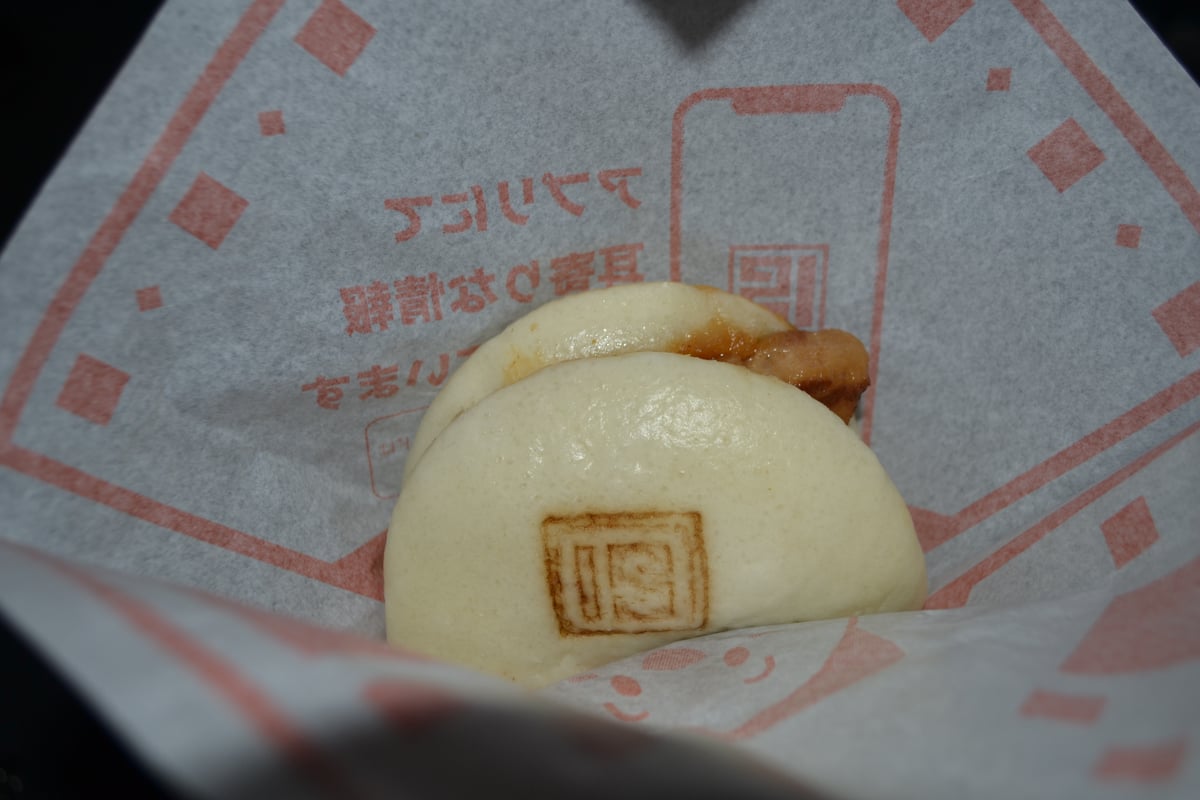
Kakuni manju is a Nagasaki specialty in which sweet-and-savory braised pork belly (kakuni) is sandwiched in a soft, fluffy white bun. The kakuni is placed inside a bun folded in half, a form that closely resembles Taiwan's gua bao (kuapao). Its roots lie in tobani (braised pork belly), a dish of Shippoku cuisine. At Chinese restaurants in Nagasaki, there was a way of eating in which the kakuni and the bun were served separately and diners sandwiched them together themselves. Products with the kakuni already sandwiched in the bun are relatively new, and are known as having been launched by Iwasaki Honpo (岩崎本舗) of Nagasaki under the name 'Nagasaki Kakuni Manju.' Today they are easy to buy around Nagasaki Shinchi Chinatown and at souvenir shops in stations and airports. They are popular both as street food to eat while still warm and as frozen souvenirs.
Origin
The roots of Kakuni manju lie in 'tobani,' a Japanese-style adaptation in Nagasaki of the Chinese dongpo pork (dongporou). Tobani is a standard dish served as a medium bowl in Shippoku cuisine. On the other hand, according to Nagasaki City, the direct roots of the custom of sandwiching kakuni in a bun are the course meals of 'Nagasaki-style Chinese cuisine,' known for Nagasaki champon and Sara udon. The kakuni and the folded bun are served separately, and diners open the bun and sandwich the kakuni inside to eat it.
History
The first to commercialize it with the kakuni already sandwiched in the bun was Iwasaki Honpo, founded in 1965 (Showa 40). According to the company, its first-generation owner, Iwasaki (岩崎博孝), created it under the name 'Nagasaki Kakuni Manju,' wishing people could enjoy dongpo pork more easily and more deliciously. It is said to have been improved more than 500 times, and in 1997 it won the top prize at the Nagasaki Prefecture New Specialty Products Exhibition. In 2025, a special campaign was also held to mark the '35th anniversary of Kakuni manju.'
Features
The bun is a white manju made from wheat flour, and kakuni made by slowly braising pork belly is sandwiched inside the fold. It is characterized by the combination of kakuni soaked in a sweet-and-savory sauce and the fluffy bun. At Nagasaki-style Chinese restaurants, many are said to add toaku (a type of kansui alkaline water), which is also used in the noodles for champon and Sara udon, to the dough. Iwasaki Honpo's products are also sold frozen and can be warmed in a microwave or steamer before eating.
Main Ingredients
Food Culture
In Nagasaki Shinchi Chinatown, Kakuni manju has become a staple of street food. It is sold not only inside Chinatown but also at shops in the surrounding area. According to Nagasaki City, the appearance of Kakuni manju sold already sandwiched came as a fresh surprise to local people.
Famous Shops
岩崎本舗 西浜町店
長崎県長崎市銅座町3-17
A directly managed shop right in front of Shinchi Chinatown, about a two-minute walk from the Shinchi Chukagai tram stop. Iwasaki Honpo's official LINE account lists Nagasaki Kakuni Manju at 470 yen each and Otoro Kakuni Manju at 550 yen each. Prices are subject to change.
View details →岩崎本舗 長崎駅店
長崎県長崎市 JR長崎駅 長崎街道かもめ市場内
A directly managed shop inside 'Nagasaki Kaido Kamome Ichiba,' adjacent to JR Nagasaki Station. The official website lists its business hours as 8:30 to 20:00. It is a convenient stop for choosing souvenirs before boarding a train.
View details →| Frozen Nagasaki Kakuni Manju by Iwasaki Honpo | Iwasaki Honpo's official online shop lists a box of 10 frozen Nagasaki Kakuni Manju at 5,850 yen. They can be eaten after warming each one in a microwave for about 40 seconds, and the best-before period is 180 days from the date of manufacture. In 2019, it won the 'Nagasaki Temiyage Taisho' (Nagasaki Souvenir Grand Prize). Prices are subject to change.Where to buy →PR |
|---|
FAQ
Q. Is Kakuni manju a dish of Shippoku cuisine?
A. No, it is not a dish of Shippoku cuisine. What is served in Shippoku cuisine is tobani, which corresponds to the kakuni filling. According to Nagasaki City, the roots of the custom of sandwiching kakuni in a bun are considered to be the course meals of Nagasaki-style Chinese cuisine. Kakuni manju can be described as a dish devised so that the tobani of Shippoku cuisine can be eaten easily.
Q. Is it the same as Taiwan's gua bao (kuapao)?
A. They are very similar in shape. Gua bao spread in Taiwan as an everyday dish of night markets and food stalls, and its roots are said to lie in the Fujian cuisine of China. Nagasaki's Kakuni manju is a specialty that has been enjoyed in its own way in Nagasaki, against the background of the tobani of Shippoku cuisine and the way of eating in Nagasaki-style Chinese cuisine.