Kaki no Dotenabe (Oyster and Miso Hot Pot)
Kaki no Dotenabe (Oyster and Miso Hot Pot)
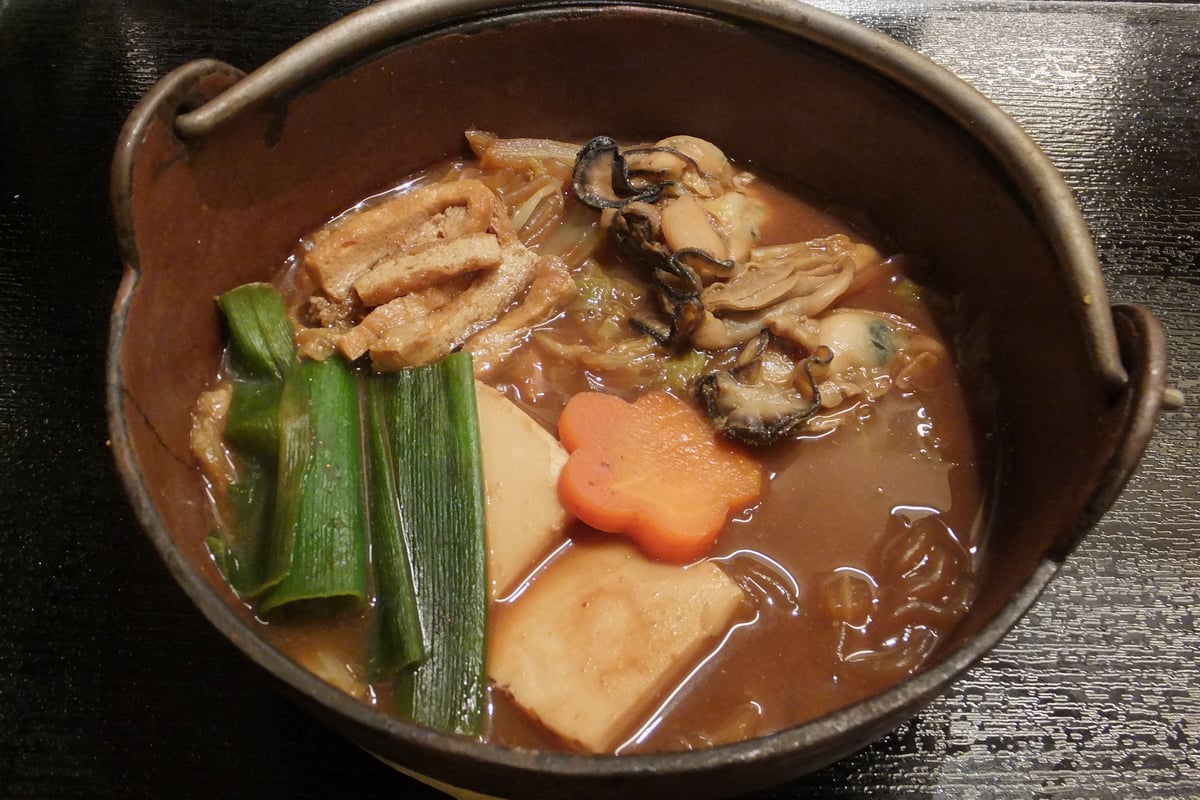
Image: Wikimedia Commons
Kaki no Dotenabe (oyster dotenabe) is a winter hot pot dish representative of Hiroshima Prefecture. Miso is spread thickly like an embankment (dote) around the inner rim of an earthenware pot, dashi broth is poured in, and oysters, napa cabbage, tofu, shungiku (garland chrysanthemum) and other ingredients are simmered. Its distinctive feature is that, as the ingredients cook, diners gradually break down the miso embankment and eat while adjusting the flavor to the strength they prefer. Sweetish white miso is often used, and some restaurants blend several kinds of miso. Hiroshima Prefecture has a long history of oyster farming and is Japan's top oyster-producing region, accounting for 50 to 60 percent of national production. Dotenabe has long been loved as a standard dish for enjoying those oysters at home and in restaurants. It is also said to be one of the three great hot pots of western Japan, and in fiscal 2023 it was recognized as the Agency for Cultural Affairs' '100-Year Food' (in the Traditional 100-Year Food category).
Origin
Oyster farming in Hiroshima Bay is said to have begun in the Tenbun era (1532–1555) at the end of the Muromachi period, and Hiroshima City states that it has a history of more than 450 years. Materials from Hiroshima Prefecture also mention a tradition that farming methods were developed in the early Edo period. Dotenabe took root in Hiroshima as a dish of oysters, long a familiar food, simmered in miso. There are various theories about the origin of the name, and no decisive record has been found.
History
In the early Edo period, oyster farmers began carrying oysters by boat to Osaka and selling them directly. In the mid-Edo period, they began setting up tatami rooms on boats and serving oyster dishes, which is said to have been the beginning of kakibune (oyster restaurant boats). In the Meiji era, these floating restaurants moored along coasts in various places are said to have numbered several hundred. Around Showa 20 (1945), hanging culture, in which oysters are suspended from rafts, spread, and production grew substantially.
Features
Miso is spread on the inside of the pot to form an embankment, dashi broth is poured into the center, and the ingredients are simmered. Besides oysters, common ingredients include napa cabbage, tofu, shungiku, negi (Japanese leeks) and enoki mushrooms. The strength of the flavor can be adjusted by how much miso dissolves into the broth, and diners can also enjoy the change as the flavor grows richer while they eat. Oysters shrink and become tough if overcooked, so it is said to be best to eat them while they are plump.
Main Ingredients
Food Culture
In winter, when oysters come into season, families also gather around dotenabe at home. Hiroshima miso makers sell dotenabe miso, blended from several kinds of miso, from autumn through winter, making it easy to prepare at home.
Famous Shops
かき船かなわ 瀬戸
広島県広島市中区大手町1丁目地先
A kakibune restaurant floating on the Motoyasu River, across from Peace Memorial Park. Its operator, Kanawa, traces its origins to oyster farming begun in 1867 (Keio 3), and opened this restaurant in 1963. The 'Kaki-zukushi Course' (all-oyster course), which includes dotenabe, is listed on the official website at 9,900 yen including tax.
View details →酔心 本店
広島県広島市中区立町6-7
A Hiroshima local cuisine restaurant said to have been founded in 1950, famous for kaki kamameshi (oyster rice cooked in an individual pot) made with oysters from Hiroshima Prefecture. It is said to have oysters available year-round, and review sites also describe a set meal combining kaki kamameshi and dotenabe. Its regular closing days vary by season, so it is best to check in advance.
| Oyster Dotenabe Base (ますやみそ) | Dotenabe miso jointly developed by ますやみそ (Masuya Miso), a miso maker in Kure City, and a long-established Hiroshima oyster restaurant. It is said to be the first product in Japan released as a hot pot base for home use. Hiroshima City's information lists it at 354 yen (tax included) for 250 g, and it can be bought at shops in Hiroshima Station and Hiroshima Airport, among other places.Where to buy →PR |
|---|---|
| Oyster Dotenabe Base (新庄みそ) | A seasonal dotenabe base sold from September to February by 新庄みそ (Shinjo Miso) of Hiroshima City. It blends three kinds of miso and adds extract of Hiroshima oysters. Hiroshima City's information lists it at 302 yen (tax included) for 150 g, and it is carried by department stores and major supermarkets in the city, Hiroshima Station and elsewhere.Where to buy →PR |
FAQ
Q. Where does the name 'dotenabe' come from?
A. A well-known theory is that it comes from spreading miso around the rim of the pot like an embankment (dote). Another theory holds that it derives from kakibune in the Edo period serving oyster hot pots below the embankments at the foot of bridges. The Agency for Cultural Affairs' '100-Year Food' introduction also mentions both theories, and neither has been settled.