Image: Wikimedia Commons
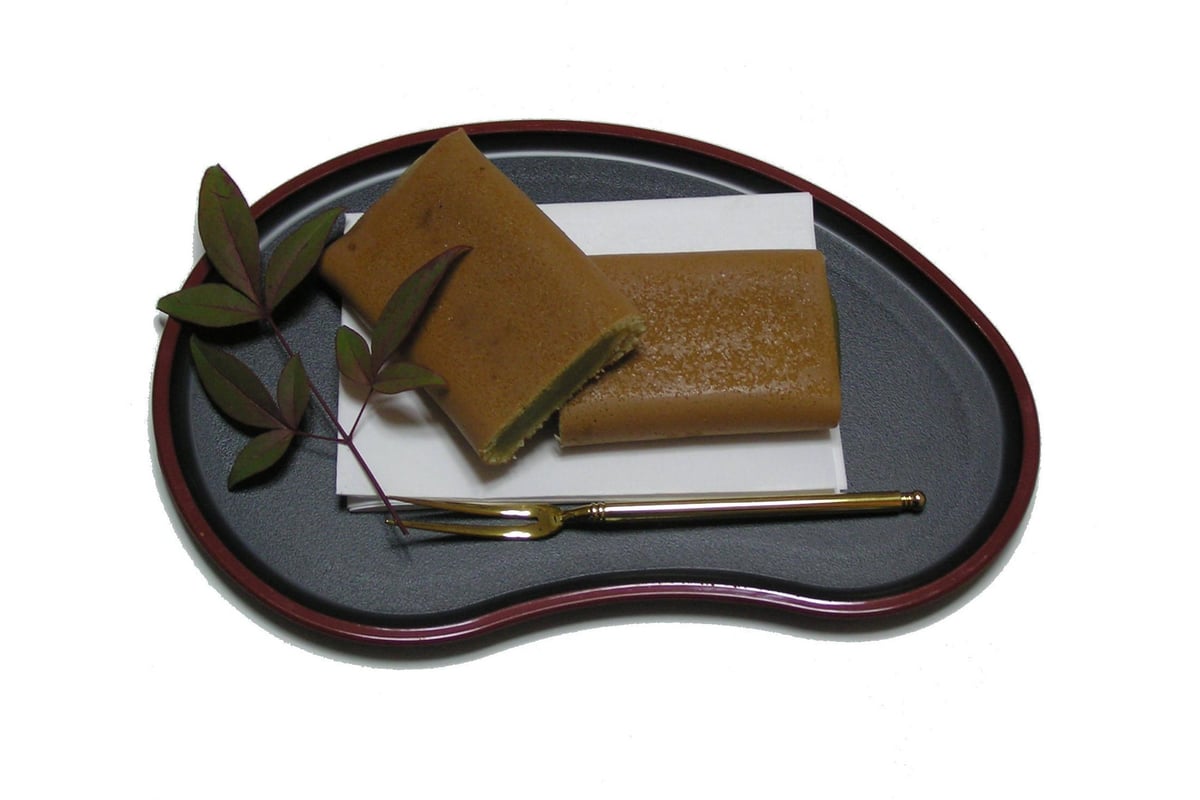
Genjimaki is a renowned confection representative of Tsuwano Town, Shimane Prefecture. It is a baked sweet made by baking a wheat-flour batter into a thin, golden-brown sheet, wrapping it around azuki bean paste (an), and shaping it into a rectangle; the combination of the castella-like (sponge-cake-like) crust and the bean paste is its hallmark. It is enjoyed as a sweet to go with tea, and more than ten confectionery shops in the town each make their own genjimaki and compete on flavor. The name is said to come from a waka poem in the Wakamurasaki chapter of The Tale of Genji, and a well-known theory holds that it began when the official confectioner of the Tsuwano domain presented it to the lord at the end of the Edo period. On the other hand, an anecdote has also been handed down that it was devised in the Genroku era as a gift for Kira Kozukenosuke. In recent years, besides koshi-an (smooth bean paste), genjimaki with shiro-an (white bean paste) and matcha bean paste have also been made. Confectionery shops such as 山田竹風軒本店 and 三松堂 are well known, and it is a popular souvenir among visitors to the town.
Origin
It is said to have begun at the end of the Edo period, when 情貫堂, the official confectioner of the Tsuwano domain, filled a thinly baked crust of kneaded wheat flour with purple bean paste and presented it to Kamei Koremi, the 11th lord of the domain. Moved by the purple bean paste, the lord's wife recalled a poem from the Wakamurasaki chapter of The Tale of Genji: 「手に摘みていつしかも見ん紫の根に通ひける野辺の若草」 (roughly, 'When might I pluck it in my hand and gaze on it, the young grass of the field whose roots are linked to the murasaki plant'). It is said that the confection was named genjimaki after this poem.
History
Another anecdote dates from the Genroku era. When Kamei Korechika, the 3rd lord of the domain, was ordered to serve as host to imperial envoys, Korechika was humiliated by Kira Kozukenosuke, who was acting as the instructor in protocol. The chief retainer (karo) Tago Geki is then said to have saved the domain from crisis by sending gifts to Kira; that gift is also said to have been the prototype of genjimaki, shaped like a paper-wrapped bundle of koban (oval gold coins). However, there is no record of this in the documents of the Kamei family of the Tsuwano domain, and it has not been confirmed as historical fact.
Features
The bean paste is wrapped in the thinly baked crust and finished as a single flat, rectangular roll. The sweetness of the bean paste and the texture of the crust differ from shop to shop, and some shops use koshi-an with restrained sweetness. Besides being cut from a whole roll and served as a sweet with tea, it is also made into products that are cut into easy-to-eat sizes, branded with a hot iron (yakiin), and individually wrapped. Some shops serve fried genjimaki, and the filling, originally only azuki bean paste, now also includes shiro-an and matcha bean paste.
Main Ingredients
Food Culture
Genjimaki is the classic souvenir of Tsuwano, which flourished in the Edo period as the castle town of the Kamei clan of the Tsuwano domain. Because of the legend that it was the confection that saved the domain from crisis, it has also been cherished as an auspicious sweet.
Famous Shops
山田竹風軒本店 本町店
島根県鹿足郡津和野町後田ロ240
A confectionery shop opened in 1885 (Meiji 18) by its first-generation owner, 山田聞蔵, with genjimaki as its signature product. It uses koshi-an with restrained sweetness. A Yahoo! News article introduced the type wrapped in kakegami (decorative paper) sold in the shop at 380 yen per roll, and the boxed type from the official online shop at 350 yen per roll.
View details →三松堂 菓心庵
島根県鹿足郡津和野町後田ロ197
A confectionery shop with a machiya-style (traditional townhouse) sweets café, offering genjimaki as a staple along with original wagashi (Japanese confections). According to a listing in Mapple (a travel guidebook), genjimaki costs 260 yen per roll, and '笑小巻,' bite-size pieces branded with a hot iron, costs 650 yen for 5 pieces. The branded designs change with the seasons.
沙羅の木
島根県鹿足郡津和野町殿町
A shop on Tonomachi Street that doubles as a literary tea room (bungei sabo) and a souvenir shop, where genjimaki are baked on the premises. In response to requests from tourists, white bean paste and matcha bean paste were added, and together with koshi-an these three kinds became the standard lineup. You can sometimes watch them being baked in the workshop through the glass.