Image: Wikimedia Commons
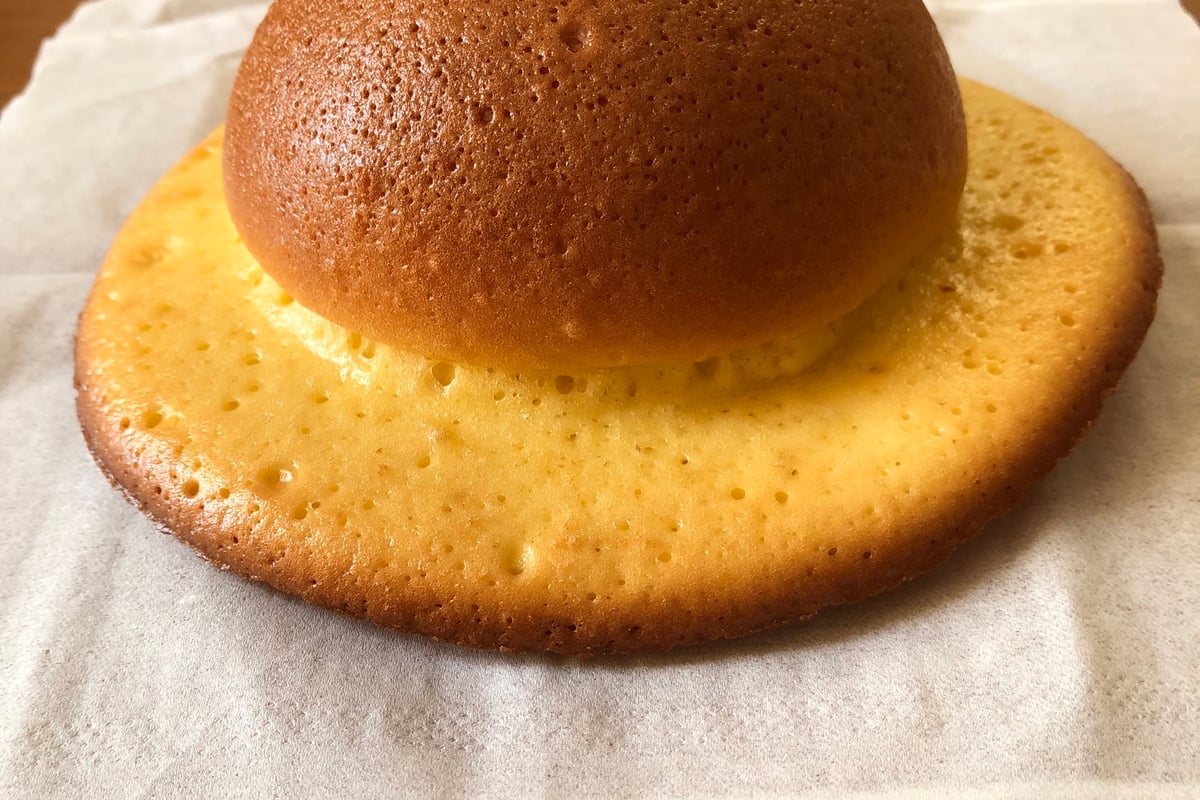
Boushi Pan is a local bread beloved in Kochi Prefecture. It is made by pouring castella batter over a round bread dough and baking it, and it gets its name because the batter that spreads out around the bun bakes into a shape like the brim of a hat (boushi). The center is fluffy and soft, while the brim is castella batter baked sweet and toasty. It is said to have been born around 1955 (Showa 30) at 永野旭堂本店 (Nagano Kyokudo Honten) in Kochi City. According to the story, it came about when the topping dough was forgotten partway through making melon pan. It was originally sold under the name 'castella pan,' but because of its shape, customers began calling it 'boushi pan.' Today, many bakeries in the prefecture make it, and there are also versions filled with cream, large sizes, and products made only of the brim. At リンベル, the shop run directly by 永野旭堂本店, the standard size is listed at 135 yen each.
Origin
Boushi pan is said to have been born around 1955 at 永野旭堂本店 (Nagano Kyokudo Honten) in Kochi City. While making melon pan, a baker forgot to put on the biscuit dough topping. Because the dough had already risen considerably, the baker poured leftover castella batter over it and baked it; according to the story, the batter spilled out around the edges and baked into a shape like the brim of a hat. Accounts differ on the details of how it happened.
History
It was first sold under the name 'castella pan,' but because of its shape, customers began calling it 'boushi pan,' and that name stuck. Its reputation spread throughout the prefecture, and bakers from other shops are said to have visited 永野旭堂本店 to learn its recipe and method, leading bakeries across the prefecture to make it. At まるごと高知 (Marugoto Kochi), Kochi Prefecture's antenna shop in Tokyo, the boushi pan made by ヤマテパン (Yamate Pan) ranked first in retail sales volume when the shop first opened. In 2025, 永野旭堂本店 developed a 'Melon Boushi Pan' together with 西島園芸団地 (Nishijima Engei Danchi) in Nankoku City.
Features
Because castella batter is poured over round bread dough before baking, a single bun offers two textures. The center, which corresponds to the crown of the hat, is a fluffy dough like that of a koppe-pan (soft bread roll). The surrounding brim is castella batter fragrant with egg, baked to a sweet golden brown, with crisp, toasty edges. Unlike melon pan, it has no granulated sugar or crosshatch pattern on the surface.
Main Ingredients
Food Culture
Many bakery companies in Kochi Prefecture make boushi pan, and it is easy to buy at supermarkets and neighborhood bakeries. It has also become one of the area's tourist specialties. There are also versions with whipped cream, sweet bean paste, or chocolate added, large-size versions, and products made only from the brim portions.
Famous Shops
リンベル(永野旭堂本店 直営店)
高知県高知市永国寺町1-43
The directly operated shop of 永野旭堂本店 (Nagano Kyokudo Honten), the birthplace of boushi pan, offering about 80 kinds of simple, homestyle breads. Boushi pan comes in standard, extra-large, and mini sizes; the standard size is listed at 135 yen, and the extra-large 'Deka Boushi Pan' (でかぼうしパン), available by reservation, at 1,100 yen. Prices are subject to change.
View details →FAQ
Q. Why is it called 'boushi pan'?
A. Because the castella batter spreads around the round bun and bakes like the brim of a hat (boushi). When it was first released it was called 'castella pan,' but according to the story, customers began calling it 'boushi pan' because of its appearance, and that name stuck.
Q. Can you buy boushi pan outside Kochi Prefecture?
A. It has been sold at まるごと高知 (Marugoto Kochi), Kochi Prefecture's antenna shop in Ginza, Tokyo. In December 2020, the convenience store chain ローソン (Lawson) released 'Boushi Pan' nationwide, and it was reported at 125 yen each (tax included). There are also products for buyers outside the prefecture with a smaller, thicker brim that is less likely to break.
Q. How is it different from melon pan?
A. Melon pan is generally made by placing biscuit dough on bread dough and baking it, with granulated sugar and a crosshatch pattern on the surface. Boushi pan is baked with soft castella batter poured over it, which forms a sweet brim fragrant with egg, and it has no crosshatch pattern. There is also an anecdote that it was born from a mistake made while making melon pan.