 1 / 2
Image: Wikimedia Commons
Odo-yaki is pottery made in Kochi City. It began in 1653 (Joo 2) as a domain kiln of the Tosa domain, and takes its name from the fact that the kiln was opened at Odo (present-day Ozu-machi), north of Kochi Castle. Many pieces are neat and thinly made, and a characteristic feature is designs such as pine, bamboo and plum (shochikubai), clouds and cranes, and seasonal flowers and plants, painted on a pale clay body with an indigo pigment called gosu (cobalt pigment). In the Edo period it was made mainly as tea ceremony utensils, was also used as gifts to the shogun's family and other daimyo, and became known as the kuniyaki (provincial ware) of Tosa. In 1820 (Bunsei 3) the kiln moved to Nosayama, and when the domain kiln was abolished in the Meiji era, its techniques were passed on to private kilns. Today two kilns in Kamobe, Kochi City, 谷製陶所 and 土居窯, preserve the tradition. Sake vessels befitting Kochi, a land known for its sake, are also popular, such as the bekuhai, a cup with a pointed bottom that cannot be set down until it is emptied, and the funadokkuri (boat sake flask), whose flat bottom makes it hard to tip over.
Origin
It began in 1653, in the time of Yamauchi Tadayoshi, the second lord of the Tosa domain, when the potter Kuno Shohaku was invited from Osaka and a kiln was opened at Odo, on the north side of Kochi Castle. The opening of the kiln is said to have been led by the chief retainer (karo) Nonaka Kenzan. It also had the character of oniwa-yaki (garden kiln ware), pottery that a lord had fired for his own enjoyment. The name is said to be a corruption of the place name 'Ozu.'
History
Shohaku's techniques were passed on to 山崎平内 and Morita Kyuemon. From the late 17th century to the early 18th century, production centered on high-grade items such as tea ceremony utensils. After the kiln site burned down in a great fire in 1727 (Kyoho 12), it was rebuilt, and many everyday items also came to be made. In 1820 the kiln moved to Nosayama, where porcelain was also fired up until the Meiji era. When the domain kiln was abolished in 1871 (Meiji 4), private kilns were opened around Nosayama.
Features
Many vessels are neat and thinly made, and are painted in the indigo of gosu on a pale clay body. The designs are traditional ones such as pine, bamboo and plum, clouds and cranes, landscapes, and seasonal plants. Clay from Nosayama has traditionally been used. At 谷製陶所, the painting is modeled on the flowers and plants of Nosayama behind the workshop. Firing brings out pink yohen (kiln transformation effects), so each piece has a different look.
Techniques
Painting with gosu
Pictures are painted with a brush on the pale clay body using an indigo pigment called gosu. Designs are often pine, bamboo and plum, clouds and cranes, and seasonal flowers and plants; combined with the neat, thinly made vessels, they give a refined impression.
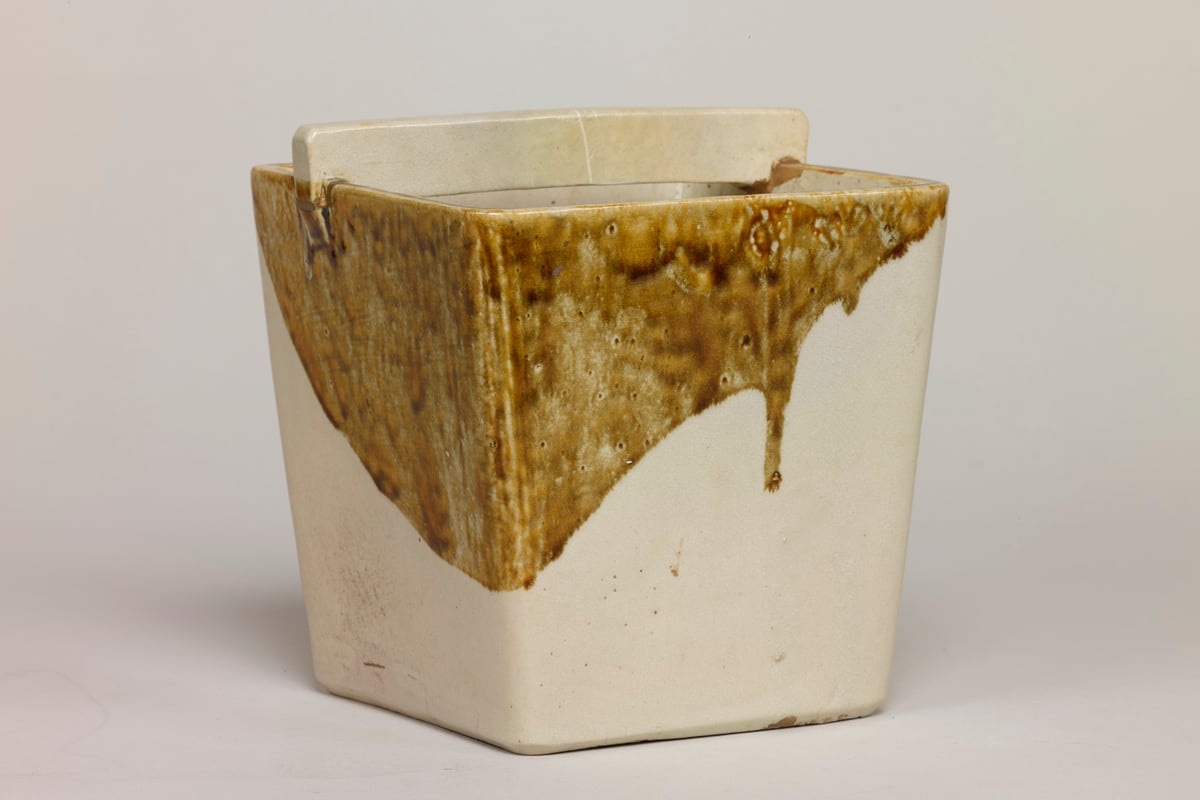
Ash glaze (kaiyu)
A technique of firing with a glaze made from the ash of burned wood and other materials. Depending on how the flames strike and the thickness of the glaze, unintended patterns and textures of the clay surface emerge. 谷製陶所 is said to refine its own straw-ash (warabai) glaze as well.
Materials Used
| Main Production Areas |
|
|---|
Artisans & Workshops
谷製陶所
A kiln said to have been opened around the time Odo-yaki spread among ordinary people in the Meiji era. The fifth generation, 谷信一郎, makes the pottery, while his father, 安雄, handles the painting and other work, and both father and son have been selected as 'Tosa no Takumi' (Master Craftsman of Tosa). They continue to make their own clay, digging it at Nosayama behind the workshop and spending a month and a half refining it.
Official site →尾戸焼 土居窯
A kiln in Kamobe, Kochi City, run by the fifth generation, 土居博幸. Kochi City's guide describes its style as graceful and gentle. Besides tea ceremony utensils and folk craft items, it also makes single-flower vases that are miniature versions of the funadokkuri, as well as mugs.
Official site →How to Buy
- Kiln galleries
- 谷製陶所 (1366 Kamobe, Kochi City) has a gallery, and it is said to draw tourists from outside the prefecture as well. At 土居窯 (1311-1 Kamobe, Kochi City), visitors can also view and purchase works by the fourth and fifth generations in the gallery attached to the workshop.Where to buy →PR
- はりま家本店
- Kochi City's guide introduces はりま家本店 (1-1-28 Harimaya-cho, Kochi City), near Harimaya Bridge, as a place where 谷製陶所's vessels are sold. Here you can pick up Odo-yaki in the center of the city.Where to buy →PR
- Mail order
- The mail-order service of the magazine Serai lists sake sets from 谷製陶所, combining a funadokkuri and a bekuhai, or an ash-glazed tokkuri (sake flask) and a guinomi (sake cup), from 6,600 yen (tax included). Prices are subject to change.Where to buy →PR
Hands-on Experiences
谷製陶所
高知県高知市鴨部1366
It is said to hold pottery classes for the general public and one-day experiences (reservation required). It also holds visiting experience classes at nearby schools and kindergartens. Parking is available. For inquiries, call 088-844-4743.
View details →FAQ
Q. What kind of vessel is a 'bekuhai'?
A. It is a sake cup whose bottom is pointed like a spinning top (koma), so it cannot be set down on the table until the sake is drunk up. 谷製陶所 makes bekuhai with reddish-brown clay surfaces lightly tinged with white and blue. It is introduced together with the funadokkuri as a vessel typical of Kochi for enjoying drinking gatherings.
Q. Why does the 'funadokkuri' have a wide bottom?
A. The bottom is made flat and wide for stability, so that it is hard to tip over and sake is less likely to spill even on a rocking boat. 谷製陶所's funadokkuri is described as 1-go size (a traditional unit of volume). 土居窯 also makes single-flower vases that are miniature versions of the funadokkuri.