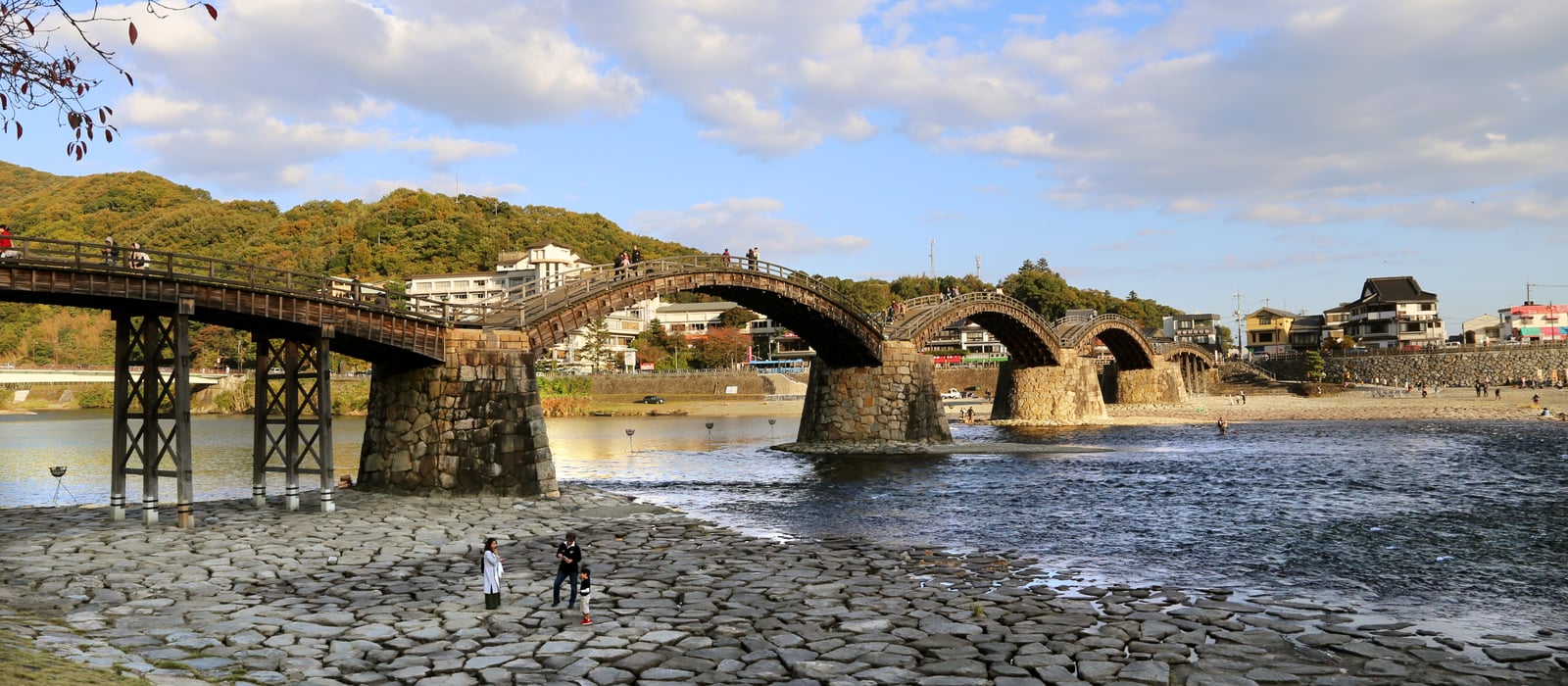
 Image: Wikimedia Commons
Yamaguchi Prefecture
Yamaguchi Prefecture lies at the western end of Honshu and is surrounded by the sea on three sides: the Sea of Japan, the Seto Inland Sea and the Hibikinada Sea. It was formed from two former provinces, Suo and Nagato. In the Muromachi period, the Ouchi clan made the town of Yamaguchi flourish as the 'Kyoto of the West', and in the Edo period the Mori clan's Hagi Domain was based here. Its Traditional Crafts Designated by the Minister of Economy, Trade and Industry are three items: Hagi-yaki, Akama inkstones and Ouchi-nuri. Hagi-yaki is a tea ceramic praised in the saying 'first Raku, second Hagi, third Karatsu', and the round couple dolls called Ouchi dolls, finished with Ouchi-nuri techniques, are also a specialty of Yamaguchi City. Other local crafts are handed down across the prefecture, including Tokuji washi with an 800-year history, Yanai-jima and Kingyo Chochin revived in the Heisei era, Hagi glass, which revived the Hagi Garasu of the end of the Edo period, and the Oniyozu kites of Mishima Island. In food, Shimonoseki is known for sashimi of pufferfish, which locals call 'fuku', and for whale dishes from its days as a base for modern whaling. Each area also has its own flavors, such as Kawara Soba born at Kawatana Onsen, Iwakuni-zushi and Ohira associated with the Iwakuni Domain, Yamaguchi Uiro made with warabi starch, and natsumikan sweets from Hagi.
Yamaguchi's Traditional Crafts
Hagi-yaki (Hagi ware)
Hagi-yaki (Hagi Ware)
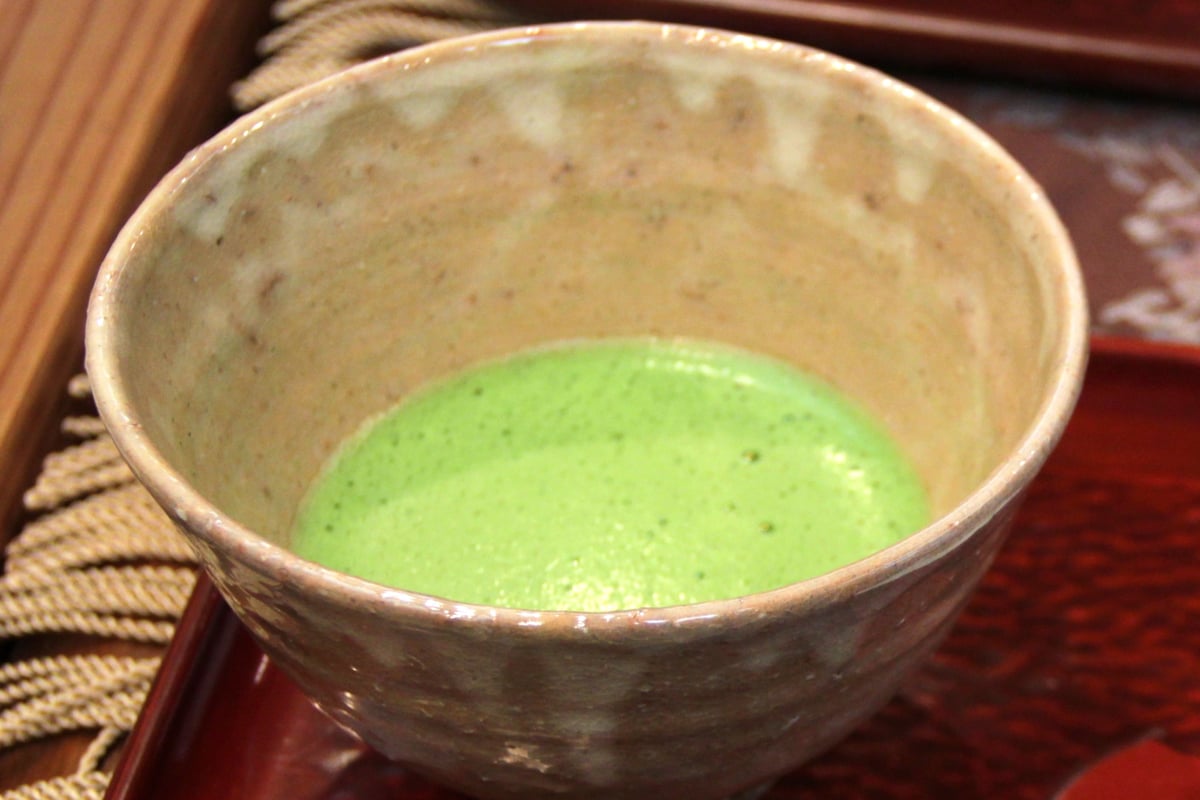
Hagi-yaki (Hagi ware) is pottery fired mainly in Hagi City, Yamaguchi Prefecture, as well as in Nagato City, Yamaguchi City and Abu Town. It is said to have begun in the early Edo period, when Mori Terumoto, lord of the Hagi Domain, had the potter brothers Ri Shakko (李勺光) and Ri Kei (李敬), whom he had invited from the Korean Peninsula, open an official domain kiln. Its appeal lies in the soft feel of its clay, which is only lightly vitrified in firing, and in its high water absorbency. With use, tea and sake seep in through the fine cracks on the surface (crazing, or kannyu), and the color of the vessel gradually changes. This is called 'Hagi no Nanabake' (the seven changes of Hagi) and has long been cherished by tea masters. Shapes and decoration are simple, and painted decoration is rarely applied. Instead, people enjoy the variations in color produced by the clay, the glaze and the flames of the climbing kiln (noborigama). In the world of the tea ceremony there is a saying, 'first Raku, second Hagi, third Karatsu', and Hagi tea bowls have been rated as masterpieces second only to Raku ware. In 2002 (Heisei 14), Hagi-yaki was designated a Traditional Craft by the Minister of Economy, Trade and Industry. More than 100 kilns are scattered throughout Hagi City, and some facilities offer hands-on experiences in hand-building (tebineri) and painting.
Akama Inkstone
Akama Suzuri (Akama Inkstones)
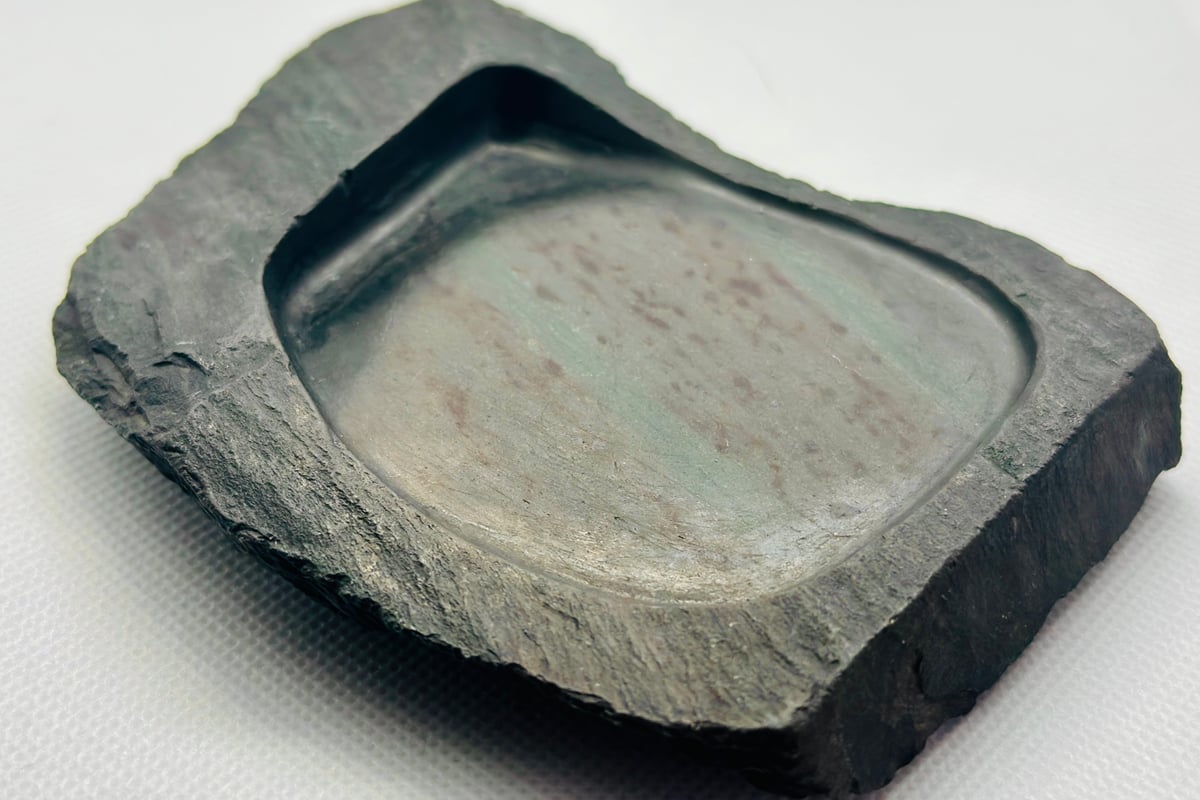
Akama inkstones (Akama suzuri) are inkstones made in Ube City and Shimonoseki City, Yamaguchi Prefecture. The name is said to come from Akamagaseki, the old name for Shimonoseki. The raw material is a reddish-purple stone called Akama stone; it contains a great deal of quartz and iron and is dense and tenacious, which makes it suitable even for fine carving. The surface of the inkstone is densely covered with minute, almost invisible points called hobo (the microscopic grinding points on the stone surface). As a result, ink can be ground quickly, producing ink with good color that spreads well. An inkstone dedicated to Tsurugaoka Hachimangu Shrine at the beginning of the Kamakura period is said to be an Akama inkstone, and the craft is said to have a history of more than 800 years. In the Edo period, it was a renowned product of the Choshu Domain and was also used as a gift. In 1976 (Showa 51), it was designated a Traditional Craft by the Minister of Economy, Trade and Industry. Today, the raw stone is quarried in the Iwataki district of Magura, Ube City, by the craftsmen themselves, who dig tunnels to extract it. Only a handful of craftsmen are said to work all the way from quarrying, making this a precious form of handwork.

Ouchi-nuri (Ouchi lacquerware)
Ouchi-nuri (Ouchi Lacquerware)
Ouchi-nuri (Ouchi lacquerware) is lacquerware made mainly in Yamaguchi City, Yamaguchi Prefecture. Over a base coat of deep vermilion known as 'Ouchi-shu' (Ouchi vermilion), autumn grasses such as bush clover (hagi) and Japanese pampas grass (susuki) are painted in colored lacquer. A further characteristic is the Ouchi-bishi (the Ouchi diamond crest), the family crest of the Ouchi clan, rendered in gold leaf within cloud shapes. The Ouchi clan, which was based in Yamaguchi in the Muromachi period, treated lacquerware as an important item in its trade with the Korean Peninsula and elsewhere. In the Edo period, too, bowls and trays continued to be made in Ushirogawara in Yamaguchi. In the Meiji era, lacquerware production flourished using as a model a Muromachi-period bowl discovered by the local historian Kondo Kiyoshi (近藤清石), and the craft has been handed down under the name 'Ouchi-nuri'. In April 1989 (Heisei 1), it was designated a Traditional Craft by the Minister of Economy, Trade and Industry. In addition to trays, bowls, chopsticks and inkstone boxes, a signature product is the Ouchi doll (Ouchi ningyo), a round husband-and-wife pair of hina dolls. In Yamaguchi City, visitors can try activities such as making accessories using Ouchi-nuri techniques.
Ouchi Dolls (Ouchi Ningyo)
Ouchi Ningyo (Ouchi Lacquered Dolls)
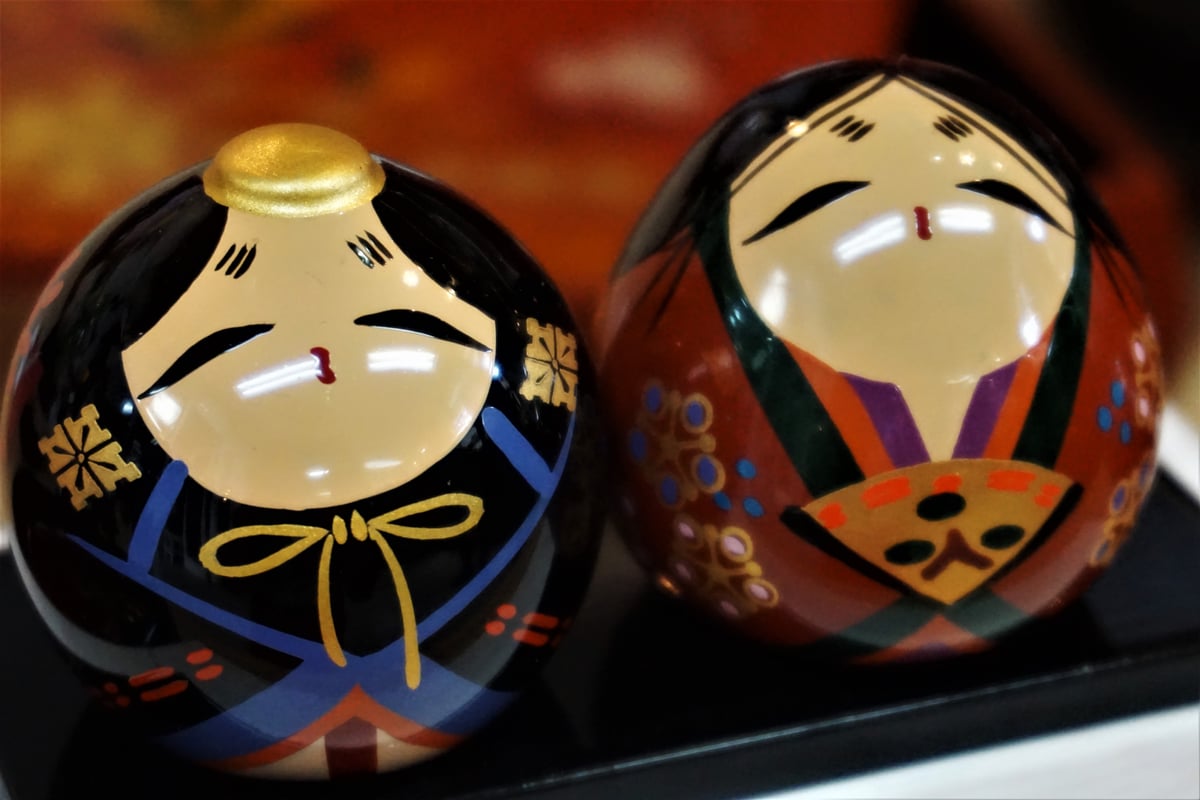
Ouchi dolls (Ouchi ningyo) are lacquered dolls made in Yamaguchi City, Yamaguchi Prefecture, and finished with the techniques of Ouchi-nuri (Ouchi lacquerware). They are a male-and-female pair of hina dolls made of round wood, coated with lacquer and finished with gold leaf and gold powder, and they are sold in paulownia boxes. They are characterized by a gentle expression: a round face, long narrow eyes and a small pursed mouth. The name comes from the Ouchi clan, which ruled Yamaguchi in the Muromachi period. According to legend, Ouchi Hiroyo summoned doll makers from the capital to comfort his wife, whom he had welcomed from Kyoto, and the dolls are cherished as a symbol of marital harmony. The present form of the Ouchi doll is said to be based on a design devised at Yamaguchi Prefecture's industrial testing station in the Taisho era. When Ouchi-nuri was designated a Traditional Craft by the Minister of Economy, Trade and Industry in 1989 (Heisei 1), the dolls were added to the designated items. They range from small pieces a few centimeters in diameter to large ones, and they are also displayed in place of hina dolls. At 長州苑 (Choshuen), near the five-storied pagoda of Ruriko-ji Temple, visitors can try painting Ouchi dolls.
Tokuji Washi (Tokuji Handmade Paper)
Tokuji Washi (Tokuji Handmade Paper)
Tokuji washi is handmade Japanese paper made in the Tokuji area of Yamaguchi City, Yamaguchi Prefecture, and is also called 'Tokuji tesuki washi' (Tokuji hand-made washi). It is made from kozo (paper mulberry), mitsumata and gampi, blended to suit the intended use. Because it is made from raw materials with few admixtures, it is strong and supple, with a simple, soft texture. According to legend, Shunjobo Chogen, who led the reconstruction of Todai-ji Temple, introduced the papermaking method at the beginning of the Kamakura period, and the craft is said to have a history of about 800 years. In the era of the Ouchi clan, high-quality paper was produced, and in the Edo period production reached its peak. With the spread of Western paper and the aging of craftsmen, only a few papermakers remain, but the technique is now a Yamaguchi City-designated Intangible Cultural Property. In addition to shoji paper and calligraphy paper, processed products such as letter paper and postcards are also made. Visitors can try papermaking at workshops in Tokuji and at the hands-on facility 重源の郷 (Chogen no Sato).
Yanai-jima (Yanai Striped Cotton)
Yanai-jima (Yanai Striped Cotton)
Yanai-jima is a striped cotton textile that has been woven in Yanai City, Yamaguchi Prefecture. It is a hand-woven cloth with vertical stripes made from cotton thread, with a soft texture and a simple warmth. In the Edo period, cotton weaving flourished in Yanai, which prospered as a merchant town on the Seto Inland Sea. Cotton whose quality was guaranteed by the Iwakuni Domain's inspection-seal system was called 'Yanai Momen' (Yanai cotton), and its name became known throughout Japan. The industry continued to thrive in the Meiji era, but declined with the spread of Western clothing and other factors, died out in the Taisho era, and Yanai-jima came to be called a 'phantom textile'. In the Heisei era, the repair of an old loom donated to the city prompted local volunteers to form the 柳井縞の会 (Yanai-jima no Kai, the Yanai-jima Association) and work to revive it. Today the association is based at やない西蔵 (Yanai Nishigura), a hands-on facility in the White Wall Townscape (Shirakabe no Machinami), and makes use of the stripes not only for kimono but also for bags and small accessories. At やない西蔵, visitors can try weaving a 10 cm square coaster on a loom.
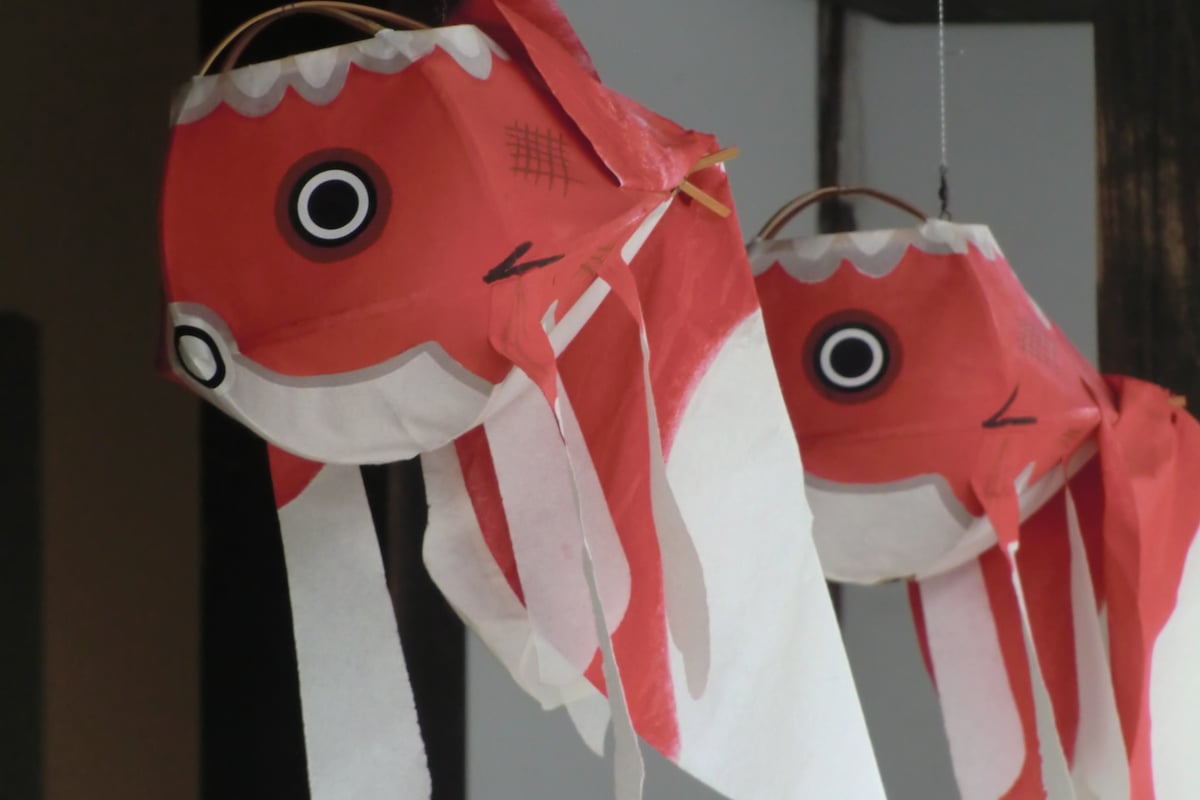
Kingyo Chochin (Goldfish Lantern)
Kingyo Chochin (Yanai Goldfish Lantern)
Kingyo Chochin is a folk craft handed down in Yanai City, Yamaguchi Prefecture: a paper lantern (chochin) in the shape of a goldfish. A frame is made from bamboo ribs and covered with washi paper, then patterns are painted on the body and eyes and fins are attached to finish an adorable goldfish. The vivid red uses the dye of Yanai-jima (Yanai striped cotton), a traditional textile of Yanai. As for its origin, legend has it that a Yanai merchant devised it at the end of the Edo period (Bakumatsu), taking a hint from the kingyo neputa (goldfish Neputa lanterns) of Aomori Prefecture. In the White Wall Townscape (Shirakabe no Machinami), the lanterns hang from the eaves of the houses and are cherished as a symbol of the town. Every year on August 13, the Yanai Kingyo Chochin Festival is held, and several thousand Kingyo Chochin decorate the street in front of the station and the White Wall Townscape. At night the lanterns are lit, and a giant goldfish Nebuta parades through the streets. At やない西蔵 (Yanai Nishigura), a hands-on facility in the White Wall Townscape, visitors can try making one, which takes about 30 minutes.
Hagi Glass
Hagi Glass (Basalt Glass of Hagi)
Hagi glass is a glass craft made at 萩ガラス工房 (Hagi Garasu Kobo) in Hagi City, Yamaguchi Prefecture. In Hagi at the end of the Edo period (Bakumatsu), 'Hagi Garasu' (萩硝子), created through repeated research by the chemist Nakajima Jihei, was produced, but it died out after only a few years. 萩ガラス工房, founded in 1992 (Heisei 4), studied the production method based on old documents and, adding modern techniques, revived it as Hagi glass. The raw material is quartz basalt mined on Mt. Kasayama in Hagi City. The studio carries out the entire process in-house, from crushing the rock to making the products. Its representative products are 'basalt glass', which is pale green from the iron contained in the rock, and 'Uchi-hibi Kannyu glass' (inner-crackle glass), in which cracks are sealed inside a three-layer glass. It is a hard potash glass that is said to resist scratches and not to turn cloudy white even after long use. At the studio, visitors can try free-blown glassblowing (chubuki), accessory making and engraving.
Mishima Oniyozu (Demon-Face Kite)
Mishima Oni-yozu (Mishima Demon Kite)
Mishima Oniyozu is a kite handed down on Mishima Island, which lies in the Sea of Japan about 45 km off the coast of Hagi City, Yamaguchi Prefecture. On Mishima Island, kites are called 'yozu', and kites with a large demon (oni) face painted on washi in three colors, red, blue and black, are called 'oniyozu'. The name is also written in various ways, such as 鬼揚子, 鬼ヨーズ and おにようず. On the island there is a custom in which, when a first-born son who will become the family heir is born, relatives and acquaintances gather at the end of the year to make a large kite, which is flown at New Year to pray for the child's healthy growth. Large ones can be as big as six to eight tatami mats. The fierce demon face carries the wish that the child will grow up strong, as well as the meaning of warding off evil. The paper tassels attached to the demon's eyes are called 'namida' (tears) and express the wish that the child will grow up never forgetting compassion for others. Small oniyozu are said to bring good luck when displayed at the entrance of a home, and they are also sold as souvenirs to wish for family safety and prosperous business. The 'National Kite Flying Festival in Mishima' (全国凧揚げ大会 in 見島) has been held on the island every October.
Yamaguchi's Local Food
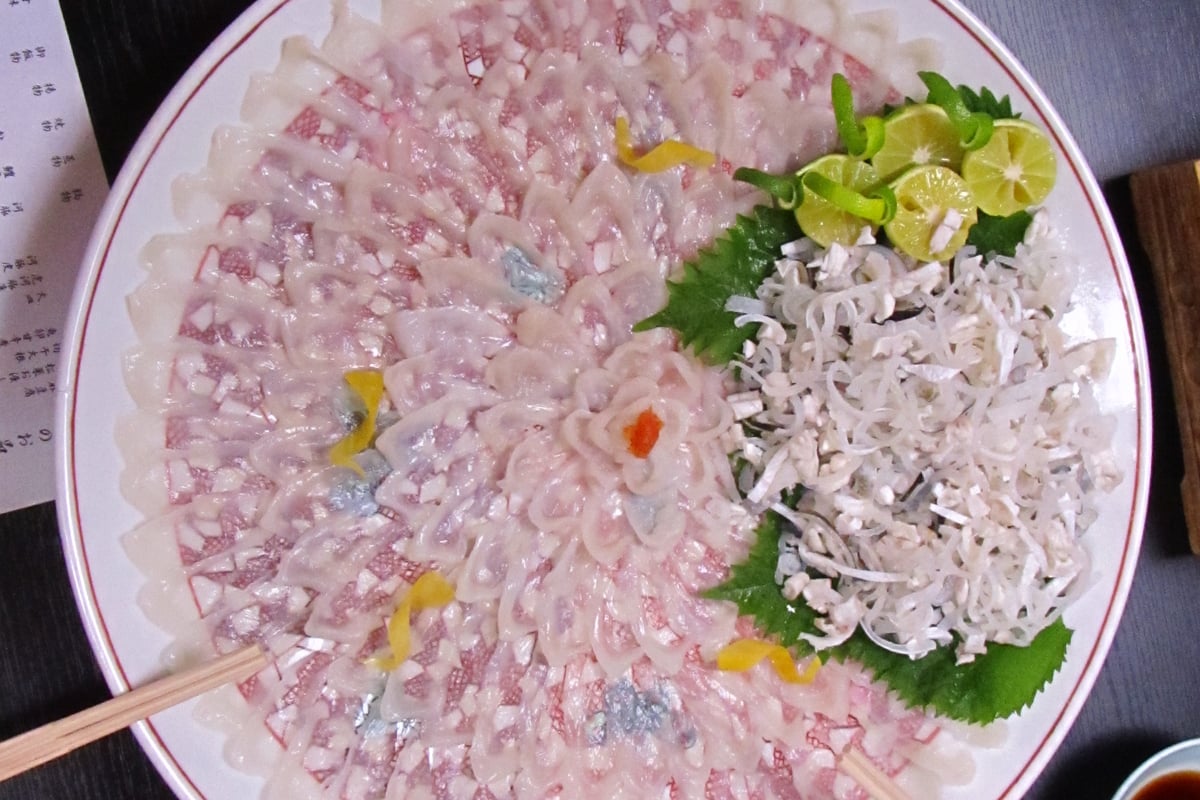
Fuku-sashi (Shimonoseki Thinly Sliced Pufferfish Sashimi)
Fuku-sashi (Shimonoseki Thinly Sliced Pufferfish Sashimi)
Fuku-sashi (pufferfish sashimi) is a signature dish of Shimonoseki City, Yamaguchi Prefecture, in which the flesh of tiger puffer (torafugu) is sliced so thin it is almost translucent and arranged on a large platter. In Shimonoseki, fugu (pufferfish) is called 'fuku,' without the voiced sound, and its sashimi is called 'fuku-sashi.' Because 'fuku' sounds like the word for good fortune (福), the name is also said to be auspicious. Yamaguchi Prefecture's official prefectural fish is the fugu, and Shimonoseki, with its long history of fugu cuisine and many processing plants and restaurants, is known as 'the home of fuku.' In 1888 (Meiji 21), at the urging of Ito Hirobumi, Yamaguchi Prefecture lifted its ban on eating fugu, and the Shimonoseki ryotei (traditional Japanese restaurant) 春帆楼 (Shunpanro) became the first restaurant officially licensed to serve fugu. Kiku-mori (chrysanthemum arrangement), in which the thin slices are laid out in a circle like flower petals, is a showcase of the chef's skill. It is eaten with ponzu accompanied by momiji-oroshi (grated daikon with red chili) and green onions. Because it is expensive, it is regarded as a special delicacy served at celebrations and other occasions. The fishing season for wild tiger puffer is limited to roughly September through March, and fuku-sashi is enjoyed as a taste of winter.
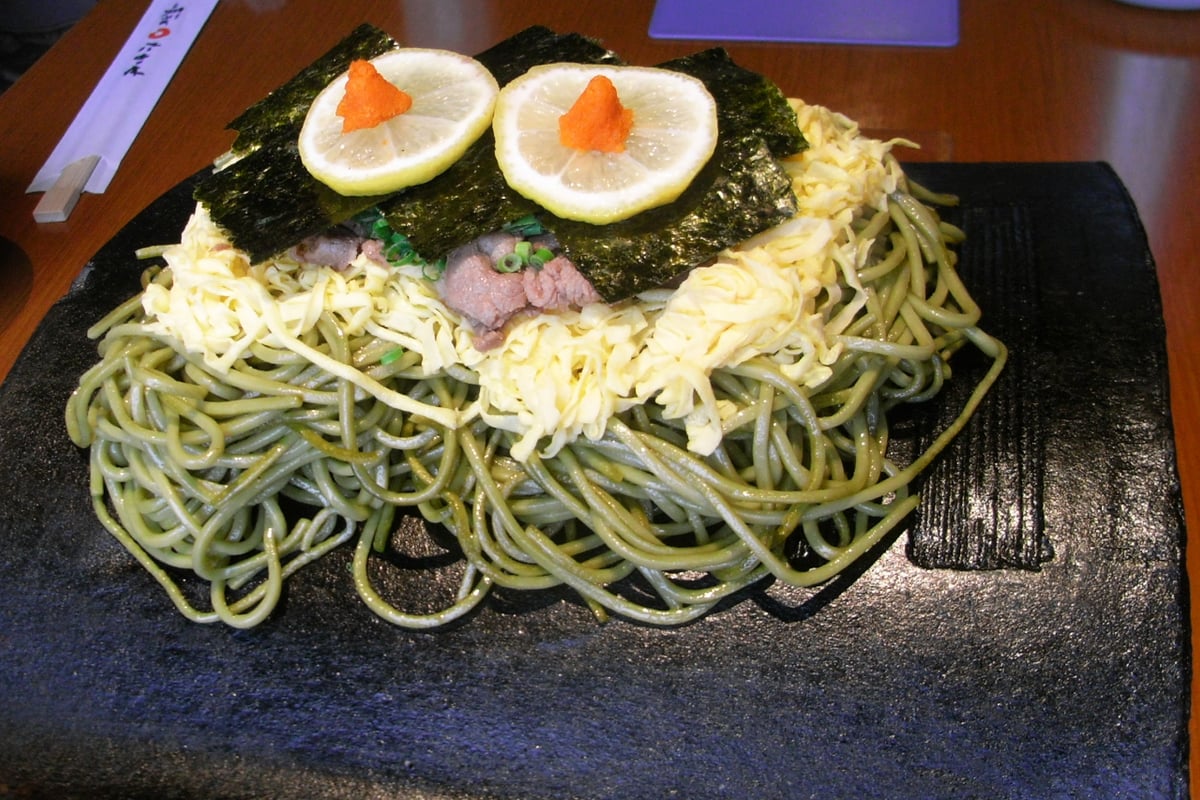
Kawara Soba (Green Tea Soba Served on a Hot Roof Tile)
Kawara Soba (Green Tea Soba Served on a Hot Roof Tile)
Kawara Soba (soba served on a hot roof tile) is a dish in which green tea soba (cha-soba) is placed on a heated roof tile (kawara), colorfully topped with beef, kinshi tamago (thin strips of egg crepe) and more, and eaten by dipping it in warm mentsuyu (noodle dipping sauce). Kawatana Onsen in Toyoura Town, Shimonoseki City, Yamaguchi Prefecture, is regarded as its birthplace. Around 1961 (Showa 36), 高瀬慎一, who ran a ryokan (Japanese inn) at the hot spring, created it as a dish that would become a specialty of Kawatana Onsen. It is said to have been inspired by an elder's story that, during the Satsuma Rebellion (Seinan War), soldiers of the Satsuma army besieging Kumamoto Castle grilled wild plants and meat on roof tiles and ate them. The cha-soba that touches the tile becomes crisp and toasty, and diners can also enjoy the contrast with the softer noodles on top. Today it has spread across Yamaguchi Prefecture as a local specialty dish. At home it is easily made on a hot plate or in a frying pan, and it is sometimes served in school lunches at elementary and junior high schools in the prefecture.
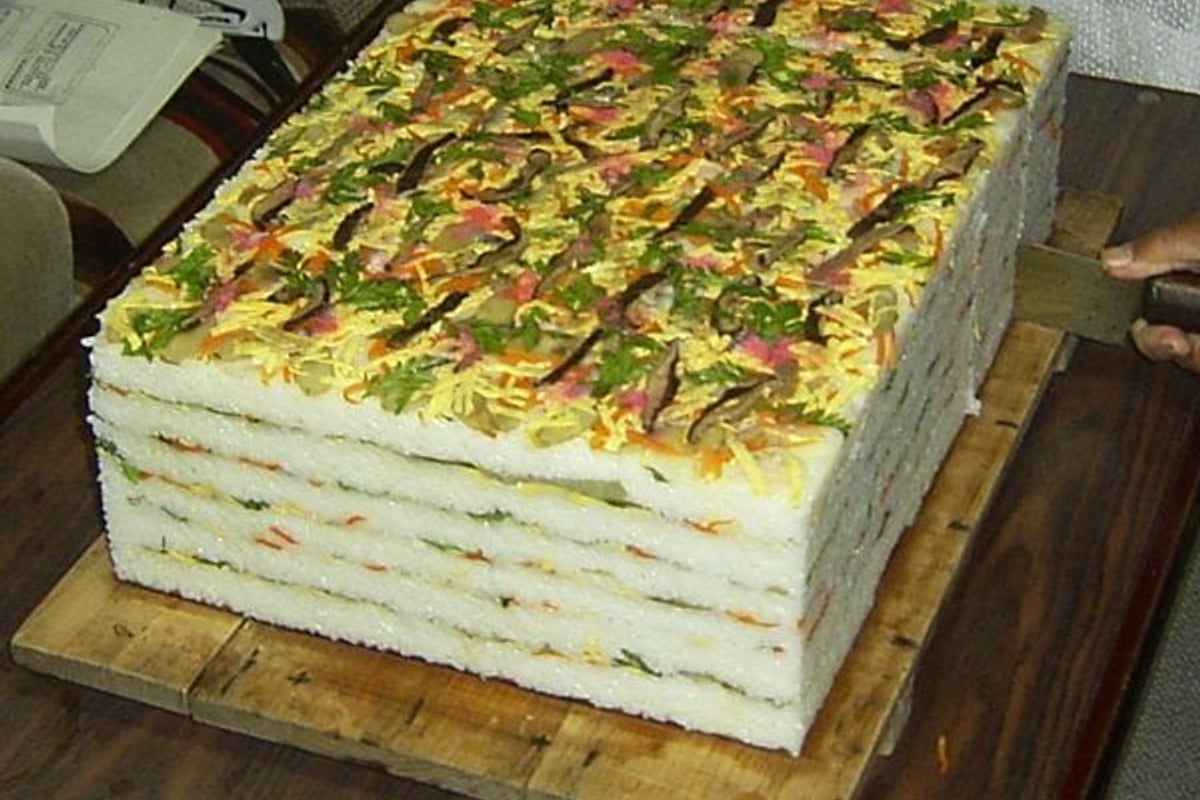
Iwakuni-zushi (Layered Pressed Sushi of Iwakuni)
Iwakuni-zushi (Layered Pressed Sushi of Iwakuni)
Iwakuni-zushi is a pressed sushi handed down in Iwakuni City, Yamaguchi Prefecture. Sushi rice and toppings are layered alternately many times in a large wooden frame and pressed from above. Toppings include vinegar-pickled Iwakuni lotus root, a local specialty, as well as kinshi tamago (thin strips of egg crepe), shiitake mushrooms and denbu (sweet fish flakes), and chisha (a leafy vegetable similar to red leaf lettuce) is placed between the layers. Its hallmark is a gorgeous appearance, with colorful layers revealed in the cross-section when it is cut. It is said to be a dish associated with the Kikkawa family, who ruled Iwakuni, and because it was presented to the domain lord, it is also called 'Tonosama-zushi' (lord's sushi). It has been made for festivals and celebrations, and sometimes 4 to 5 sho (a traditional Japanese unit of volume) of rice is cooked at once to make a large quantity. In fiscal 2021, it was recognized as the Agency for Cultural Affairs' '100-Year Food' (in the Traditional 100-Year Food category). Today it can be enjoyed at eateries and ryokan (Japanese inns) around Kintai Bridge (Kintaikyo), and it is also sold for takeout.
Kencho (Stir-Simmered Tofu and Daikon)
Kencho (Stir-Simmered Tofu and Daikon)
Kencho is a home-style dish of Yamaguchi Prefecture in which tofu, daikon radish and carrots are stir-fried in oil and then simmered in a sweet and savory sauce of soy sauce and sugar. It is made throughout the prefecture and enjoyed as an everyday side dish. Depending on the household or area, aburaage (fried tofu), konnyaku, chicken, dried shiitake mushrooms, taro and other ingredients are added. Its sweet and savory seasoning goes well with rice, and because it tastes better the more the flavor soaks in, people are said to have once made a large batch at a time and eaten it while reheating it. The 1989 publication 'Nihon no Shokuseikatsu Zenshu 35: Kikigaki Yamaguchi no Shokuji' (Collected Records of Japanese Dietary Life 35: Oral Accounts of Yamaguchi Food) describes it as 'a winter feast made by the potful.' There are two theories about the origin of the name: one connects it with 'kenchen' of Nagasaki, and the other with Kencho-ji Temple in Kamakura. Kencho also appears on school lunch menus, and it is sometimes made into a soup called 'kencho-jiru' (kencho soup).
Chagayu (Yamaguchi Tea Rice Porridge)
Chagayu (Yamaguchi Tea Rice Porridge)
Chagayu (tea rice porridge) is a local dish found mainly in eastern Yamaguchi Prefecture, in which rice is cooked in tea brewed from bancha (coarse green tea) or similar. The Ministry of Agriculture, Forestry and Fisheries' 'Uchi no Kyodo Ryori' (Our Local Cuisine) lists the Yanai, Suo-Oshima, Iwakuni and Hagi districts as the main areas where it has been handed down. Roasted bancha is put in a cloth tea bag (chabukuro) and boiled, and once the tea has turned a deep color, the bag is removed and unwashed rice is added and cooked. It has a light, smooth texture and is said to be often eaten hot in winter and chilled in summer. In Yamaguchi Prefecture, it is said that in the early 17th century the Kikkawa clan, lords of the Iwakuni Domain, encouraged it to save rice, and it spread throughout the prefecture. In Suo-Oshima and Yanai, where sweet potato cultivation thrived, the faintly sweet 'imogayu' (sweet potato porridge), made with sweet potatoes, has also long been popular. While it is spoken of as a rice-saving dish, there is also a view that sees it as 'furyu-shoku' (a food of refined taste), since each household has its own secrets for cooking it. Because it is easy to digest, it continues to be eaten today as a healthy food.
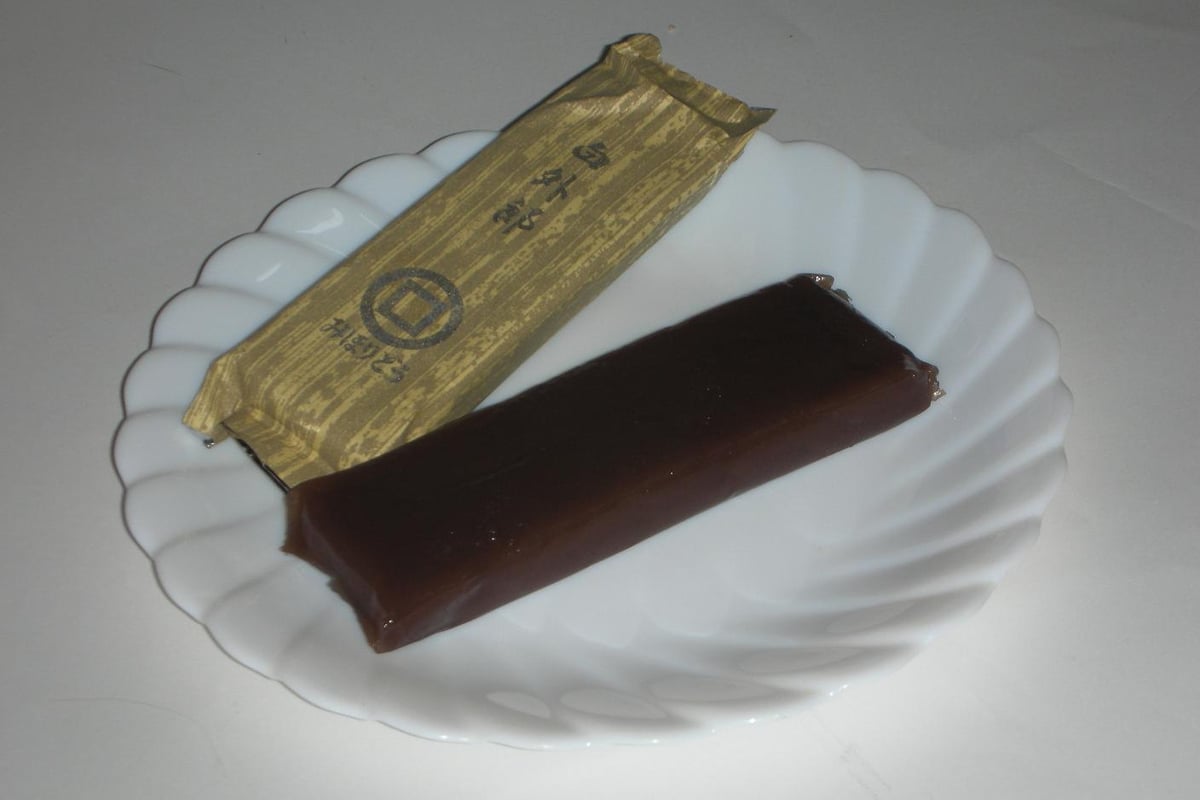
Yamaguchi Uiro (Bracken Starch and Sweet Bean Cake)
Yamaguchi Uiro (Bracken Starch and Sweet Bean Cake)
Yamaguchi Uiro is a steamed confection made mainly in Yamaguchi City. 'Warabi-ko' (warabi, or bracken, starch), extracted from the roots of bracken, is kneaded together with sweet azuki bean paste, wheat flour and sugar, then steamed. Compared with the uiro of Nagoya and other places, which is made with rice flour, it has a bouncy, jiggly springiness and melts smoothly in the mouth, with a texture close to warabi-mochi. The Ministry of Agriculture, Forestry and Fisheries' 'Uchi no Kyodo Ryori' (Our Local Cuisine) introduces its smoothness, which locals describe as 'ottori' (gentle and mellow). Its origins are said to date back to the Muromachi period, and it has been handed down in the town of Yamaguchi, which was called the 'Kyoto of the West' under the Ouchi clan. The taste of the uiro shop 福田屋 (Fukudaya), which operated in Ouchi Mihori from the Edo period, is said to have been passed on to present-day shops such as 御堀堂 (Mihorido) and 豆子郎 (Toshiro). Besides being served with tea, it is popular as a souvenir, a gift and a return gift for guests (hikidemono), and it can also be bought at shops in the prefecture's shinkansen stations.
Natsumikan Gashi (Candied Natsumikan Peel)
Natsumikan Gashi (Candied Natsumikan Peel)
Natsumikan Gashi is a local confection made mainly in Hagi City by simmering the peel of natsumikan (summer orange) in sugar. The thick peel is cut into thin strips and boiled, with the cooking water discarded, to soften its bitterness; sugar is then added in several batches, and the peel is simmered until the white part becomes translucent. Finally, it is coated with granulated sugar and dried, producing a confection that combines gentle bitterness with sweetness. The natsumikan is a citrus fruit that originated in Ohibi (大日比) in Senzaki, Nagato City, and in the Meiji era its cultivation spread in Hagi to help former samurai families (shizoku) who had lost their stipends. According to the Ministry of Agriculture, Forestry and Fisheries' 'Uchi no Kyodo Ryori' (Our Local Cuisine), it was a precious snack in times when sweets were scarce, and it is still made at home in Hagi today. Besides the sugar-simmered peel, Hagi confectioners also make 'Natsumikan Maruzuke,' in which the peel is filled with white yokan (sweet bean jelly), and these are popular as Hagi souvenirs.
Kujira no Tatsutaage (Deep-Fried Marinated Whale Meat)
Kujira no Tatsutaage (Deep-Fried Marinated Whale Meat)
Kujira no Tatsutaage is a dish of lean red whale meat seasoned with soy sauce and ginger, coated with katakuriko (potato starch) and deep-fried. In Yamaguchi Prefecture, it has long been enjoyed at home, in restaurants and in school lunches, especially in areas with deep ties to whales such as Shimonoseki and Nagato. On the San'in side in the north of the prefecture, there has long been a custom of eating whale at Setsubun to pray for good health and freedom from illness. Whaling flourished along the Nagato coast in the Edo period, and Shimonoseki prospered as a relay point sending the whale meat and whale oil to various regions. From the Meiji era onward, Shimonoseki also became a base for modern whaling, and in the postwar years of food shortage, whale meat supported people as a valuable source of protein. Tatsutaage spread in this era as a staple of school lunch menus, and even today, school lunches using whale are served at schools in Shimonoseki City about six times a year. Shimonoseki is said to rank first in Japan in the number of restaurants serving whale dishes and in the volume of whale meat landed and distributed, and tatsutaage can be enjoyed at restaurants in the city.
Uni Meshi (Sea Urchin Rice)
Uni Meshi (Sea Urchin Rice)
Uni Meshi is a local dish of Hagi City, Yamaguchi Prefecture, in which raw sea urchin (uni) is cooked together with rice. The Hagi coast, facing the Sea of Japan, is rich in the seaweed that sea urchins feed on, and purple sea urchins (murasaki uni) and bafun sea urchins are landed there, as well as red sea urchins (aka uni) from early spring through summer. Because sea urchin is expensive, it rarely appeared on everyday tables and has been served when entertaining important guests. Unlike 'uni-don,' in which raw sea urchin is placed on top of rice, cooking the sea urchin with the rice spreads the aroma of the sea through all of the rice. The Ministry of Agriculture, Forestry and Fisheries' 'Uchi no Kyodo Ryori' (Our Local Cuisine) introduces it as a dish of the Hagi area, centered on Mishima Island off the coast of Hagi. On Mishima Island, it is made at home and also served at inns on the island. In addition, Shimonoseki City in the west of the prefecture is said to be the birthplace of bottled sea urchin, in which alcohol-cured sea urchin (tsubu-uni) is packed in jars, and processed sea urchin products are also known as specialties of Yamaguchi Prefecture.
Ohira (Iwakuni Chicken and Root Vegetable Stew)
Ohira (Iwakuni Chicken and Root Vegetable Stew)
Ohira is a local dish of the Iwakuni area of Yamaguchi Prefecture, in which chicken and root vegetables such as satoimo (taro) and lotus root are simmered in plenty of broth. A large, flat lacquered bowl with a lid is called an 'ohira,' and the dish takes its name from being served in one. It is served at gatherings of many people, such as weddings, funerals and other ceremonial occasions, and the bowl used then is said to sometimes reach about 50 cm in diameter. The ingredients vary, including chicken, taro, lotus root, shiitake mushrooms, burdock root, konnyaku and koya-dofu (freeze-dried tofu), and the local specialty Iwakuni lotus root is indispensable. Although it is a simmered dish, it has plenty of lightly seasoned broth, so it is often eaten together with the broth. In the Iwakuni area, it is regarded as a celebratory dish alongside 'Iwakuni-zushi,' a lavish pressed sushi. Today it is made at home and also served at restaurants, and it sometimes appears in school lunches.
Model Course
Hagi Castle Town course: try Hagi-yaki and Hagi glass, and enjoy natsumikan sweets
At 萩焼会館 in Chinto, Hagi City, you can try painting a teacup (from about 2,200 yen) or hand-building pottery (about 3,300 yen), and choose anything from tea utensils to everyday tableware in its large shop. 吉賀大眉記念館, open on Fridays, weekends and national holidays, also offers pottery-making experiences. In the afternoon, head to 萩ガラス工房 in Koshigahama. Pale green glassware made from quartz basalt from Mt. Kasayama is on display, and you can also try free-blown glassblowing under a craftsperson's guidance (about 5,000 yen; reservations by phone only). On the way back, stop at 光國本店 in Kumagaya-cho for Natsumikan Maruzuke, natsumikan peel filled with white yokan, and Hagi no Kaori, peel simmered in syrup.
Yamaguchi City course: discover Ouchi-nuri and Ouchi dolls, taste uiro, and try papermaking in Tokuji
At 長州苑 next to the Five-Storied Pagoda of Ruriko-ji Temple, you can paint an Ouchi doll (about 1,100 yen for the lord or the princess) or fold-dye Tokuji washi (about 880 yen) (reservations required). At the nearby 山口ふるさと伝承総合センター, you can make Ouchi-nuri chopsticks (about 2,000 yen; reserve by the day before). At 桑原大内塗大内人形製作所 in the Dojomonzen shopping arcade, you can watch the decoration process of Ouchi-nuri. In front of Yamaguchi Station, 御堀堂本店 and 本多屋本店 sell Yamaguchi Uiro, a wobbly sweet made with warabi starch. If you have time, drive to Tokuji and try making washi at the papermaking workshop of 重源の郷 (from about 700 yen, plus a separate admission fee).
Shimonoseki course: savor fuku-sashi and whale dishes, then eat the original Kawara Soba at Kawatana Onsen
At 唐戸市場, facing the Kanmon Straits, 'Ikiiki Bakangai' is held on Fridays, weekends and national holidays, where you can buy pufferfish nigiri and other sushi from a single piece. Nearby, 春帆楼 下関本店 is the ryotei that became the first restaurant officially licensed to serve fugu, and its fugu kaiseki courses start at 8,800 yen (tax included, service charge extra). In the evening, enjoy whale tatsuta-age and whale sashimi at 下関鯨屋 日新丸 in Nakanocho (closed on Sundays). For souvenirs, alcohol-cured sea urchin such as 'Akama Uni' from うに甚本舗 in Saiwaicho, Shimonoseki, is recommended. The next day, head to Kawatana Onsen in Toyoura-cho. At 元祖瓦そば たかせ 川棚本館, you can enjoy the original Kawara Soba (1,485 yen per serving).
Make Yanai-jima and Kingyo Chochin in Yanai's White Wall Townscape, then taste Iwakuni-zushi and Ohira at Kintai Bridge
At やない西蔵 in the White Wall Townscape of Yanai City, you can weave a Yanai-jima coaster on a loom (about 500 yen, about 30 minutes) or make a Kingyo Chochin (about 900 yen for a small one). At the nearby 佐川醤油店, you can choose from goldfish lanterns in various colors and patterns. Yanai and its surroundings are also an area where chagayu, rice cooked in bancha tea, has been handed down. In the afternoon, move to Iwakuni and head to the foot of Kintai Bridge. At 平清 (Hirasei), you can enjoy local dishes such as Iwakuni-zushi made with Iwakuni lotus root, and at 半月庵, a lunch set that lets you taste both Iwakuni-zushi and Ohira, a dish of chicken and root vegetables simmered together. At 岩国国際観光ホテル, you can also make Iwakuni-zushi in a mini wooden frame (2,200 yen; reservations required).
Island trip to Mishima off Hagi to discover Oniyozu kites and Uni Meshi
Take the high-speed boat operated by 萩海運 from Hagi Commercial Port and cross to Mishima Island in the Sea of Japan in about 1 hour 10 minutes. On Mishima, the custom of flying the 'Oniyozu', a giant kite as large as six to eight tatami mats, at New Year to celebrate the birth of an eldest son is still handed down. At 赤崎旅館, about a five-minute walk from the Honmura ferry landing, Mishima's specialty uni meshi, rice cooked with sea urchin caught off the Hagi coast, is served as one of the dishes (meals are for staying guests; about 9,000 to 16,000 yen per night with two meals). If you cannot visit the island, you can assemble an Oniyozu at home with the Oniyozu kit (about 2,750 yen) sold at the online store of 道の駅萩往還.
Events
Shimonoseki Fuku Memorial Festival
Every year on April 29 / 南風泊市場, Hikoshima, Shimonoseki City
View details →Yanai Kingyo Chochin Festival
Every year on August 13 / Around JR Yanai Station, Retoro-dori and the White Wall Townscape, Yanai City