 Image: Wikimedia Commons
Wakayama Prefecture
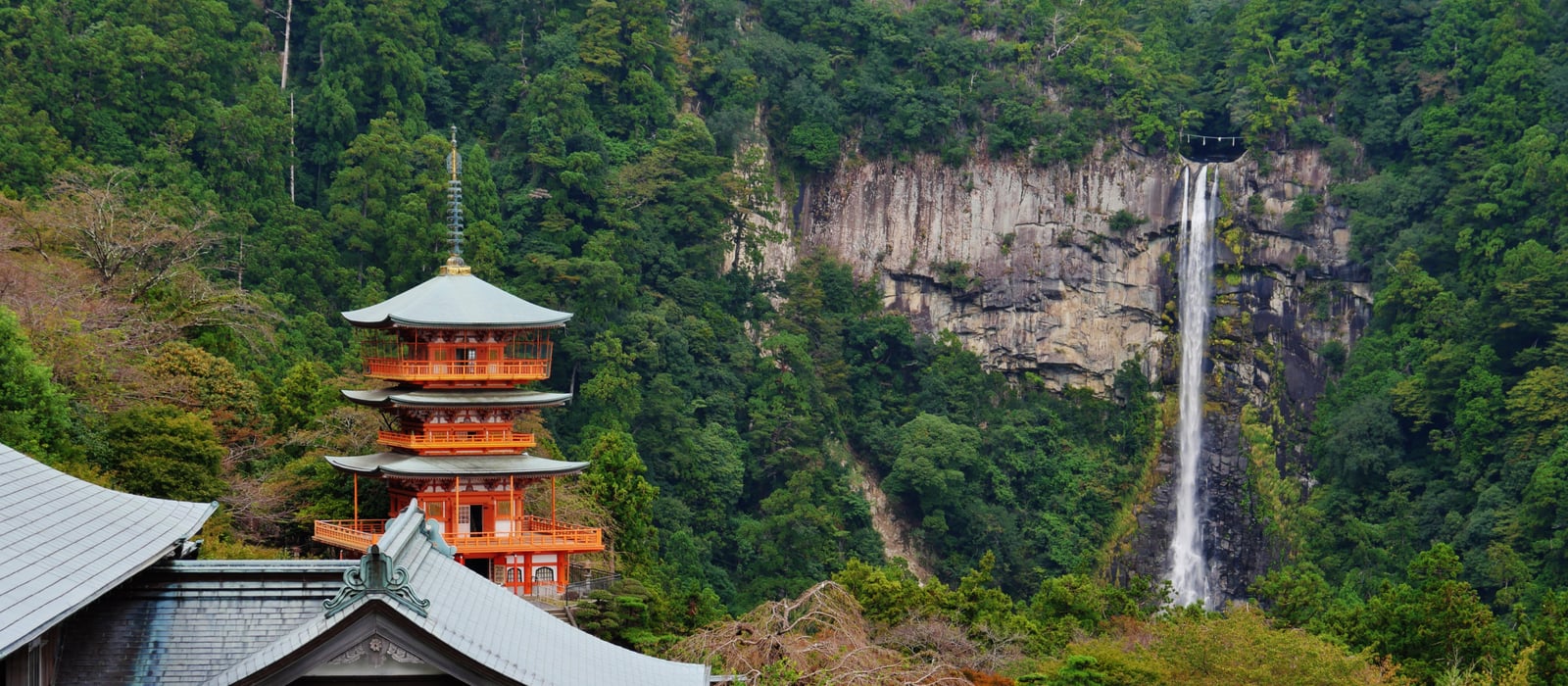
Wakayama Prefecture occupies the western and southern parts of the Kii Peninsula. Blessed with sacred sites such as Mount Koya (Koyasan) and the Three Grand Shrines of Kumano, and with a long coastline washed by the Kuroshio Current, it has nurtured crafts and food cultures of both the mountains and the sea. Its Traditional Crafts designated by the Minister of Economy, Trade and Industry are three items: Kishu Shikki (Kishu Lacquerware), Kishu Tansu (Kishu Paulownia Chests) and Kishu Herazao (Kishu Bamboo Fishing Rods). Kishu Shikki from Kuroe in Kainan City is said to carry on the tradition of Negoro Nuri from Negoro-ji, and is known as a production area of lacquerware for everyday use. Wakayama Prefecture Governor-Designated Local Traditional Crafts include Nachiguro Suzuri inkstones, Yasudagami paper, hemp palm brooms, Negoro-ji Negoro Nuri and Kishu Koya Kumiko woodwork. In food, umeboshi made from Nanko ume grown in Minabe and Tanabe are known throughout Japan. Yuasa is said to be the birthplace of soy sauce brewing, and is also a production area of Kinzanji miso. Wakayama City's chuka soba (Wakayama Ramen), Kumano's mehari-zushi and Kishu's narezushi are also local specialties. Each area has its own flavors as well, such as Katsuura Fishing Port with its large landings of fresh tuna, Hidaka with its kue dishes, and Mount Koya with its sesame tofu.
Wakayama's Traditional Crafts
Kishu Shikki (Kishu Lacquerware)
Kishu Shikki (Kishu Lacquerware)
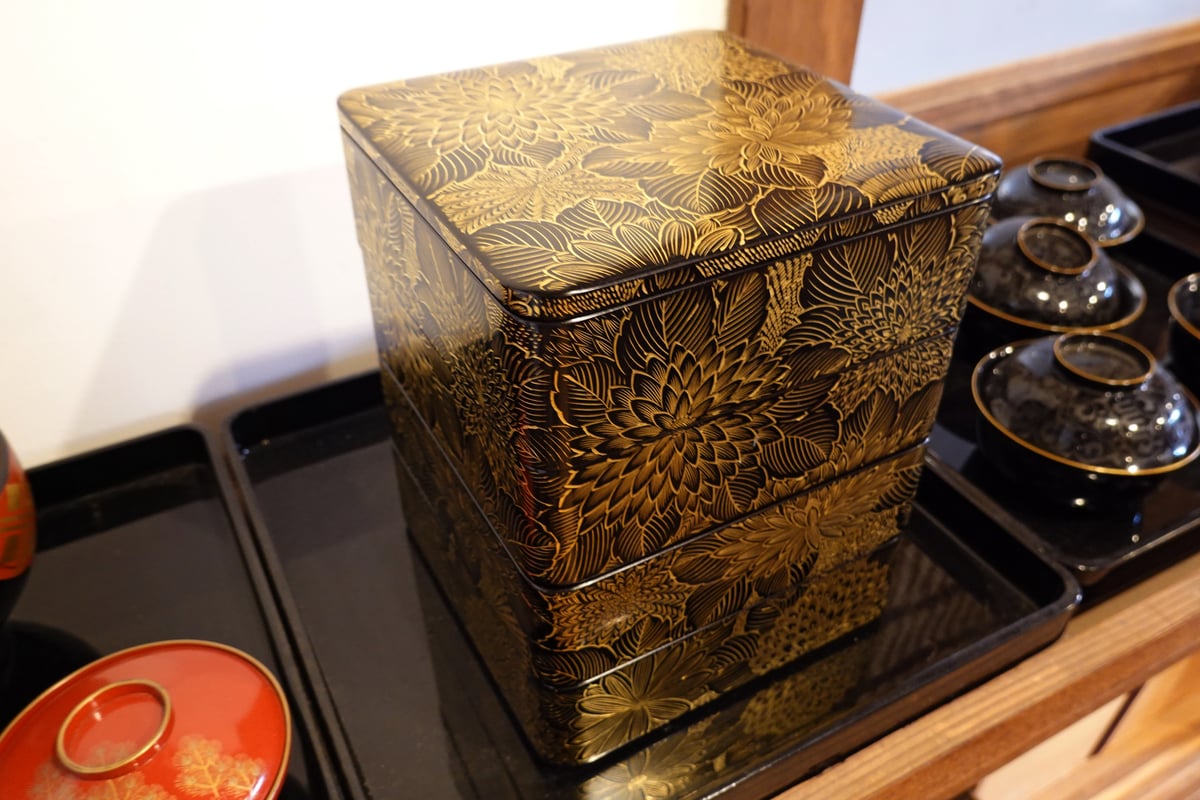
Kishu Shikki is lacquerware made mainly in the Kuroe district of Kainan City, Wakayama Prefecture, and also in Wakayama City and Kimino Town. Because Kuroe was the center of production, it is also called 'Kuroe-nuri'. Its origins are said to date back to the Muromachi period, beginning when kijishi (wood-turners) of the Omi lineage made bowls from Kishu wood. Another theory holds that craftspeople who had made Negoro Nuri at Negoro-ji in Iwade City moved to Kuroe after Toyotomi Hideyoshi's attack on Negoro in 1585. In the Edo period, under the protection of the Kishu Domain, it developed as a production area for everyday bowls and trays through a division of labor in which craftspeople shared the work of wood bases, coating and decoration. From the Meiji era onward it adopted chinkin and maki-e techniques, and after the war it was quick to take up plastic bases and synthetic coatings. It is one of Japan's leading lacquerware production areas, alongside Aizu and Yamanaka, and in 1978 (Showa 53) it was designated a Traditional Craft by the Minister of Economy, Trade and Industry.
Negoro Nuri (Negoro Lacquerware)
Negoro Nuri (Negoro Lacquerware)
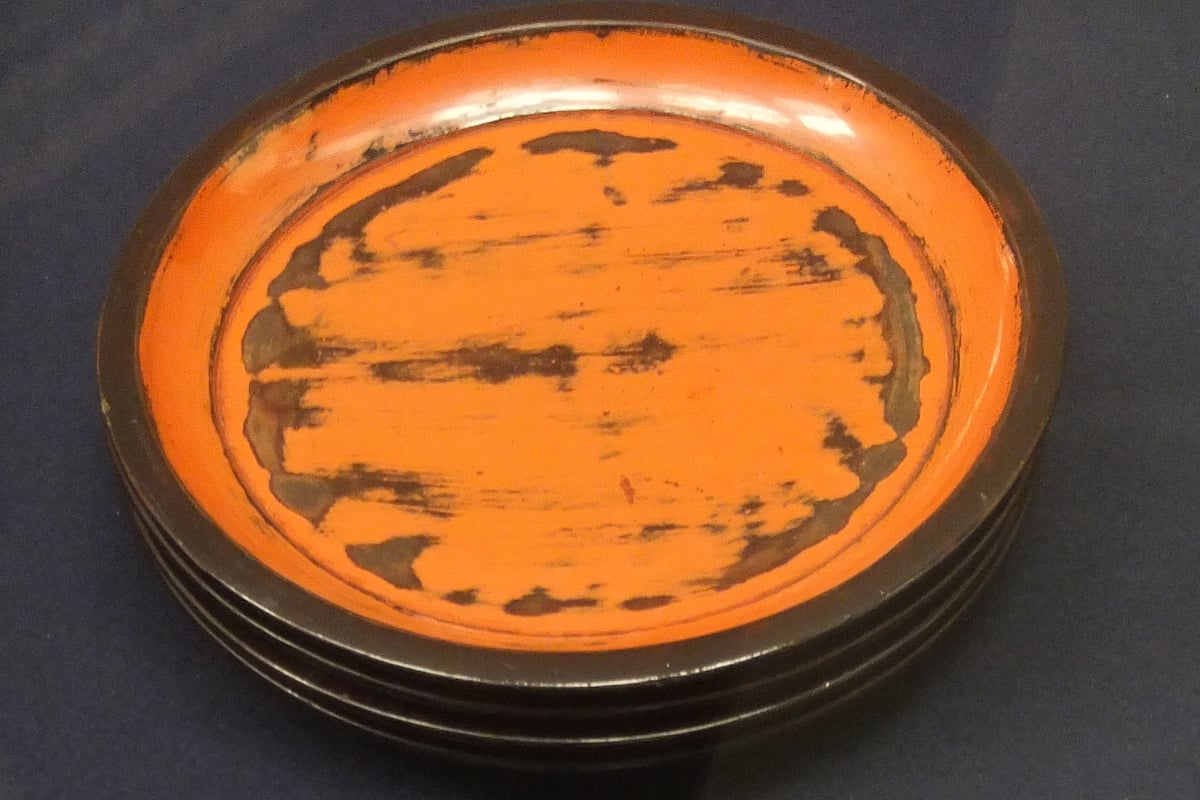
Negoro Nuri is vermilion lacquerware associated with Negoro-ji temple in Iwade City, Wakayama Prefecture. It is finished by applying vermilion urushi lacquer over an undercoat of black lacquer. Its appeal lies in the way the vermilion surface wears away with long use, revealing the black beneath here and there to form a distinctive pattern. It is said to have begun when monks at medieval Negoro-ji made the tableware, furnishings and Buddhist implements used at the temple. In 1585 (Tensho 13), most of the temple was burned in Toyotomi Hideyoshi's attack on Negoro, and lacquerware making at Negoro came to an end. The craftspeople are said to have moved to various places and passed on the techniques, and 'Negoro' also became a name for high-quality, durable vermilion lacquerware. Locally, in 1993 the then Iwade Town held training courses for craftspeople as a revival project, and the skills are being handed down once again. In 2007 (Heisei 19), it became a Wakayama Prefecture Governor-Designated Local Traditional Craft under the name 'Negoro-ji Negoro Nuri'.

Kishu Tansu (Kishu Paulownia Chests)
Kishu Tansu (Kishu Paulownia Chests)
Kishu Tansu are paulownia chests (kiri-tansu) made mainly in Wakayama City. They use paulownia wood, which is white, light and soft. Paulownia absorbs moisture in humid seasons and releases it when dry, which makes it easy to keep the humidity inside the chest constant, and so these chests have long been prized for storing kimono and other precious items. They are assembled so precisely that there is no gap between the body and the drawers, and they are so airtight that pushing in one drawer forces another drawer out with the air inside. The oldest records date from the end of the Edo period; documents record that household furnishings for the Tokugawa family were made when Wakayama Castle was rebuilt. In the Meiji era the area developed as a production area supporting demand in the Osaka region, and production grew further when the opening of the Nankai Railway made transport more convenient. Craftspeople proceed by hand through about 15 steps, from preparing the timber to finishing. In 1987 (Showa 62), Kishu Tansu were designated a Traditional Craft by the Minister of Economy, Trade and Industry.
Kishu Herazao (Kishu Bamboo Fishing Rods)
Kishu Herazao (Kishu Bamboo Fishing Rods)
Kishu Herazao are bamboo fishing rods for herabuna (crucian carp) fishing, made in Hashimoto City and Kudoyama Town, Wakayama Prefecture. Herabuna is a freshwater fish that is highly popular as a target for anglers, and Kishu Herazao developed as tools for this style of fishing. Three kinds of natural bamboo, madake, koyadake and yadake, are used for different parts and joined together to make a single rod. Broken down in detail, there are as many as about 130 steps, and a craftsperson called a rod maker (saoshi) carries out almost all of them alone, by hand. It takes about six months to a year to complete one rod. The craft carries on a lineage of rod making that began in Osaka in the Meiji era, and the production area was born when a rod maker moved their base to Hashimoto in the early Showa period. With a history of more than 130 years, it is said to account for about 90% of the country's bamboo herabuna rods. In 2013 (Heisei 25), Kishu Herazao were designated a Traditional Craft by the Minister of Economy, Trade and Industry.
Yasudagami (Kishu Handmade Washi)
Yasudagami (Kishu Handmade Washi)
Yasudagami is a handmade washi (Japanese paper) made in the Shimizu district of Aridagawa Town, Wakayama Prefecture. It is made from the bark of kozo (paper mulberry) and is characterized by its white, strong paper that resists tearing. After the former Kishu Domain, it is also called 'Kishu handmade washi'. It is said to have begun in the early Edo period, when Tokugawa Yorinobu, lord of the Kishu Domain, ordered papermaking within the domain and the village head Kasamatsu Satayu established papermaking. The techniques are said to have been learned from Yoshino in Nara, and at its peak there were reportedly about 400 households making paper for umbrellas, folding fans and documents. In the 1900s, demand fell with the spread of mass-produced paper and Western-style umbrellas, and the great flood of 1953 damaged many papermaking workshops. In 1979, the remaining craftspeople set out to pass on the techniques, and today papermaking is carried on at '体験交流工房わらし'. In 1988 (Showa 63), it became a Wakayama Prefecture Governor-Designated Local Traditional Craft.
Nachiguro Suzuri (Nachiguro Inkstone)
Nachiguro Suzuri (Nachiguro Inkstone)
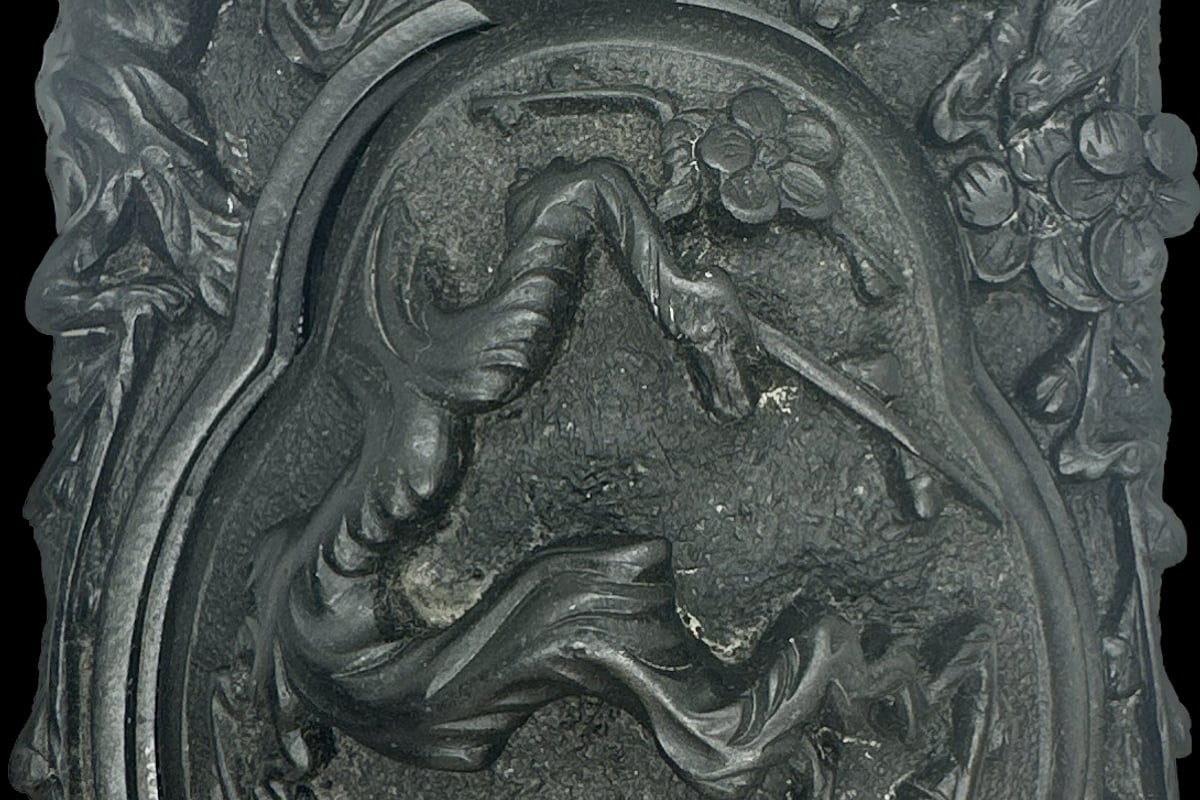
Nachiguro Suzuri are inkstones made in Nachikatsuura, Wakayama Prefecture. Their material, Nachiguro stone, is a black, dense stone that takes on a wet-looking luster when polished. Travelers on the Kumano pilgrimage (Kumano-mode) are said to have taken this stone home as proof of their visit. With the addition of human skill, the stone was reborn as an inkstone. Its moderate hardness and fine-grained texture are said to make the ink blend well, and it has been highly valued by calligraphers since the Edo period. In the early Meiji period, shops selling inkstones are said to have lined the approach leading to Kumano Nachi Taisha and Nachisan Seiganto-ji. Today, 山口光峯堂, located midway along the approach, is the only one carrying on the techniques of hand-carved Nachiguro Suzuri. Production begins with selecting the stone and proceeds through rough carving with chisels, polishing with whetstones, and finishing to a sheen. In 1990 (Heisei 2) Nachiguro Suzuri became a Wakayama Prefecture Governor-Designated Local Traditional Craft.
Shuro Hoki (Hemp Palm Broom)
Shuro Hoki (Hemp Palm Broom)
Shuro Hoki are Japanese brooms made in Kimino, Wakayama Prefecture, with heads made from the fibers of the bark of the hemp palm (shuro) tree. The area around Kimino was once called Nokamidani and was known as Japan's leading production area for hemp palm bark and hemp palm products. Hemp palm fibers are fine, supple and springy, and are also resistant to water and slow to rot. Brooms made from them sweep softly and gather even fine dust well. It is also said that with continued use they give a sheen to tatami mats and wooden floors. Brooms are said to have been made in Nokamidani since at least the late Edo period. In 2004 (Heisei 16) Shuro Hoki became a Wakayama Prefecture Governor-Designated Local Traditional Craft. At the time of the designation, the only person carrying on the traditional techniques of this area was 桑添勇雄, who was later selected as a Wakayama Prefecture Meisho (Master Craftsperson). Today the techniques are carried on by 棕櫚箒製作舎, run by the apprentice 西尾香織.
Kishu Koya Kumiko Zaiku (Kishu Koya Wooden Latticework)
Kishu Koya Kumiko Zaiku (Kishu Koya Wooden Latticework)
Kishu Koya Kumiko Zaiku is a decorative woodworking technique handed down at the foot of Mount Koya (Koyasan), a World Heritage Site. Finely split pieces of wood are fitted together by hand without using any nails or the like, building up a variety of patterns as if weaving them. The main materials are the local 'Koya Rikuboku (six trees of Mount Koya)', which are strong, lustrous and easy to work. Koya Rikuboku refers to six kinds of trees: pine, fir (momi), hemlock (tsuga), Japanese cedar (sugi), Japanese cypress (hinoki) and Japanese umbrella pine (koyamaki). The craft is said to have developed in this area from techniques passed on in the Edo period by skilled kumiko craftspeople invited from Kyoto to restore the temples of Mount Koya. Geometric patterns are built up with 'mitsukude', in which three thin pieces of wood are joined into an equilateral triangle, and are used to decorate free-standing screens (tsuitate), ranma (transom panels), frames, ornaments and more. The production areas are Hashimoto, Katsuragi, Kudoyama and Koya, and in 2010 (Heisei 22) the craft became a Wakayama Prefecture Governor-Designated Local Traditional Craft.
Kishu Bina (Kishu Lacquered Hina Dolls)
Kishu Bina (Kishu Lacquered Hina Dolls)
Kishu Bina are lacquered hina dolls made in Kuroe, Kainan, Wakayama Prefecture. Kuroe is known as a production area of Kishu Shikki (Kishu lacquerware), and Kishu Bina are made using its wood-base making and lacquer art techniques. Genuine urushi lacquer is applied to a round wooden base, like a mandarin orange that fits in the palm of the hand, and the face and kimono of each doll are hand-painted one by one using the maki-e technique. They came to be made as lacquerware hina dolls in the early Showa period. Around 1960, when Wakayama was a classic honeymoon destination, they became popular as travel souvenirs. In 2004 (Heisei 16) Kishu Bina became a Wakayama Prefecture Governor-Designated Local Traditional Craft. However, in 2016 the lacquerware shop that had been making the dolls closed, and production was interrupted for a time. Younger members of 紀州漆器協同組合 then worked to revive them, resuming production for the first time in seven years, and sales began in February 2024.
Nokaji Hamono (Shingu Hand-Forged Blades)
Nokaji Hamono (Shingu Hand-Forged Blades)
Nokaji Hamono are forged (tanzo) blades made in Shingu, Wakayama Prefecture. Nokaji (village blacksmiths) are blacksmiths who forge, and also repair, blades used in daily life, such as farm tools and tools for mountain work. Shingu lies at the mouth of the Kumano River and once flourished as a collection point for timber and charcoal carried by river boats. Yamashi (forestry workers) gathered here, and blacksmiths who made their tools lined the streets of the town. Around 1910, there are said to have been about 30 blacksmiths. The blades produced are mainly for forestry, such as axes, nata (hatchets) and shitakari-gama (undergrowth-clearing sickles). Based on the idea that 'tools used in the mountains must be hard enough not to lose out to knots in the wood', iron and steel are heated in a furnace and forged with hammers. In 2002 (Heisei 14) Nokaji Hamono became a Wakayama Prefecture Governor-Designated Local Traditional Craft.
Wakayama's Local Food
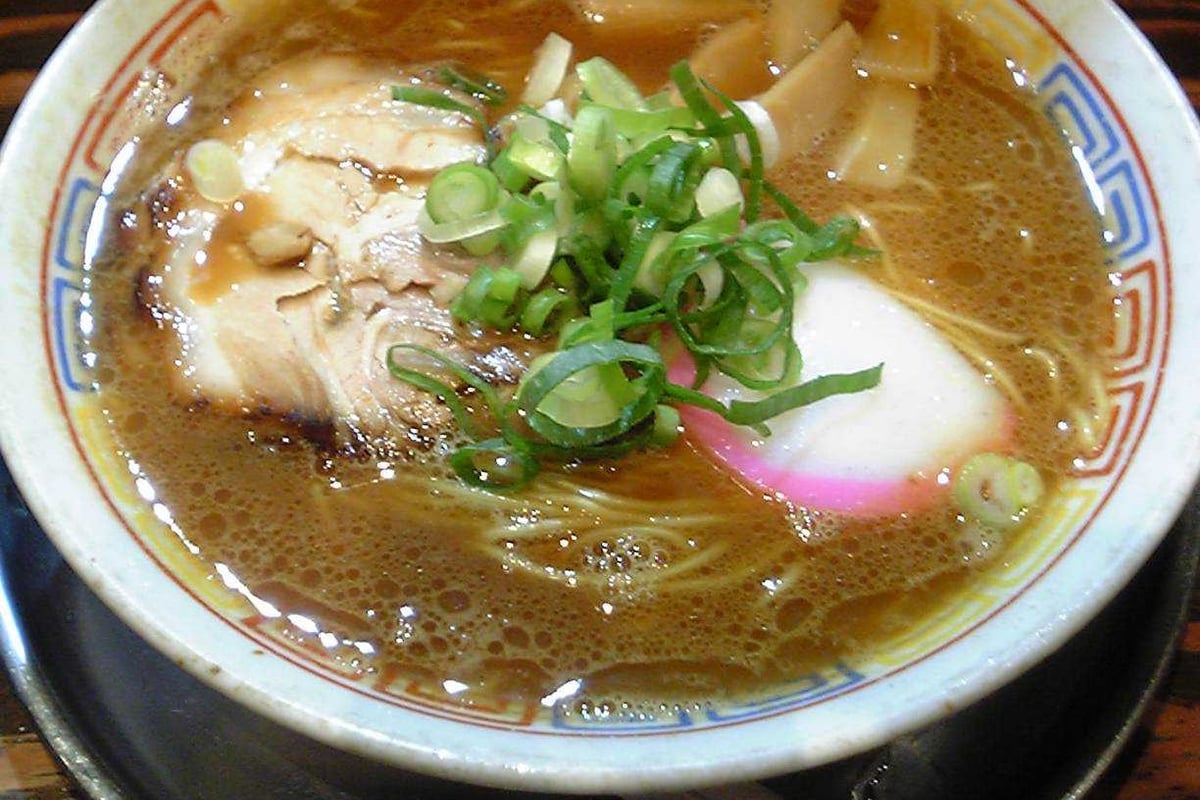
Wakayama Ramen (Wakayama Chuka Soba)
Wakayama Ramen (Wakayama Chuka Soba)
Wakayama ramen is a local ramen eaten mainly in Wakayama City. Locally, it is more commonly called 'chuka soba' than 'ramen.' The standard bowl consists of thin, straight noodles in a broth combining pork bone and soy sauce, topped with chashu (braised pork), menma (seasoned bamboo shoots), green onion, and kamaboko (fish cake) with a swirl pattern. The broth falls broadly into two styles: the Shako-mae style, a clear broth in which the soy sauce flavor comes to the fore, and the Ide style, a rich broth made by simmering pork bones for many hours. Its beginnings are traced to '〇髙' (Marutaka), a yatai (street stall) that operated shortly after the war near the Shako-mae (in front of the depot) stop of the streetcar line. The custom of freely taking hayazushi (pressed mackerel sushi) and boiled eggs from the table and declaring how many you ate when paying is also well known. In 1998, 井出商店 was named the best in Japan on a television program, and the name spread nationwide.
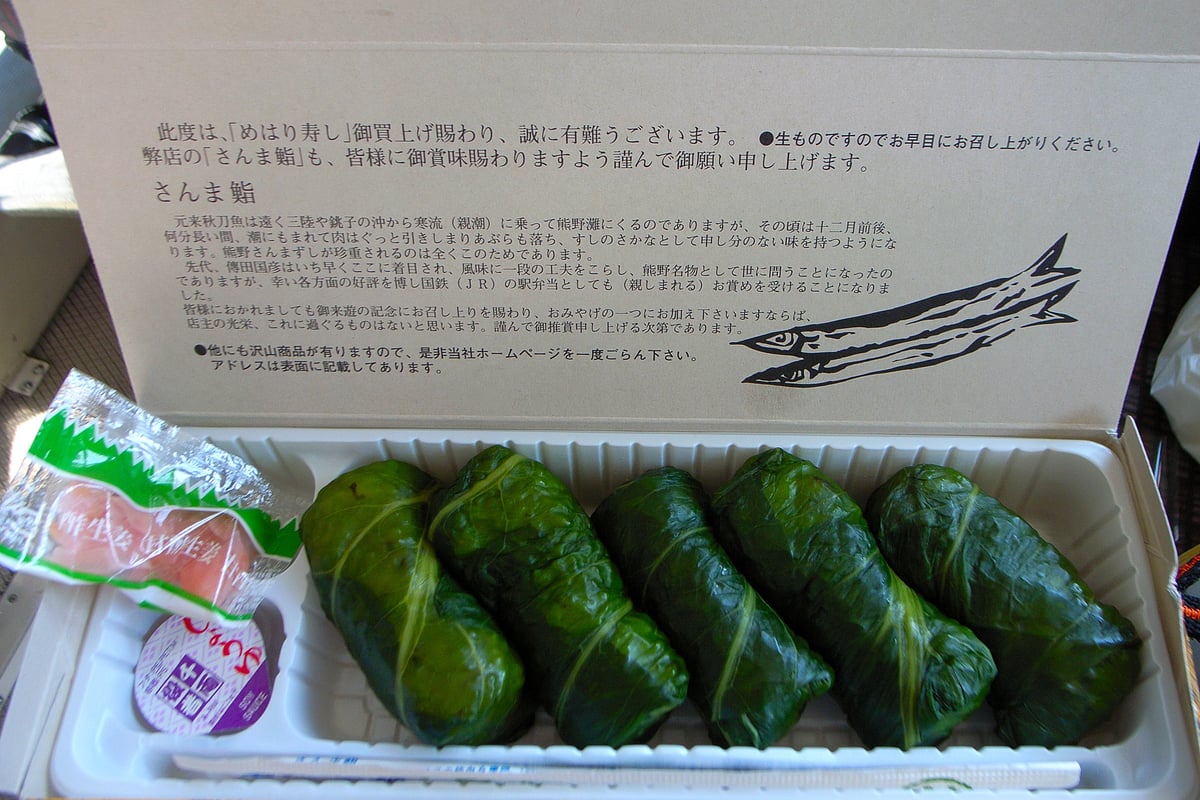
Mehari Zushi (Rice Balls Wrapped in Pickled Takana Leaves)
Mehari Zushi (Rice Balls Wrapped in Pickled Takana Leaves)
Mehari zushi is a local dish of southern Wakayama Prefecture in which a large rice ball is wrapped in salt-pickled takana (leaf mustard) leaves. It is popular mainly in the Kumano region, including Shingu City, and also in the neighboring Kumano area of Mie Prefecture. In this area, where forestry and fishing thrive, it spread as a packed lunch that could be eaten quickly between work in the mountains or during busy fishing. The name is said to come from 'opening your mouth wide, as wide as your eyes open in amazement (me wo miharu), to eat it' or from 'so delicious it makes your eyes open wide.' According to the Ministry of Agriculture, Forestry and Fisheries, it also appears in the mid-Edo-period kabuki play 'Ise Ondo Koi no Netaba.' It used to be made large, but today smaller, easier-to-eat versions are the norm. Chopped takana stems, umeboshi (pickled ume plums), katsuobushi (dried bonito flakes), and the like are sometimes added to the rice, and each household and shop has its own variations. Shingu City has specialty shops, and it is also enjoyed as a specialty of Kumano tourism.
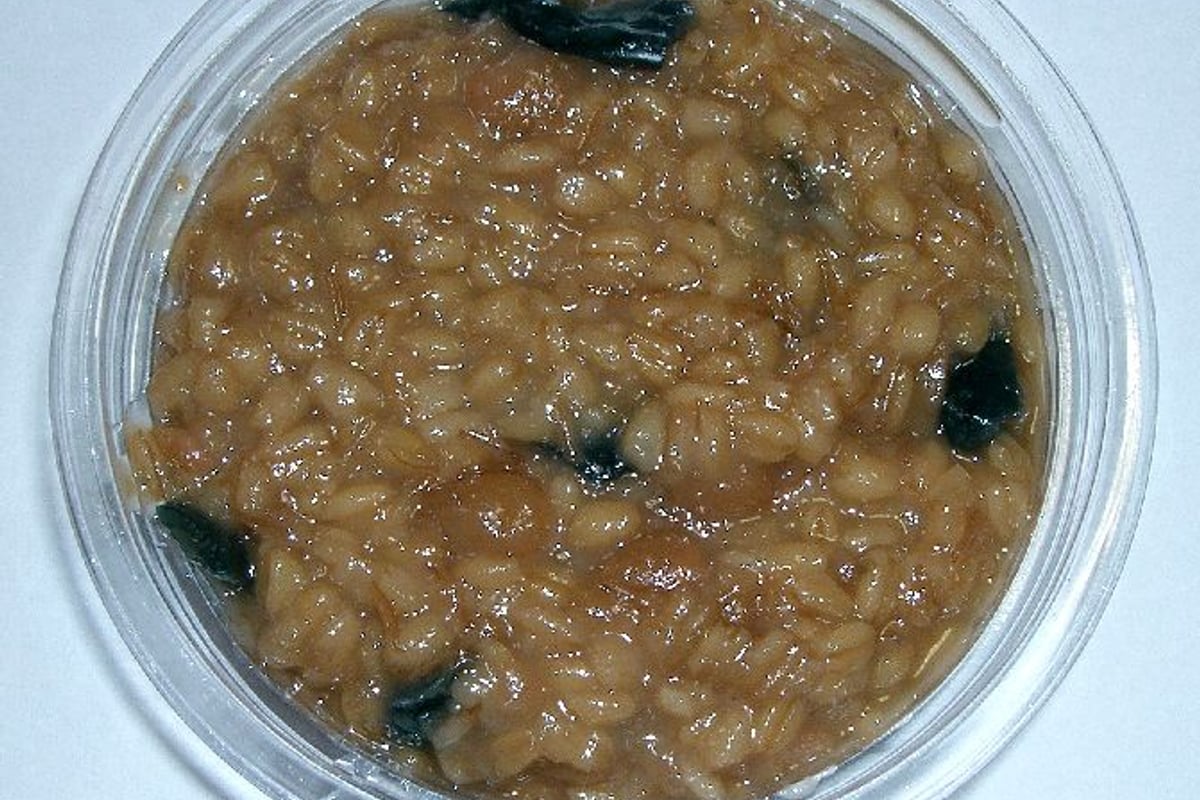
Kinzanji Miso (Chunky Miso with Summer Vegetables)
Kinzanji Miso (Chunky Miso with Summer Vegetables)
Kinzanji miso is a traditional miso of Wakayama Prefecture, made by mixing koji (malted grain) of soybeans, barley, and rice with chopped vegetables such as uri melon, eggplant, ginger, and shiso, and then letting it mature. Rather than a seasoning dissolved into dishes, it is a type of name-miso (miso eaten as a side dish), also called okazu miso, eaten as is alongside rice or as a snack with sake. The leading theory holds that in the Kamakura period, the Zen monk Kakushin (Hotto Kokushi), who traveled to Song China, learned how to make it at Jingshan Temple (Kinzan-ji) and brought the method to Kishu after returning to Japan. Yuasa Town is known as a production area of Kinzanji miso, and it is also said that the liquid that collected in the miso barrels became the beginning of Yuasa soy sauce. In 2017, 'Kishu Kinzanji Miso' became the first product of Wakayama Prefecture to be registered as a Geographical Indication (GI). In Yuasa Town, there are still storehouses that make Kinzanji miso.
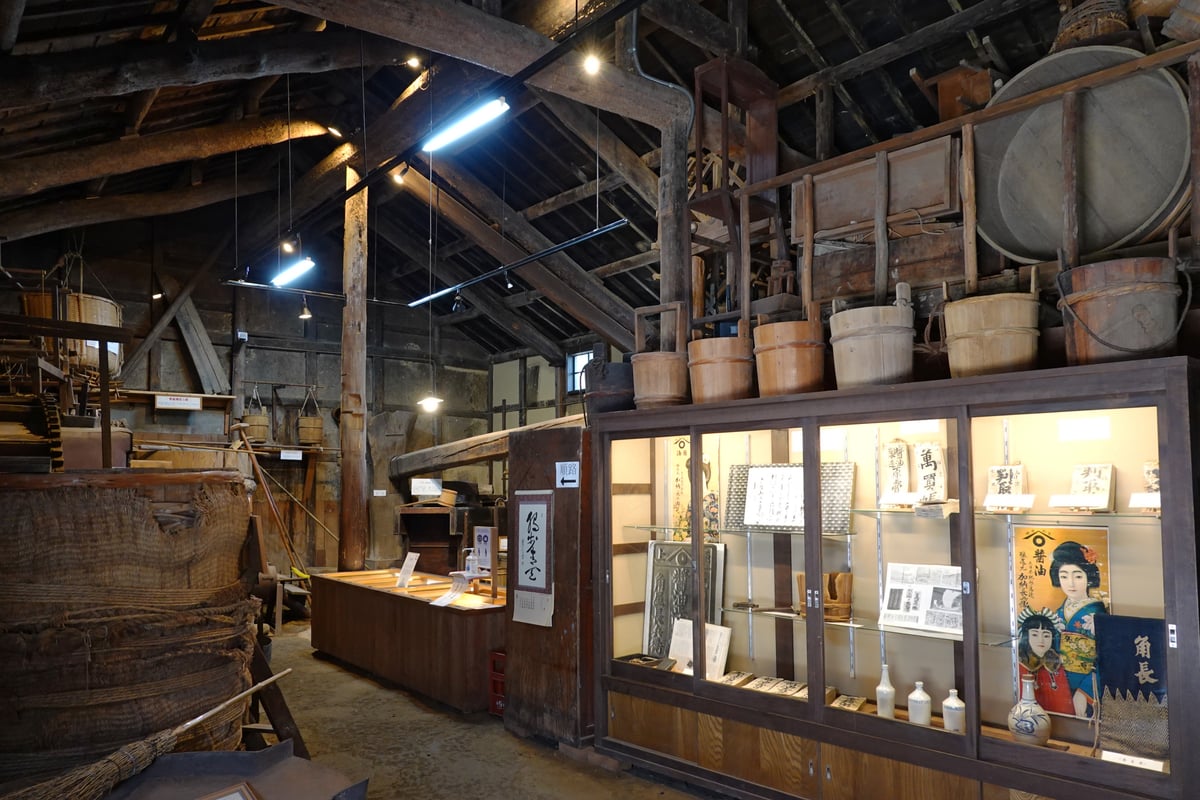
Yuasa Shoyu (Yuasa Soy Sauce)
Yuasa Shoyu (Yuasa Soy Sauce)
Yuasa shoyu is soy sauce brewed in Yuasa Town, Arida District, Wakayama Prefecture. Yuasa is said to be the birthplace of soy sauce brewing in Japan. Soy sauce is said to have begun when people making Kinzanji miso, which had been introduced in the Kamakura period, noticed that the liquid collecting in the barrels tasted good and refined it through repeated efforts. In the Edo period, it received the protection of the Kishu Domain, and at its peak, 92 soy sauce makers are said to have lined the town. In 2006, the townscape that prospered through brewing became the first soy sauce brewing town in Japan to be selected as a national Important Preservation District for Groups of Traditional Buildings. In 2017, it was recognized as Japan Heritage under the title 'The First Drop: Kishu Yuasa, Birthplace of Soy Sauce Brewing.' Breweries that preserve traditional methods, such as large cedar barrels and kan-jikomi (winter brewing), still remain today. While strolling the townscape, you can tour the breweries and buy soy sauce.
Kishu Umeboshi (Kishu Pickled Ume Plums)
Kishu Umeboshi (Kishu Pickled Ume Plums)
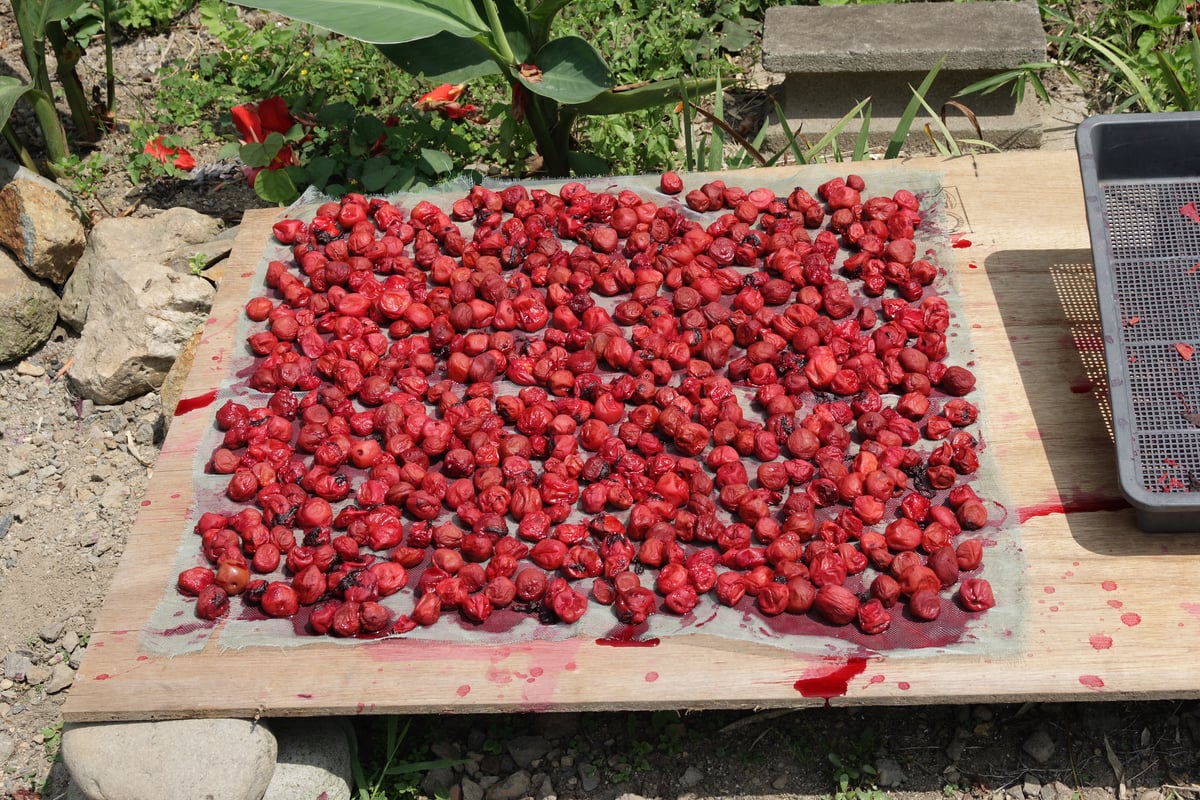
Kishu umeboshi are umeboshi (pickled ume plums) made in Wakayama Prefecture. Wakayama Prefecture is Japan's leading ume-producing area, accounting for about 60% of the national harvest, with Minabe Town and Tanabe City at its center. The representative variety, Nanko ume, is large and fleshy, and when made into umeboshi it takes on a soft, melt-in-the-mouth texture. Ume cultivation in this area is said to have spread in the Edo period, on land with much poor soil and many slopes, thanks to encouragement and protection by 安藤直次, a chief retainer (karo) of the Kishu Domain. The harvested ume are pickled in salt and finished by drying them in the summer sun. The agricultural practice of combining ume orchards with coppice forests for firewood and charcoal on mountain slopes and making use of pollination by Japanese honeybees is called the 'Minabe-Tanabe Ume System.' This system was recognized as a Globally Important Agricultural Heritage System (GIAHS) in 2015. In recent years, many sweeter, lower-salt umeboshi have also been made.
Narezushi (Fermented Mackerel and Saury Sushi)
Narezushi (Fermented Mackerel and Saury Sushi)
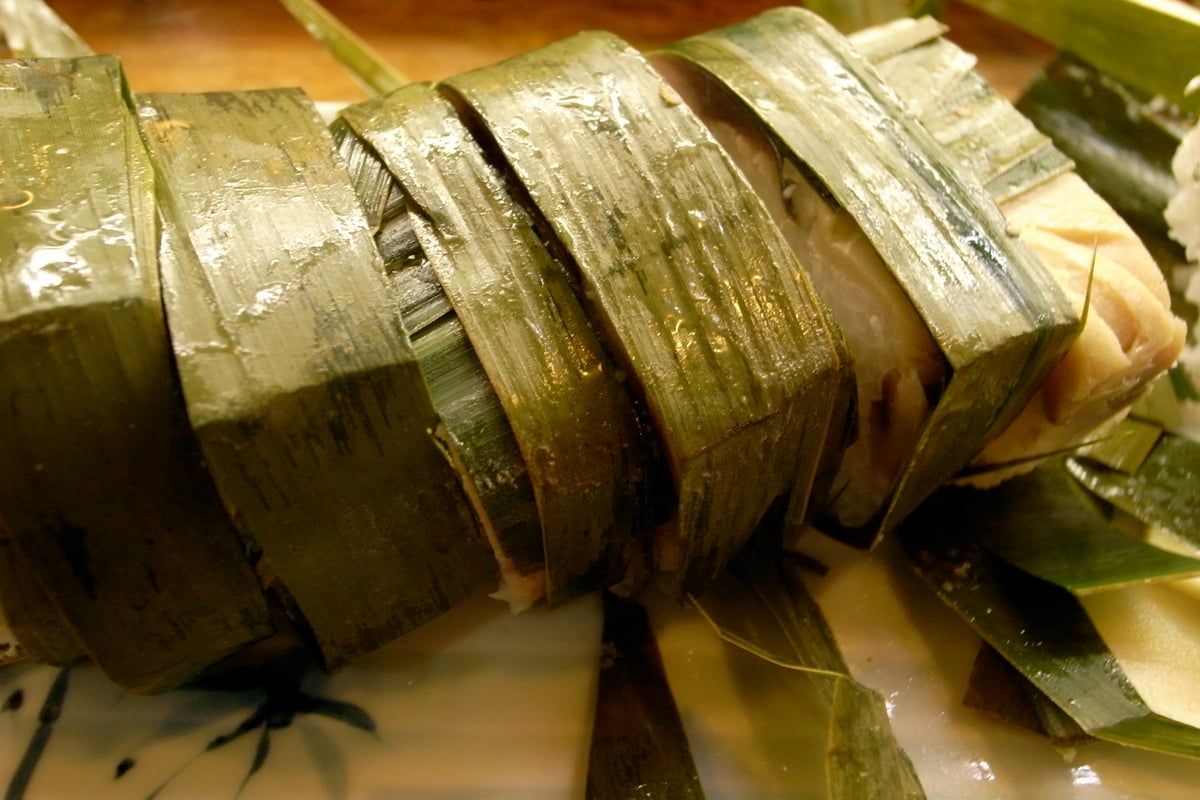
Narezushi is a local dish of Wakayama Prefecture in which salted fish and rice are wrapped in leaves, packed into a wooden tub, and left to undergo lactic acid fermentation. Producing its sourness through fermentation rather than vinegar, it preserves to this day a way of eating regarded as the original form of sushi. Mackerel is typical in the Arida and Hidaka regions in the central part of the prefecture, while saury is typical in the Kumano region in the south, including Shingu City. The leaves used for wrapping differ from area to area; in Arida City and Hidaka District, leaves of ase (giant reed, known as danchiku, a plant of the grass family) have traditionally been used. According to the Ministry of Agriculture, Forestry and Fisheries, Wakayama's narezushi is said to be one of Japan's three great narezushi and to have a history of some 800 years or more. Households pickled it as a special dish for autumn festivals, and there was also a custom of packing it into tiered boxes (jubako) and giving it to relatives. There are two kinds: haya-nare (quick-fermented), which is pickled for a short time and is easy to eat, and hon-nare (long-fermented), which is fermented for a long time and has a strong aroma and sourness. At 東宝茶屋 in Shingu City, you can even taste saury narezushi aged for 30 years.
Kue Nabe (Longtooth Grouper Hot Pot)
Kue Nabe (Longtooth Grouper Hot Pot)
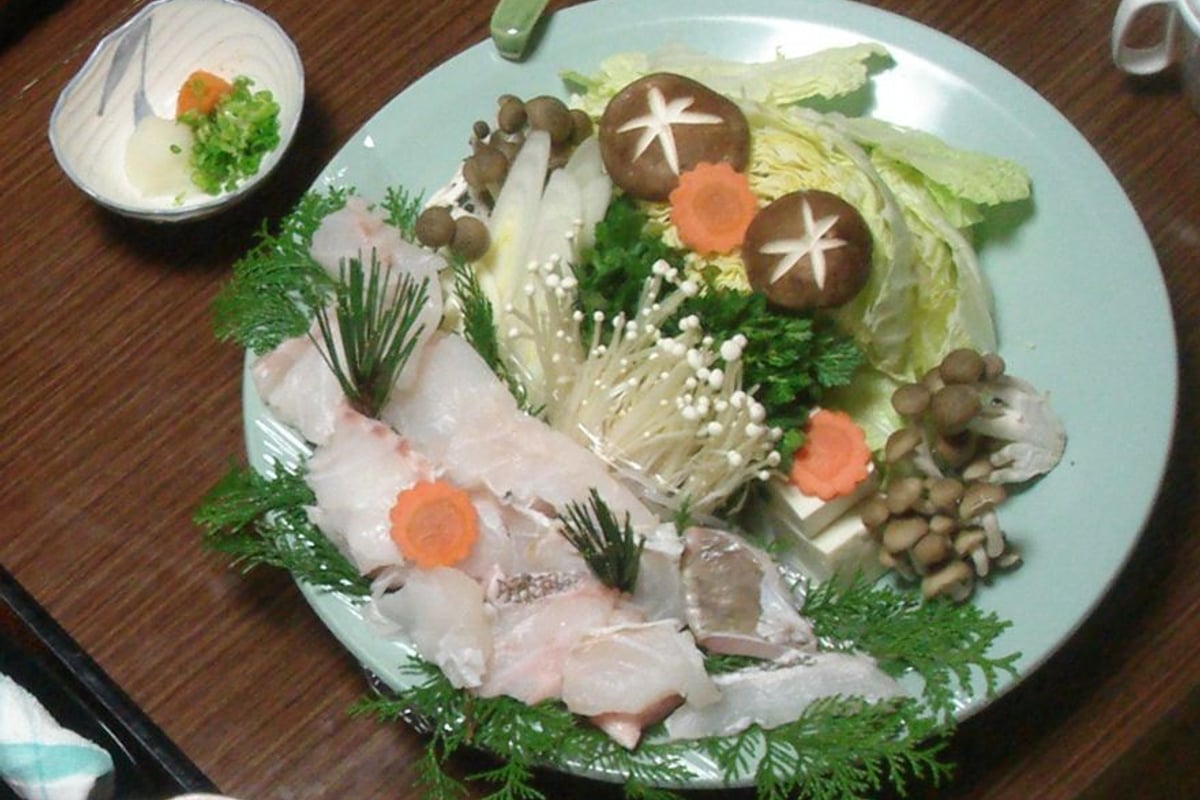
Kue nabe is a winter specialty of Wakayama Prefecture in which kue (longtooth grouper), a prized fish of the grouper family, is simmered with vegetables and other ingredients. Kue is a large fish that can exceed 1 meter in length, and because it is scarce it is also called a 'phantom luxury fish.' Its flavor is so highly regarded that there is a saying, 'Once you eat kue, you can't eat any other fish.' Wakayama Prefecture, which faces the Kii Channel, is known as a good kue fishing ground, and Hidaka Town in particular is famous as the 'Town of Kue.' At minshuku (family-run guesthouses) and ryokan in the town, full courses that serve kue nabe along with sashimi and karaage (deep-fried kue) are a specialty. In 2018, Hidaka Town's kue nabe took first place in Japan at the 'Nippon Zenkoku Nabe Grand Prix.' When kue is cooked in a hot pot, the gelatinous part around the skin melts out, creating a broth rich in savory flavor. Finishing with zosui (rice porridge) made from that broth is another pleasure. The season runs from late October to around February, and summer, after spawning, is also said to be good as the 'ura-shun' (second season).
Katsuura no Nama Maguro (Never-Frozen Tuna of Katsuura)
Katsuura no Nama Maguro (Never-Frozen Tuna of Katsuura)
Katsuura no nama maguro refers to tuna landed at Katsuura Fishing Port in Nachikatsuura Town, Wakayama Prefecture, that has never once been frozen. 'Nama' here does not mean eaten raw as sashimi, but that the tuna has not been frozen. Katsuura Fishing Port lies at the heart of Katsuura Onsen, about a 3-minute walk from JR Kii-Katsuura Station. According to Nachikatsuura Town, its landings of fresh tuna caught by longline fishing are said to be the largest in Japan. A distinguishing feature is that tuna caught in relatively nearby fishing grounds is brought back chilled in ice water rather than frozen. About 60 percent of the landings are albacore, and bigeye and yellowfin tuna are also landed. Every morning except Saturdays and some other days, rows of fresh tuna are laid out at the port market and auctioned. At eateries in the town, you can enjoy fresh, never-frozen tuna (nama maguro) with a springy, chewy texture as sashimi, set meals, or rice bowls.
Koyasan Goma Dofu (Sesame Tofu of Mount Koya)
Koyasan Goma Dofu (Sesame Tofu of Mount Koya)
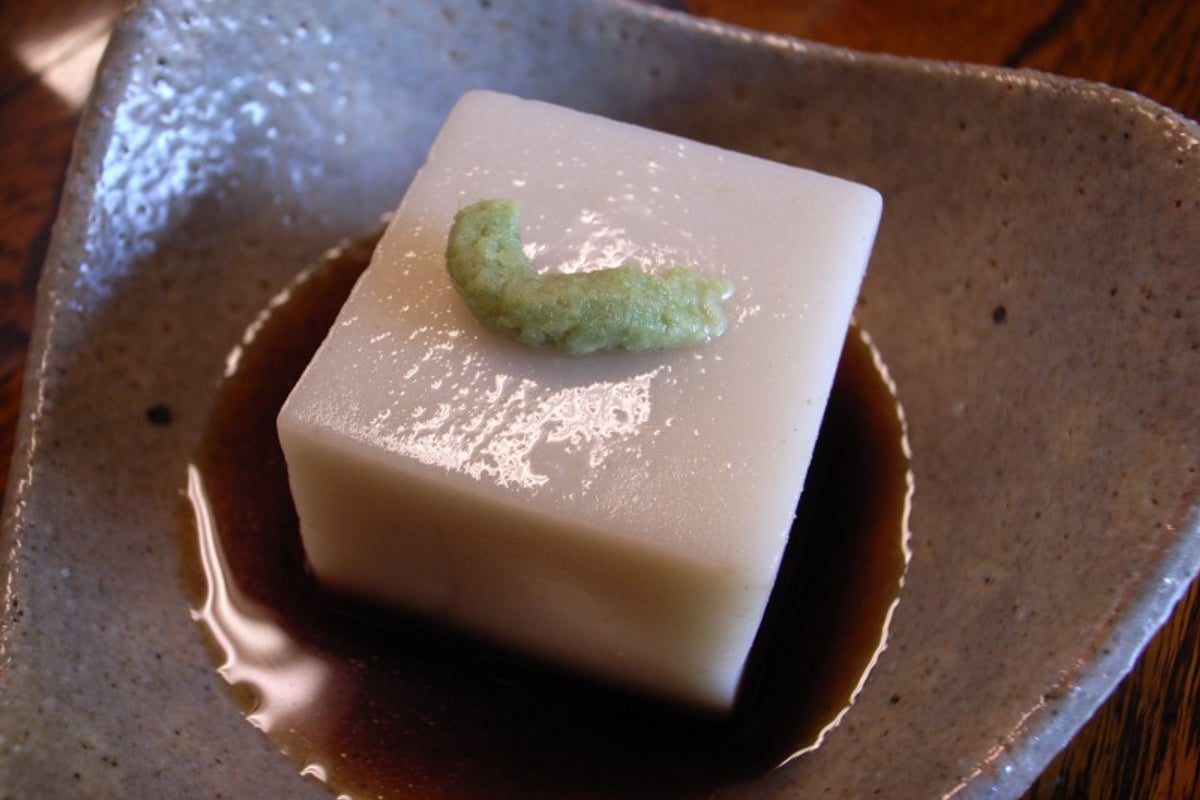
Koyasan goma dofu is a dish of shojin cuisine (Buddhist vegetarian cuisine) made by kneading ground white sesame with Yoshino kuzu (kudzu starch) and water, then chilling it until it sets. Although it is called tofu, it contains no soybeans, and it is characterized by the aroma of sesame and a smooth, springy mouthfeel. According to the Ministry of Agriculture, Forestry and Fisheries, it is said to have originated as one of the shojin dishes eaten during rigorous ascetic training on Mount Koya (Koyasan), which Kobo Daishi (Kukai) founded about 1,200 years ago. In shojin cuisine, which uses no meat or fish, protein tends to be lacking. Goma dofu is said to have been created as a way to efficiently consume sesame, which contains high-quality protein. On Mount Koya, white goma dofu made with hulled white sesame is the mainstream, and it is generally eaten with wasabi and soy sauce. Even today it is an indispensable part of the shojin meals served at shukubo (temple lodging), and on the mountain there are long-established goma dofu shops dating back to the Meiji era and the early Showa era. It is also widely enjoyed as a souvenir of a pilgrimage.
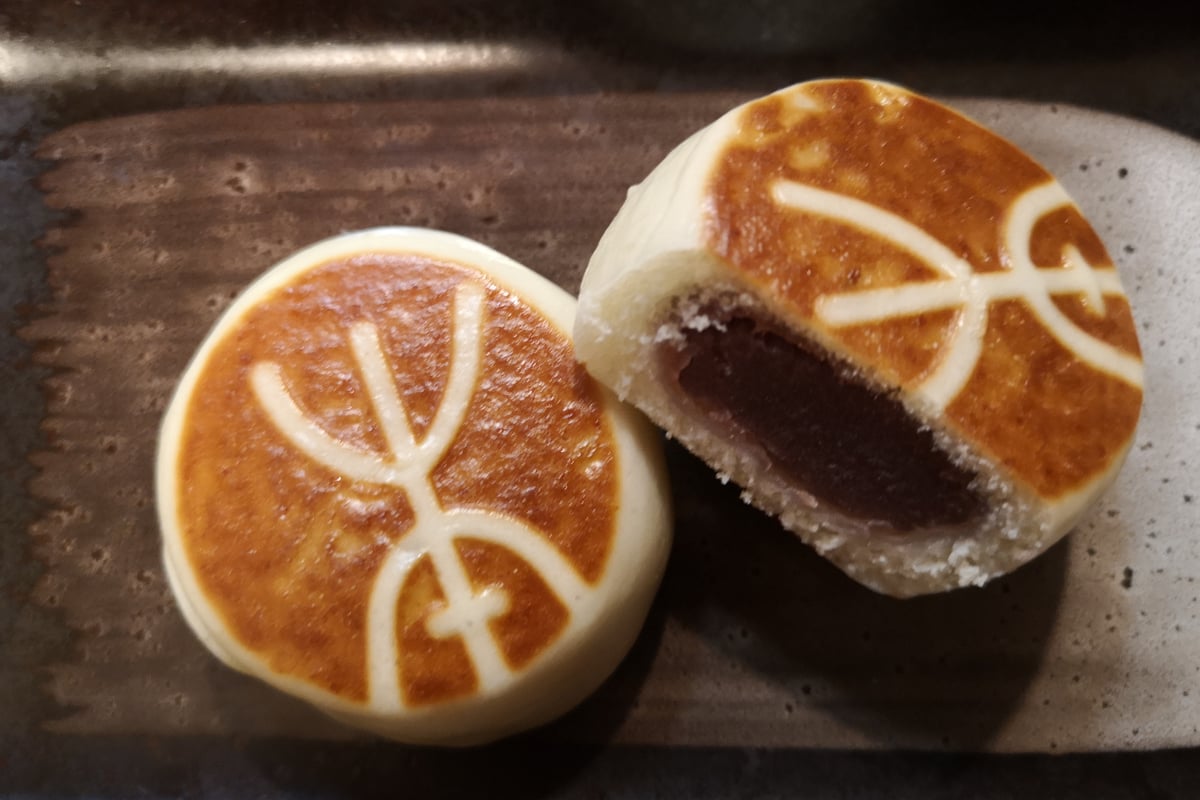
Honnoji Manju (Sake Bun Branded with the Character Hon)
Honnoji Manju (Sake Bun Branded with the Character Hon)
Honnoji manju is a sakamanju (sake-leavened bun) made by 総本家駿河屋, a long-established wagashi (Japanese confectionery) shop in Wakayama City. Smooth koshi-an (strained red bean paste) is wrapped in dough fermented with rice koji and steamed, and the surface is stamped with a branded mark (yakiin) of the character 本 (hon) in seal script (tenshotai). It is characterized by a faint aroma of sake and the gentle sweetness of the koshi-an. 駿河屋 is said to have been founded as '鶴屋' in Fushimi, Kyoto, in 1461 (Kansho 2), during the Muromachi period. It later followed Tokugawa Yorinobu, founder of the Kishu Tokugawa family, to Wakayama and became confectioner by appointment to the Kishu Tokugawa family. The most widely accepted theory is that the character 本 comes from the teaching 'Make honesty your foundation (moto),' which the Kishu Domain preached to its people. During the Edo period, successive lords of the Kishu Domain are said to have taken the buns with them to Edo during sankin-kotai (alternate attendance). Made over about four days from fermentation to steaming, it is one of Wakayama's representative confections.
Model Course
Kishu Shikki lacquerware and Kishu Bina dolls in Kainan's Kuroe, and rolling a hemp palm scrubber in Kimino
About a 10-minute walk from JR Kuroe Station brings you to the old streets of Kuroe, a town of lacquerware. 池庄漆器店, founded in 1876 (Meiji 9), still deals in Kishu Shikki. 紀州漆器伝統産業会館(うるわし館) is free to enter, and on Saturdays and Sundays you can try maki-e (reservation required, about 1 hour). The Kishu Bina dolls revived in 2024 can also be bought here (about 60,000 yen per pair). In the afternoon, head to Kimino and try making a hemp palm scrubber (tawashi) at しゅろの手しごと体験教室 (from about 1,500 yen for adults; reservation required at least 3 days in advance).
Visiting a Negoro Nuri workshop in Iwade, then chuka soba and Honnoji Manju in Wakayama City
岩出市民俗資料館 has a Negoro Nuri workshop, and on Wednesdays and Saturdays you can watch the production process (free admission; closed Tuesdays). At nearby 道の駅ねごろ歴史の丘「花笑み館」, you can choose souvenirs such as Negoro Nuri. After moving on to Wakayama City, enjoy chuka soba at 井出商店, said to be the originator of the Ide style, or at 元車庫前丸宮, of the Shako-mae style. On the way home, buy Honnoji Manju, associated with the Kishu Tokugawa family, at 総本家駿河屋 in Surugacho.
Touring breweries in Yuasa, the birthplace of soy sauce, and making Yasudagami paper in Aridagawa
Among the streets of Yuasa is 角長, founded in 1841 (Tenpo 12), which also has a soy sauce museum. At Yuasa Shoyu's 九曜蔵, you can tour a storehouse lined with large cedar barrels free of charge and also try soy sauce soft-serve ice cream. For Kinzanji miso, the wooden-box version from 太田久助吟製 (270 g, about 1,080 yen) makes a good gift. From around May to November, you can also buy mackerel narezushi wrapped in ase leaves at 御寿司 つるや (about 1,300 yen each). In the afternoon, drive to the Shimizu area of Aridagawa in the mountains. At 体験交流工房わらし, you can try making Yasudagami paper (about 600 yen; entry accepted until 15:00).
Stopping by a herazao workshop at Kii-Shimizu Station, then sesame tofu on Mount Koya
Kii-Shimizu Station on the Nankai Koya Line has the Kishu Herazao 匠工房, set up in the renovated station building. Besides viewing and buying rods, you can try 'hiire' (straightening with fire) and 'hosaki-kezuri' (shaving the rod tip) (from about 2,000 yen per hour, excluding tax). Check the opening days in advance. After riding the Koya Line up to Mount Koya, you can enjoy freshly made sesame tofu at 濱田屋, said to have been founded in the Meiji period (about 400 yen each; reservations recommended). At 角濱ごまとうふ総本舗 near the Daimon gate, you can also have a kaiseki meal centered on sesame tofu.
Choosing Nanko ume umeboshi in Minabe and enjoying kue dishes in Hidaka
Minabe is the town that produces the most ume in Japan. At 道の駅みなべうめ振興館, you can see exhibits on the history of ume free of charge, and umeboshi made from the town's Nanko ume are also available. At 紀州梅干館, you can watch the umeboshi production process, and there is also a 'Make Your Own Umeboshi' experience by reservation (about 2,500 yen). In the evening, head north to Hidaka and enjoy kue dishes at 割烹 岬, run by an owner who is also a fisher (kue set meal about 2,900 yen; full course about 13,200 yen).
A Kumano course: choosing a Nachiguro inkstone on Mount Nachi, then fresh tuna in Katsuura and mehari-zushi in Shingu
At 山口光峯堂, halfway along the approach to Kumano Nachi Taisha, you can try grinding ink before choosing a hand-carved Nachiguro inkstone (from about 6,600 yen for a standard inkstone). For lunch, go down to Katsuura Fishing Port and enjoy fresh tuna at 勝浦漁港にぎわい市場 or まぐろ料理 竹原 (竹原's tuna set meal is about 1,650 yen). The next day, extend your trip to Shingu, where you can buy mehari-zushi at 総本家めはりや新宮本店 (about 560 yen for 4 pieces). At 東宝茶屋, open in the evening, you can also taste 30-year-old hon-nare narezushi.
Events
Kishu Shikki Festival (紀州漆器まつり)
Usually the first Saturday and Sunday of November (in 2026: November 7 and 8) / Kainan City (in front of the 海南ハレアメ lawn, 紀州漆器伝統産業会館 うるわし館, and other venues)
View details →