 Image: Wikimedia Commons
Tottori Prefecture
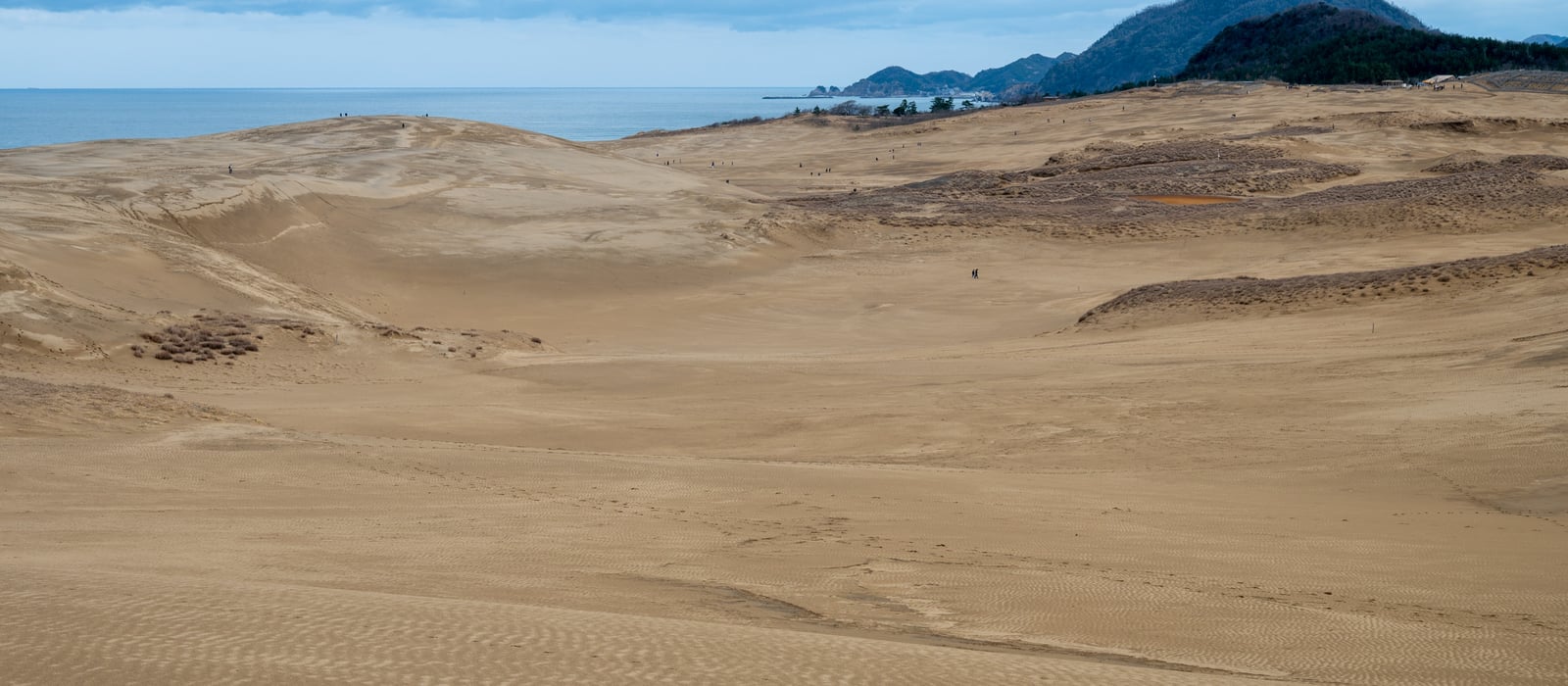
Tottori Prefecture is a prefecture in the northeastern part of the Chugoku region, facing the Sea of Japan. It is made up of two former provinces, Inaba in the east and Hoki in the central and western parts, and each has handed down its own handicrafts and food culture. Its Traditional Crafts designated by the Minister of Economy, Trade and Industry are three items: Inshu Washi, Yumihama Gasuri and Izumo Ishidoro (Izumo Stone Lanterns). Inshu Washi is made in Aoya and Saji in Tottori City and is known for gasenshi, a paper for calligraphy. Yumihama Gasuri is a pictorial kasuri (ikat) born from the cotton growing of the Yumigahama Peninsula, which stretches from Yonago City to Sakaiminato City. In 1985 the prefecture also set up its own system of local crafts and related items designated by the Governor, and its list includes mingei (folk craft) vessels such as Ushinoto Ware and Nakai Kiln, as well as Kurayoshi Gasuri, Yodoe Gasa, Hakota Ningyo and Mochigase Nagashibina. In Tottori City, the Mingei movement activist Yoshida Shoya guided Shinsaku Mingei (new folk craft), and in 1932 also opened what is said to be Japan's first mingei shop. In food, Matsuba crab in winter and Sakyu Rakkyo grown in the sand dune fields are known throughout Japan. Each area also has its own flavors, such as Tofu Chikuwa and Itadaki made with tofu, gyukotsu (beef bone) ramen in the central and western parts of the prefecture, kakinoha-zushi from Chizu, and Azuki Zoni, a zenzai-like New Year's soup.
Tottori's Traditional Crafts

Inshu Washi (Inshu Japanese Paper)
Inshu Washi (Inshu Japanese Paper)
Inshu Washi is Japanese paper (washi) whose two main production areas are Aoya Town (Aoya-cho) and Saji Town (Saji-cho) in Tottori City, Tottori Prefecture. Inshu is another name for Inaba Province, which corresponds to the eastern part of present-day Tottori Prefecture. Among the Shosoin documents of the Nara period is paper presumed to have been made in Inaba, and the Heian-period 'Engishiki' records that Inaba Province supplied paper to the imperial court. In the Edo period it was made in large quantities both as official paper for the domain and as paper for ordinary people. After the war, demand for shoji paper and office paper dropped sharply, and the area sought a way forward by developing gasenshi (calligraphy and painting paper), craft paper and dyed paper. Above all, its handmade high-grade gasenshi boasts one of the largest production volumes in Japan. Because it uses up little ink and lets the brush glide smoothly, it has been called 'Inshu fude kirezu' (Inshu paper never lets the brush run dry) and has long been favored by calligraphers across Japan. In 1975 (Showa 50), it became the first washi in Japan to be designated a Traditional Craft by the Minister of Economy, Trade and Industry (national Traditional Craft).
Yumihama Gasuri (Yumihama Ikat Cotton)
Yumihama Gasuri (Yumihama Ikat Cotton)
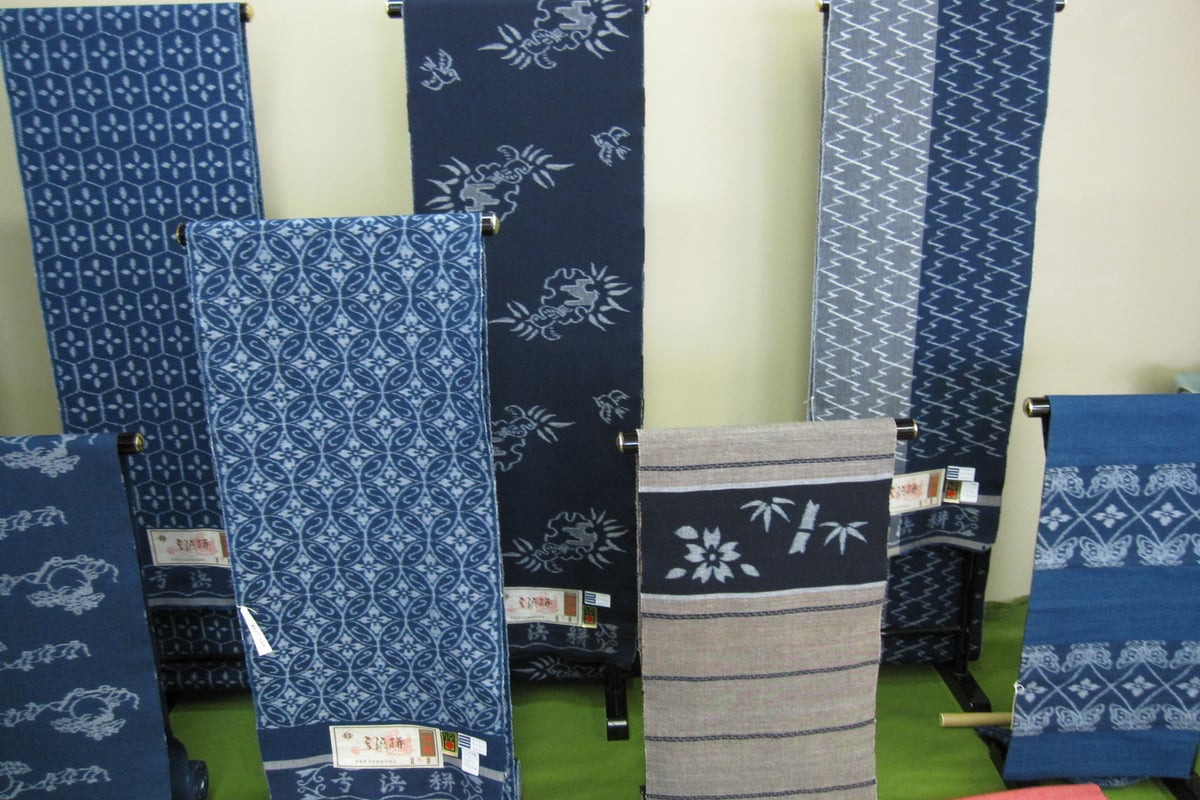
Yumihama Gasuri is a cotton kasuri (ikat) that has been woven on the Yumigahama Peninsula (Yonago City and Sakaiminato City) in western Tottori Prefecture. Kasuri is a textile in which patterns are created during weaving by using threads that have been partially dyed in advance. In the late 17th century, cotton growing for household use began on the sandy soil of Yumigahama, and in the mid-18th century wholesalers of aidama (indigo balls) were established and cotton production increased. In the early 19th century, women in farming households began weaving e-gasuri (pictorial kasuri) with pictures woven in for their families. Its appeal lies in its simple, rough texture, with auspicious motifs such as cranes and tortoises or pine, bamboo and plum appearing in white against a deep indigo ground. In the Meiji era, Tottori Prefecture's kasuri output ranked third in Japan, but it declined with the development of the spinning industry and the spread of synthetic fibers. In 1975 (Showa 50), it was designated a Traditional Craft by the Minister of Economy, Trade and Industry (national Traditional Craft). In 1978 it also became an Intangible Cultural Property of Tottori Prefecture.
Izumo Ishidoro (Izumo Stone Lanterns)
Izumo Ishidoro (Izumo Stone Lanterns)
Izumo Ishidoro are stone lanterns made from Kimachi stone, which is quarried around the Kimachi district of Shinji Town, Matsue City, Shimane Prefecture. The main production areas are Matsue City and Izumo City in Shimane Prefecture, and in Tottori Prefecture, stonemasons in Sakaiminato City carry on their production. Their origins are said to date back to the Nara and Heian periods, when they began to be used as votive lights with the arrival of Buddhism. In the Momoyama period, as the tea ceremony spread, they came to be placed in gardens. In the Edo period, the Matsue Domain designated Kimachi stone as otome-ishi (restricted stone) and protected it by banning its removal from the domain. Kimachi stone is a fine-grained, soft sandstone that is easy to carve, and because moss readily grows on it, it quickly takes on an aged look. In 1976 (Showa 51), Izumo Ishidoro became the first stone craft to be designated a Traditional Craft by the Minister of Economy, Trade and Industry (national Traditional Craft). Japan Traditional Crafts Aoyama Square writes the name as '出雲石燈ろう', while Tottori and Shimane Prefecture materials write it as '出雲石灯ろう'.
Kurayoshi Gasuri (Kurayoshi Ikat Textiles)
Kurayoshi Gasuri (Kurayoshi Ikat Textiles)
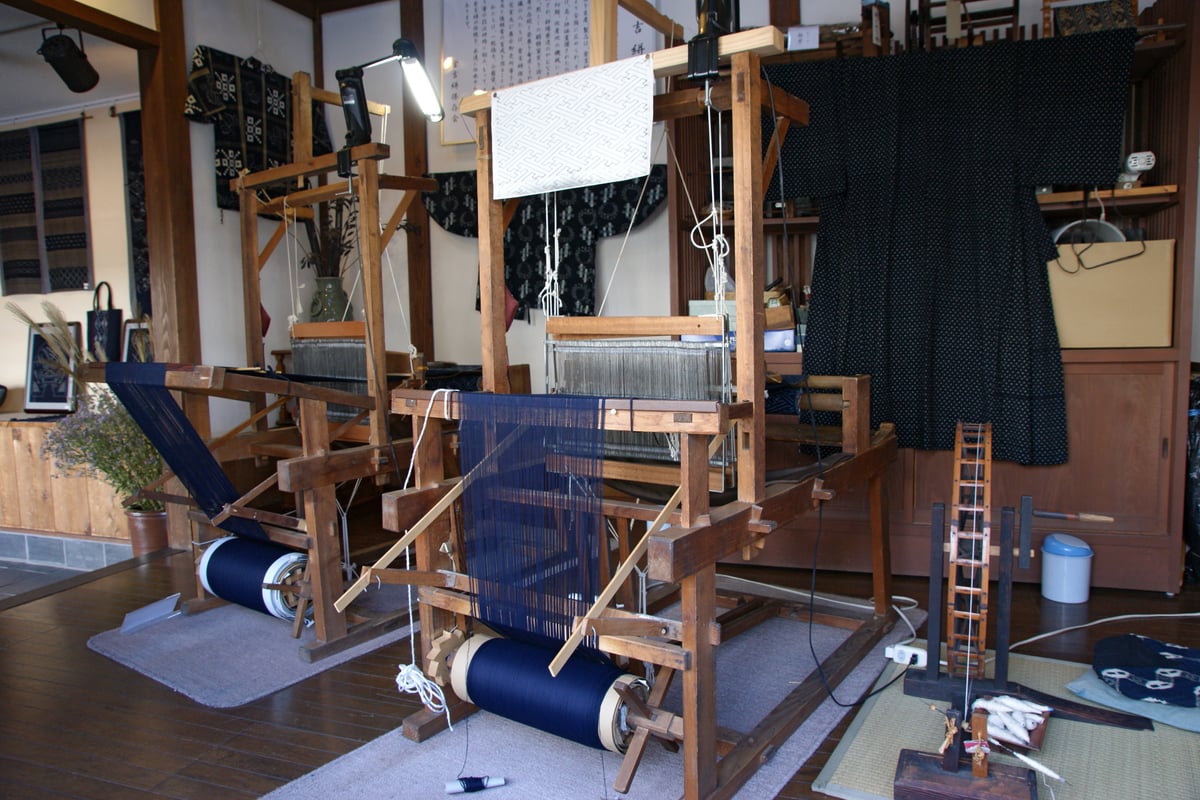
Kurayoshi Gasuri is a kasuri (ikat) that has been woven in Kurayoshi City in central Tottori Prefecture since the late Edo period. It is known for its elaborate e-gasuri (pictorial kasuri), which weave in motifs such as flowers, birds and landscapes, pine, bamboo and plum, and cranes and tortoises as if they were paintings. Tottori Prefecture materials say that about 200 years ago, 稲嶋大助 wove e-gasuri depicting flowers, birds and landscapes and spread the craft. It was woven extensively in the Meiji era, and kasuri exhibited by the 船木 and 桑田 factories won awards at world's fairs overseas. In the early Meiji era, the technique is said to have spread to the Mimasaka region, giving rise to Sakushu Kasuri in Okayama Prefecture. It later declined, pushed aside by machine-made textiles. After the war, the dyeing and weaving artist Yoshida Tasuku deciphered old instruction manuals and revived the complex futsu-ori (double weave). Today, 倉吉絣保存会 (the Kurayoshi Gasuri Preservation Society) carries on the techniques and holds demonstrations and exhibition sales at 倉吉ふるさと工芸館. It is one of the Tottori Prefecture Local Crafts designated by the Governor of Tottori Prefecture.
Ushinoto Yaki (Ushinoto Ware)
Ushinoto Yaki (Ushinoto Ware)
Ushinoto Ware (Ushinoto Yaki) is pottery fired at a kiln in Ushito, Kawahara Town, Tottori City. The kiln began in the late Edo period, and some sources date its founding to the Tenpo era (1830–1844). It originally fired everyday wares such as tokkuri (sake bottles) with plum-blossom patterns from local clay, but by the early Showa period it had declined. In 1931 (Showa 6), the fourth-generation potter 小林秀晴 received guidance from Yoshida Shoya, an activist of the Mingei movement, and went on to make 'somewake-zara' (two-glaze division dishes) with green and black glazes each applied to one half. Yanagi Muneyoshi, who was present when the pieces were taken out of the kiln, praised them highly, and Ushinoto Ware became the starting point of the Shinsaku Mingei (new folk craft) promoted by Yoshida. It is characterized by simple, thick and sturdy vessels for everyday use, and it is still fired in the climbing kiln handed down through the generations. It is designated a Tottori Prefecture Local Craft, and today the sixth generation, 小林孝男, and the seventh generation, 小林遼司, continue making pottery.
Inkyuzan Yaki (Inkyuzan Ware)
Inkyuzan Yaki (Inkyuzan Ware)
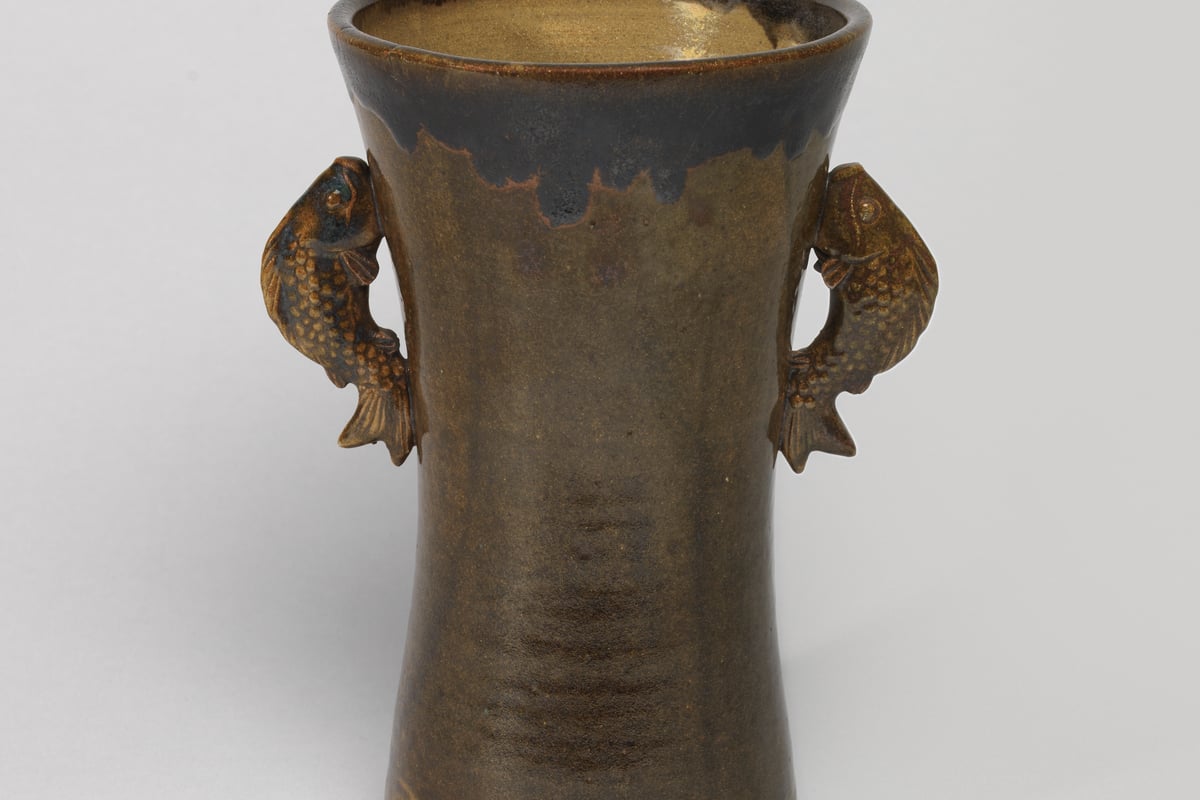
Inkyuzan Ware (Inkyuzan Yaki) is pottery fired at a kiln in Kunoji, Yazu Town, Tottori Prefecture. It is said to have begun in the Meiwa era (1764–1772) of the mid-Edo period, when a potter from Kyoto, invited by Lord Ikeda, the lord of the Tottori Domain, built a kiln, and the domain had it fire tea utensils and other wares as its official kiln. The name 'Inkyuzan' comes from Kunoji in Inaba Province, where the kiln is located. The kiln still fires its seven-chamber climbing kiln, in use since the Edo period, with firewood. Local clay rich in iron is finished with glazes such as straw-ash glaze (warabai-yu) and namako glaze. Its style is rustic yet conveys a sense of dignity, and alongside its central tea utensils it also makes vessels for everyday use such as teacups (yunomi) and coffee cups. It is designated a Tottori Prefecture Local Craft, and the Ashizawa family, who run the kiln, carry on the tradition.
Nakai Gama (Nakai Kiln Pottery)
Nakai Gama (Nakai Kiln Pottery)
Nakai Kiln (Nakai Gama) is a mingei kiln in Nakai, Kawahara Town, Tottori City. In Tottori Prefecture's materials it is listed under the name 'Inshu Nakai Kiln (Inshu Nakai Gama)'. It began in 1945 (Showa 20), when the first generation, 坂本俊郎, built a climbing kiln. The second generation, Sakamoto Chikao, worked on Shinsaku Mingei under the guidance of Yoshida Shoya, a mingei activist from Tottori, and in 1952 received the name 'Ushinoto-yaki Waki-gama' (branch kiln of Ushinoto Ware) from Yoshida. Its signature works are 'somewake' dishes in which green, black and white glazes are divided on a single vessel. In 2000 the third generation, 坂本章, released vessels made under the direction of the industrial designer Yanagi Sori. Its modern dishes with divided glazes have become widely known. Using local mountain clay and straw-ash glazes it makes itself, the kiln continues to make vessels that are useful in daily life. It is designated a Tottori Prefecture Local Craft.
Yodoe Gasa (Yodoe Japanese Umbrellas)
Yodoe Gasa (Yodoe Japanese Umbrellas)
Yodoe Gasa are wagasa (Japanese umbrellas) made in Yodoe Town, Yonago City, Tottori Prefecture. They are said to have begun in Bunsei 4 (1821), when 倉吉屋周蔵, who came from Kurayoshi, opened an umbrella shop in Yodoe. Inviting 西金蔵 from Tsuyama in Meiji 14 (1881) to provide guidance on production became the catalyst for its growth. The wide sandy beach where umbrellas could be dried all at once, and the easy availability of good bamboo, also worked in its favor. In the Taisho era, the number of manufacturers grew to 71, shipping about 170,000 umbrellas a year throughout western Japan and elsewhere. It declined with the spread of Western-style umbrellas, and in 1984 (Showa 59) the last manufacturer closed. The following year, in 1985, 淀江傘伝承の会 (a society for passing down Yodoe Gasa) was founded and has carried on the techniques. The mainstays are sturdy bangasa and janome-gasa, characterized by janome designs shaped like plum blossoms or tortoiseshell (kikko) and by colorful thread decoration. It is one of the Tottori Prefecture Local Crafts designated by the Governor of Tottori Prefecture.
Mochigase no Nagashibina (Mochigase Floating Hina Dolls)
Mochigase no Nagashibina (Mochigase Floating Hina Dolls)
Mochigase Nagashibina refers both to the paper hina dolls handed down in Mochigase Town, Tottori City, and to the event of floating them down a river. On the third day of the third month of the lunar calendar, children in their best clothes place a male-and-female pair of paper hina dolls on a sandawara (round straw lid) woven from straw, add small peach branches, rapeseed blossoms and the like, and float them down the Sendai River. It is a custom of transferring the year's misfortunes to the dolls and praying for good health. The event was designated an Intangible Folk Cultural Property of Tottori Prefecture in 1985, and in 2021 it was selected by the national government as an Intangible Folk Cultural Property Requiring Measures such as Documentation. The dolls for floating are made by hand over about half a year, starting in autumn after the rice harvest, by the local group ときわ流しびなの会. The list of local crafts and related items designated by the Governor of Tottori Prefecture also includes 'nagashibina, kirin-jishi' as folk toys. At 流しびなの館 in the town, visitors can try making paper hina dolls and sandawara.
Hakota Ningyo (Hakota Papier-mache Dolls)
Hakota Ningyo (Hakota Papier-mache Dolls)
Hakota Ningyo are hariko (papier-mâché) dolls made in Kurayoshi City, Tottori Prefecture. Washi is layered over a paulownia wooden mold, and the hariko removed from the mold is given a base coat of gofun (shell white) and then colored with dyes and Japanese paints. They are said to have originated in the Tenmei era (1781–1789) of the Edo period. Tradition has it that 備後屋治兵衛, who came to Kurayoshi as a peddler from Bingo Province (present-day eastern Hiroshima Prefecture), was charmed by a modest young woman of Kurayoshi and made a doll in that young woman's likeness. Simple dolls shaped like kokeshi, they were once called 'Haako-san' and were cherished as playmates for children. They are also charms for praying that children grow up safely without injury or illness. They are included as a folk toy on the list of local crafts and related items designated by the Governor of Tottori Prefecture. Today 倉吉はこた人形保存会 continues to make and sell them at はこた人形工房, located in a corner of the Shirakabe Dozogun (white-walled storehouses), where visitors can also try painting the faces.
Tottori's Local Food

Tottori Matsuba Gani (Snow Crab of Tottori)
Tottori Matsuba Gani (Snow Crab of Tottori)
Matsuba gani (Matsuba crab) is the name used in the San'in region for male snow crabs, and it is the taste that represents winter in Tottori Prefecture. Within the prefecture, it is landed at ports such as Sakai Fishing Port (Sakaiminato City), Tottori Port (Tottori City), and Ajiro Fishing Port (Iwami Town). The fishery opens every year on November 6, and the Matsuba crab season runs until March 20 of the following year. Matsuba crabs with a shell width of 11 centimeters or more landed by the prefecture's offshore bottom trawlers are shipped with tags indicating that they come from Tottori Prefecture. From the 2015 fishing season, sales began of the top-grade brand 'Tokusen Tottori Matsuba Gani Itsukiboshi' (specially selected Tottori Matsuba crab, Itsukiboshi). It has been reported that a single Itsukiboshi crab once fetched 5 million yen at the first auction of the season. Female snow crabs, on the other hand, are locally called oyagani (female snow crab). Egg-bearing oyagani have long been enjoyed at home as 'oyagani miso soup,' simmered with daikon radish.
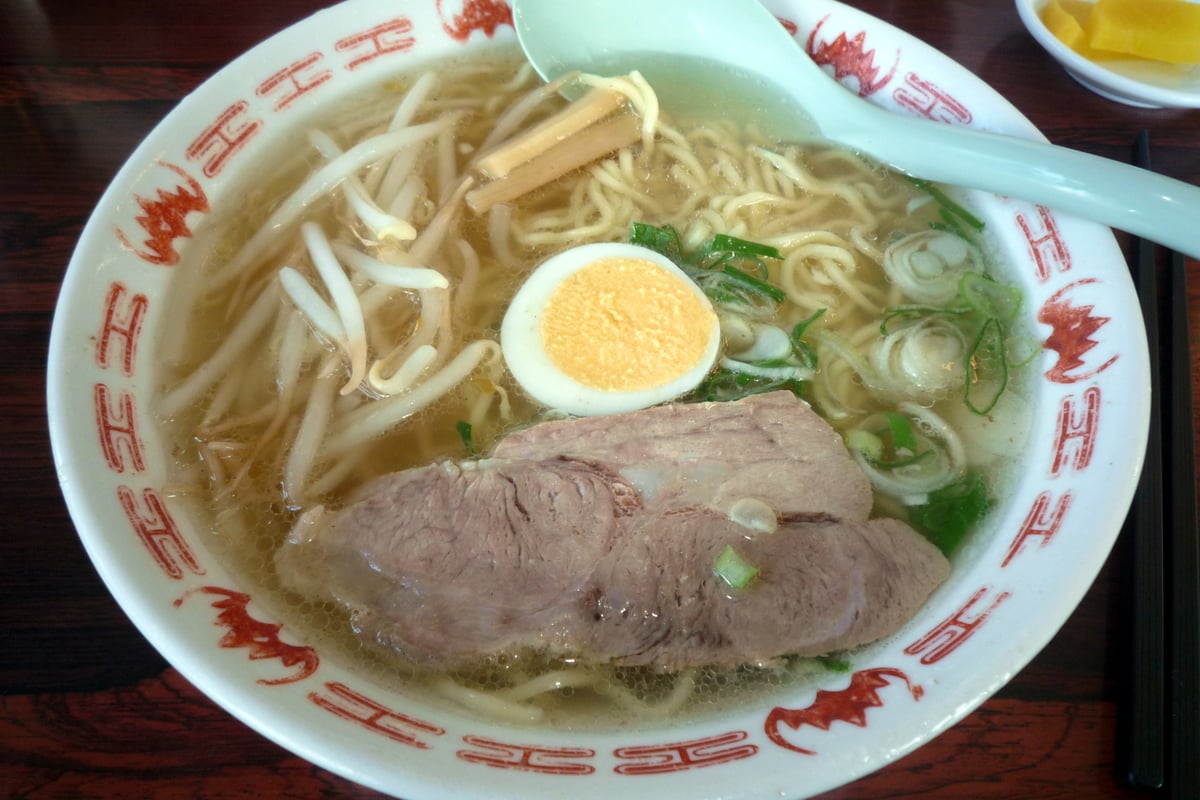
Tottori Gyukotsu Ramen (Beef Bone Broth Ramen)
Tottori Gyukotsu Ramen (Beef Bone Broth Ramen)
Tottori gyukotsu ramen is a local ramen of Tottori Prefecture characterized by a soup made from stock taken from beef bones (gyukotsu). It is unusual among Japanese ramen, where pork bone and chicken carcass broths predominate, and its appeal is said to lie in the sweetness and savory aroma of beef fat and its light aftertaste. Shops are concentrated in the central and western parts of the prefecture, such as Yonago City, Sakaiminato City, Kurayoshi City, and Kotoura Town, and only a very few shops serve it in the eastern part of the prefecture. Locally it has long been a taken-for-granted taste, and it was originally enjoyed as one item on the menus of set-meal restaurants and diners rather than at specialty shops. There are several theories about its origin, but 満洲味 (Masumi) in Yonago City is regarded as the shop where it began. In 2009, enthusiasts formed the Tottori Gyukotsu Ramen Omendan (鳥取牛骨ラーメン応麺団) and began promoting it under the name 'Tottori Gyukotsu Ramen.' In 2010, it was ranked second in a TV ranking of local gourmet foods and became known nationwide.
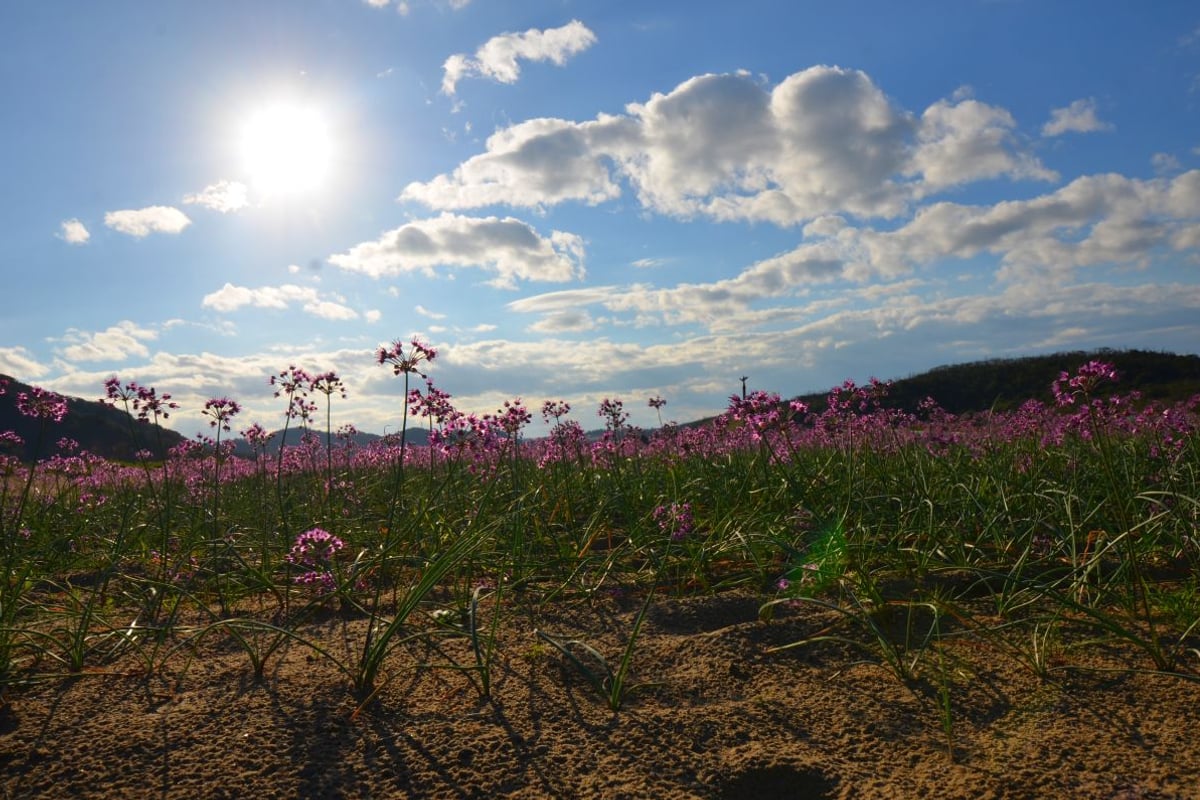
Sakyu Rakkyo (Sand Dune Rakkyo Shallots)
Sakyu Rakkyo (Sand Dune Rakkyo Shallots)
Sakyu rakkyo refers both to the rakkyo (Japanese scallion) grown in the sand dune fields of Fukube Town, Tottori City, adjacent to the Tottori Sand Dunes, and to the pickles made from it. Rakkyo is a vegetable whose small bulb-like part is eaten, and it is commonly pickled in sweet vinegar. The sand dune fields have low soil fertility, and the thick layer of sand makes it hard for excess moisture and nutrients to accumulate, so the rakkyo grow firm and pale. Their crisp texture is highly valued in the market, and in March 2016 they were registered as a Geographical Indication (GI) under the names 'Tottori Sakyu Rakkyo' and 'Fukube Sakyu Rakkyo.' The harvest runs from late May to mid-June; besides being shipped with roots attached or as washed rakkyo, they are sold year-round as processed products such as sweet vinegar pickles. From late October to early November, pale purple flowers bloom all at once across about 120 hectares of fields, creating a seasonal autumn sight of the dunes.
Chizu Kakinoha Zushi (Persimmon Leaf Sushi of Chizu)
Chizu Kakinoha Zushi (Persimmon Leaf Sushi of Chizu)
Chizu kakinoha-zushi is a regional dish handed down in Chizu Town, located in the mountains of southeastern Tottori Prefecture. Thin slices of salted trout and sansho (Japanese pepper) berries are placed on vinegared rice, which is then wrapped in persimmon leaves and left for the flavors to meld. It is said to have arisen from efforts to eat fish without letting it spoil in Chizu, which lies far from the sea. The tannins contained in persimmon leaves have a preservative effect and are said to keep the salted trout from spoiling. In the past, many farmhouses had persimmon trees in their gardens, and these readily available leaves were put to use. It has been made as a feast for hare no hi (special occasions), such as Obon, festivals, New Year, and entertaining guests. Wrapping it in autumn-colored leaves adds color and gives it an autumnal charm. Because opportunities to make it at home have decreased, local residents' groups are working on its production and promotion. In contrast to Nara Prefecture's kakinoha-zushi, which often uses mackerel, the use of trout is a characteristic of Chizu's version.
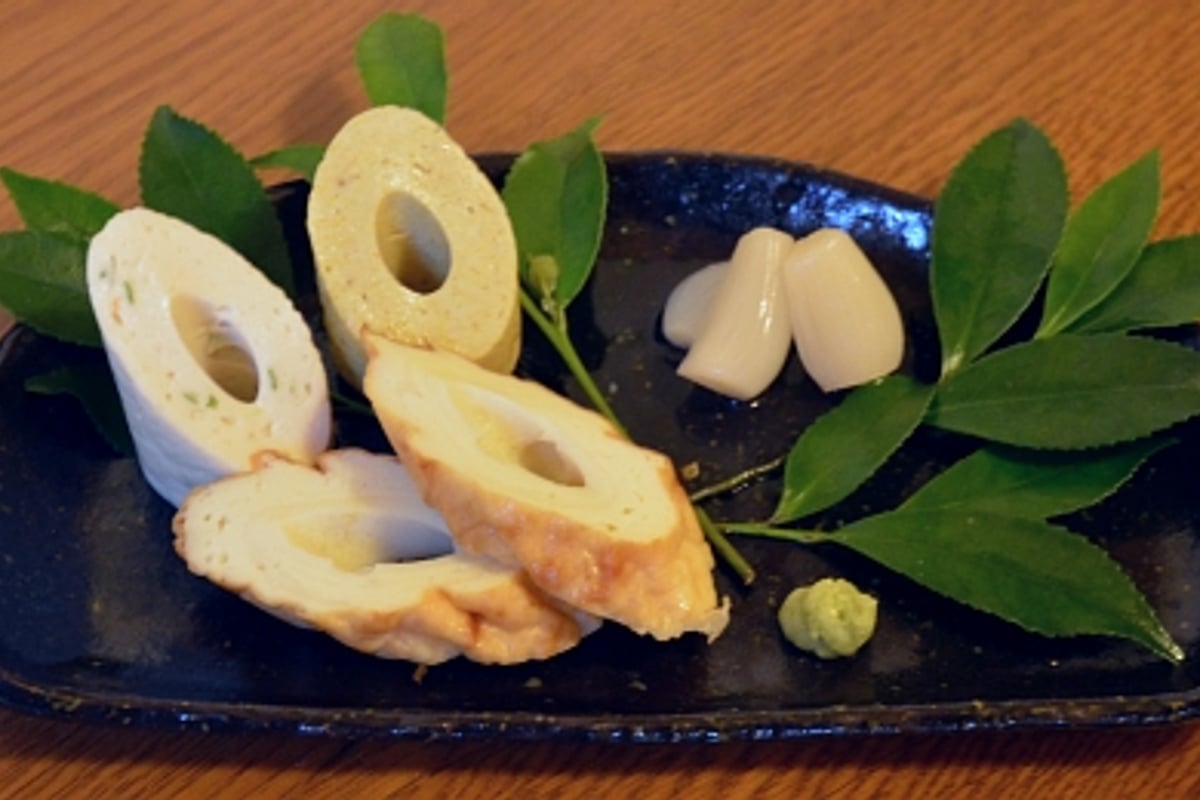
Tofu Chikuwa (Tottori Tofu and Fish Paste Tube)
Tofu Chikuwa (Tottori Tofu and Fish Paste Tube)
Tofu chikuwa is a fish-paste product of Tottori Prefecture made by mixing momen (firm) tofu with surimi (minced white fish), shaping the mixture into the tube form of chikuwa, and steaming it. The basic ratio is said to be roughly 7 parts tofu to 3 parts fish paste. It has a soft, fluffy texture, and the aroma of tofu spreads as you chew. It is an everyday food in the eastern part of the prefecture (the Inaba region) centered on Tottori City, and has also long been enjoyed in the central part of the prefecture. As for its origin, a widely known theory holds that it began when Ikeda Mitsunaka, lord of the Tottori Domain, encouraged people to 'eat tofu instead of fish' for the sake of frugality. On the other hand, materials from the Tottori Prefectural Archives describe this story as popular lore and introduce tofu chikuwa as originally a luxurious food for entertaining guests. It has been eaten not only as an everyday side dish but also on hare no hi (special occasions) such as festivals and weddings. It is typically eaten with ginger soy sauce or wasabi soy sauce, and there are also products such as versions with green onion or curry flavor; it is popular as a Tottori souvenir as well.
Ago no Yaki (Grilled Flying Fish Chikuwa)
Ago no Yaki (Grilled Flying Fish Chikuwa)
Ago no yaki is a large chikuwa (tube-shaped fish cake) from Tottori Prefecture made from flying fish surimi. In Tottori Prefecture, flying fish is called ago, and the product is also popular under the name ago chikuwa. Ordinary chikuwa is made from fish such as Alaska pollock, shark, and Okhotsk atka mackerel (hokke), but ago no yaki is made from flying fish. The grilled skin is fairly firm and fragrant, and it makes a crisp crackling sound when you cut into it with a knife. It is darker in color than ordinary chikuwa, and people seeing it for the first time reportedly sometimes take it for a black chikuwa. It has a satisfying chew and lets you enjoy the full flavor of flying fish. Besides being torn by hand or bitten into whole, it is eaten as a snack with sake, dipped in wasabi soy sauce or ginger soy sauce. It is also used as an ingredient in clear soups and for making stock. Flying fish are in season in early summer, and ago no yaki is also enjoyed as an early summer delicacy. It is also popular as a souvenir for people from outside the prefecture.
Dondoroke Meshi (Tottori Rice Cooked with Stir-Fried Tofu)
Dondoroke Meshi (Tottori Rice Cooked with Stir-Fried Tofu)
Dondoroke meshi is a local dish of Tottori Prefecture in which tofu stir-fried in oil and vegetables such as burdock and carrot are cooked together with rice. It has been handed down from the eastern to the central part of the prefecture and is also called 'tofu meshi' (tofu rice). 'Dondoroke' means thunder in the local dialect. It is said to have been named because the crackling sound made when tofu is put into hot oil sounds like a peal of thunder. In the past, tofu was a treat and a valuable source of protein. Dondoroke meshi has been made at breaks in farm work, such as after rice planting, and when villagers gathered. Dried shiitake mushrooms and aburaage (thin fried tofu) add umami, and it is finished with light seasoning for a clean taste. In the Showa era people began adding chicken, and after rice cookers became widespread, a mixed-rice style of preparation also spread. Today it also appears on school lunch menus featuring local cuisine.
Itadaki (Tottori Rice-Stuffed Fried Tofu Pouch)
Itadaki (Tottori Rice-Stuffed Fried Tofu Pouch)
Itadaki is a local dish of western Tottori Prefecture in which large triangular aburaage (thin fried tofu) are stuffed with uncooked rice and vegetables and slowly cooked in dashi broth. It is enjoyed mainly on the Yumigahama Peninsula and in places such as Yonago City and Sakaiminato City, and is also called 'nonokomeshi.' It looks like a large inari-zushi, but differs in that the uncooked rice is cooked together with the aburaage. According to tradition, it began around the mid-Meiji era when the head priest of a temple in Sakaiminato City took a liking to the aburaage served as shojin cuisine at a temple in Fukui Prefecture, stuffed it with rice and vegetables, and cooked it. It was devised in an era when rice was precious, with plenty of other ingredients so that even a small amount of rice would be filling. It was made in each household on special occasions and also shared with neighbors. The seasoning varies from household to household, and it is said that Sakaiminato City tends toward saltier versions and Yonago City toward sweet-and-savory ones. In fiscal Reiwa 3, it was certified as a 100-Year Food (Agency for Cultural Affairs) in the 'Modern 100-Year Food' category.
Azuki Zoni (Sweet Red Bean New Year Soup with Mochi)
Azuki Zoni (Sweet Red Bean New Year Soup with Mochi)
Azuki zoni is the New Year's zoni of Tottori Prefecture, in which round mochi (rice cakes) simmered until soft are placed in a soup of sweetly simmered azuki (red beans). Both its appearance and preparation closely resemble what other regions call 'zenzai' or 'shiruko.' In Tottori Prefecture it is eaten mainly in the eastern and central parts on the morning of New Year's Day, together with osechi (New Year's dishes). The saltiness of the osechi is said to pair well with the sweetness of azuki zoni. It is said that in the past it was an azuki soup with a little salt, but today it is common to simmer it sweet with sugar. The red color of azuki is believed to have the power to ward off evil, and azuki has long been used as an ingredient for hare no hi (special occasions). It is not eaten throughout the whole prefecture; in mountainous areas, zoni seasoned with soy sauce or miso appears to be more common. In Misasa Town in the central part, tochi-mochi made with tochi (Japanese horse chestnut) nuts gathered in the mountains is added. Azuki zoni is also handed down in places such as Matsue City and the Izumo region of Shimane Prefecture.
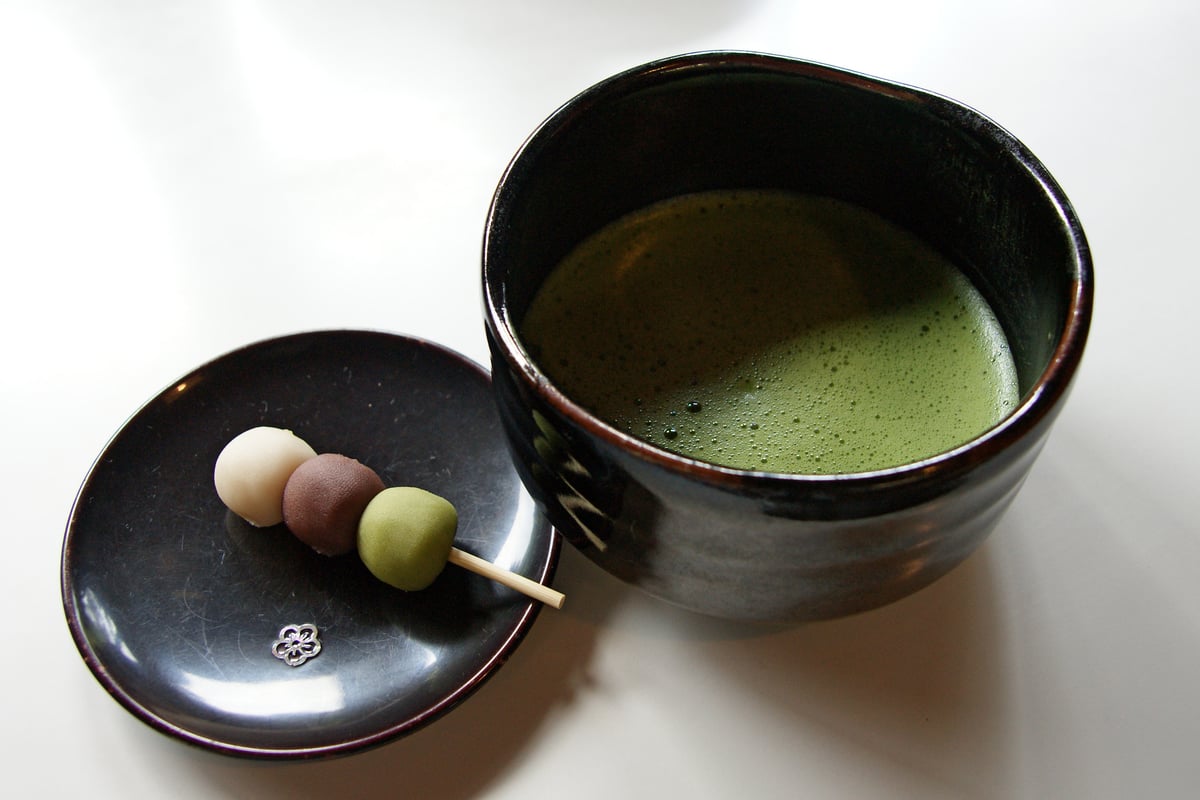
Utsubuki Koen Dango (Kurayoshi Three-Color Dumplings)
Utsubuki Koen Dango (Kurayoshi Three-Color Dumplings)
Utsubuki Koen Dango are three-color skewered dumplings made by 石谷精華堂 (Ishitani Seikado) in Kurayoshi City, Tottori Prefecture. Small pieces of mochi are wrapped in three kinds of bean paste, white bean paste made from tebo (a type of white kidney bean), azuki bean paste, and matcha bean paste, and threaded onto skewers. Locally they are affectionately known as 'Koen Dango' (park dumplings), and they are one of Tottori's representative souvenir sweets. It is said that in Meiji 13 (1880), the founder, 石谷すま, began making them in connection with the story that Nawa Nagatoshi presented amacha (sweet tea) dango to Emperor Go-Daigo. Utsubuki Park, which gives the dango their name, is a park at the foot of Mount Utsubuki in Kurayoshi City and has been selected as one of Japan's 'Top 100 Cherry Blossom Spots.' They are made from local glutinous rice flour mixed with syrup, by repeating the process of kneading and steaming. The maker states that no additives have been used since its founding, and the use-by period is short, at about three days.
Model Course
Choosing Sakyu Rakkyo at the Tottori Sand Dunes, then tofu chikuwa in 元魚町 and a mingei shop
At 砂丘会館 near the entrance to the Tottori Sand Dunes, you can choose processed products such as pickled Sakyu Rakkyo. 味の散歩道まえた in Fukube is the direct sales shop of a fish-paste maker founded in Taisho 10, and its ago chikuwa made from flying fish paste is popular. Back in the city center, buy tofu chikuwa at とうふちくわの里 ちむら or かろや商店 in 元魚町. Finally, head to 鳥取たくみ工芸店, about a 5-minute walk from JR Tottori Station. It is the mingei shop that Yoshida Shoya opened in 1932, and vessels of Ushinoto Ware and Nakai Kiln line its shelves (closed Wednesdays).
Learning about Matsuba crab at Karo's かにっこ館 and market, then making Inshu Washi in Aoya
とっとり賀露かにっこ館, near Tottori Port, is a free crab aquarium where you can learn about Matsuba crab. At nearby 鳥取港海鮮市場かろいち, fresh fish shops line up, and in winter you can compare and buy Matsuba crab and oyagani (female snow crab). In the afternoon, head west on the JR San'in Line and try papermaking at あおや和紙工房 in Aoya (reservation required; last reception at 15:30; closed Mondays). If you stay in Tottori City in winter, you can enjoy a Matsuba crab course at かに吉 near Tottori Station (reservations only).
Up the Sendai River to the mingei kilns of Kawahara, the nagashibina of Mochigase and the kakinoha-zushi of Chizu
Kawahara in Tottori City is home to 牛ノ戸焼窯元, where the somewake dish was born under the guidance of Yoshida Shoya, and to 因州・中井窯, known for its somewake in green, black and white. Both have irregular closing days, so contact them by phone in advance. Stopping by the 布袋 branch of とうふちくわの里 ちむら before lunch is also recommended. At 流しびなの館 in Mochigase, you can try making paper hina dolls under the guidance of ときわ流しびなの会 (60-minute course about 1,430 yen; reservation required). Further south in Chizu, 古民家カフェ 和佳 in the Itaibara settlement is said to serve kakinoha-zushi at lunch from around late May to mid-October.
Kurayoshi Gasuri and Hakota Ningyo at Kurayoshi's white-walled storehouses, then gyukotsu ramen in Kotoura
At はこた人形工房, in a corner of Kurayoshi's Shirakabe Dozogun (white-walled storehouses), you can paint a face on a hariko (papier-mache) Hakota Ningyo doll (about 30 minutes, from about 1,600 yen). At nearby 倉吉ふるさと工芸館, you can watch weaving demonstrations by 倉吉絣保存会 and also buy kimono fabric and small items. Note that both are closed on Wednesdays. At 石谷精華堂, founded in Meiji 13, you can enjoy three-colored Utsubuki Koen Dango in white, azuki and matcha in the tearoom. In the evening, go on to Kotoura and have gyukotsu ramen at 香味徳 赤碕店, founded in 1949.
A Yumigahama course of Yonago's Yodoe Gasa, gyukotsu ramen and Itadaki, and Sakaiminato's Yumihama Gasuri
At 和傘伝承館, about a 5-minute walk from JR Yodoe Station, you can watch the making of Yodoe Gasa, and with a reservation you can also try making a mini umbrella. For lunch, head to 満洲味 (Masumi) in Yonago City, said to be the birthplace of gyukotsu ramen. At 手打ちそば 昌庵 in 彦名町, you can also taste Itadaki, a Yonago local dish of fried tofu pouches stuffed with rice and vegetables and simmered (about 420 yen for two). In the afternoon, travel north along the Yumigahama Peninsula and try a Yumihama Gasuri experience of weaving cloth from Japanese cotton at 工房ゆみはま in 竹内町, Sakaiminato City (a plan listed on a booking site costs from about 8,000 yen per person).
Events
Mochigase Nagashibina Festival (もちがせ流しびな行事)
Every year on the 3rd day of the 3rd month of the old lunar calendar (April 9 in 2027) / Around 流しびなの館, Mochigase, Tottori City (Sendai River)
View details →