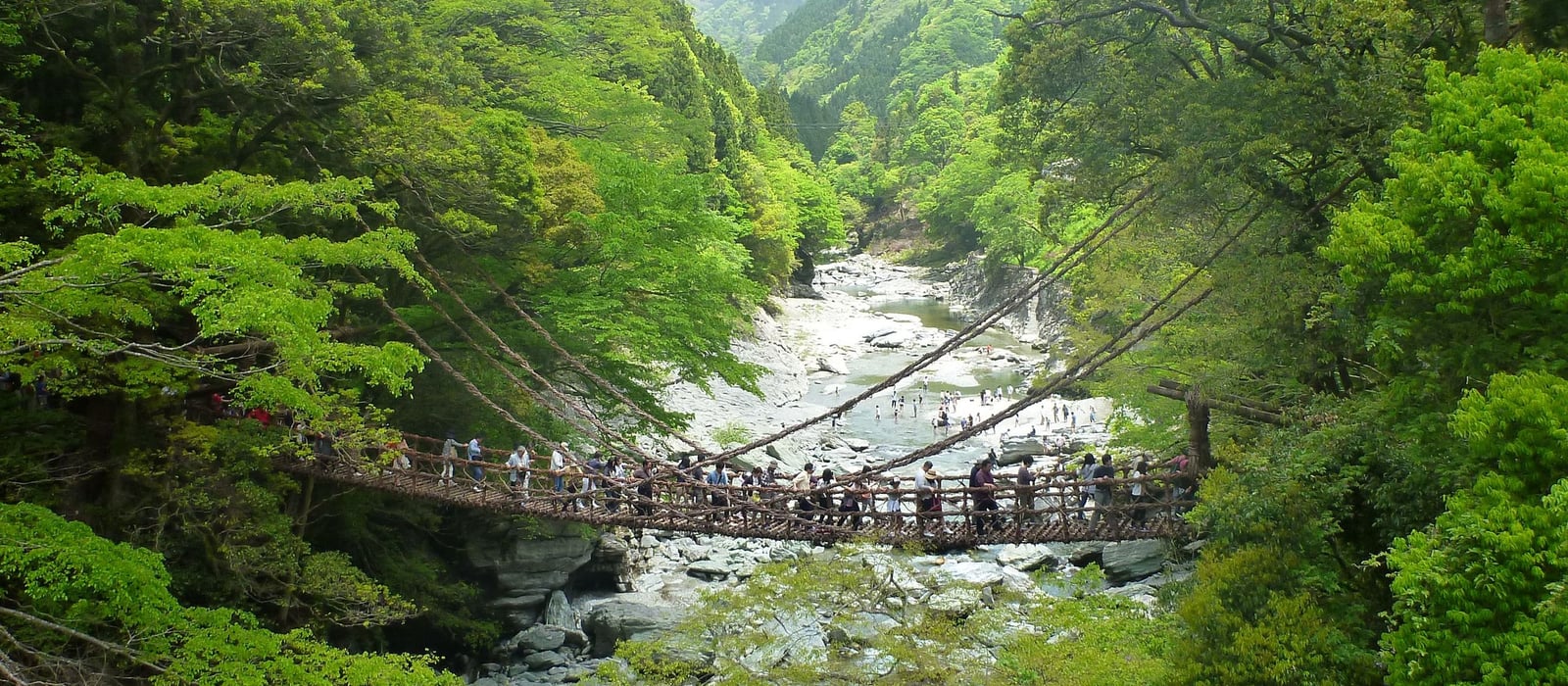
 Image: Wikimedia Commons
Tokushima Prefecture
Tokushima Prefecture lies in eastern Shikoku and corresponds to Awa (Awa Province), one of Japan's former provinces. The Yoshino River flows east through the center of the prefecture, and mountains cover about 80 percent of its land. In the Edo period, the Hachisuka clan's Tokushima domain was based here, and sukumo (composted indigo leaves), a dye made from indigo grown in the Yoshino River basin, was shipped throughout Japan and supported the domain's finances. Its Traditional Crafts designated by the Minister of Economy, Trade and Industry are three items: Awa Washi, Otani Ware (Otani-yaki) and Awa Shoai Shijira-ori. Otani Ware developed through the making of aigame, the vats used for indigo dyeing, and the yarn for Shijira-ori is also dyed with Awa indigo (Awa-ai). Tafu (bark-fiber cloth), a cloth made from kozo (paper mulberry), has been passed down in Kito, Naka Town, and Awa Deko (Awa puppets), the puppets used in Awa ningyo joruri (puppet theater), in the area around Tokushima City. Karaki butsudan (exotic-hardwood Buddhist altars), kyodai (dressing stands) and yusanbako (picnic boxes), which draw on the techniques of shipwrights, are also Tokushima handicrafts. In food, the prefecture is known for Tokushima Ramen topped with sweet-savory pork belly and a raw egg, Iya Soba and Sobagome Zosui (buckwheat-grain porridge) from the Iya area, Handa Somen from Tsurugi Town, and Tarai Udon from Awa City. Bouze no Sugatazushi (whole butterfish sushi), Fish Katsu from Komatsushima, Awa Bancha (fermented tea) made by lactic acid fermentation, wasanbon (fine Japanese sugar) made from chikuto sugarcane, and Taki no Yakimochi from the foot of Mount Bizan are also flavors unique to Tokushima.
Tokushima's Traditional Crafts

Awa Washi (Awa Japanese Paper)
Awa Washi (Awa Handmade Paper)
Awa Washi is a handmade washi (Japanese paper) that has been made generation after generation in Tokushima Prefecture. According to Tokushima Prefecture, it is said to have begun about 1,300 years ago with the Awa Inbe clan (Awa Inbe-shi). Its main raw materials are kozo (paper mulberry), mitsumata and gampi, and it is characterized by its resistance to water and tearing. In the Edo period the Tokushima domain protected papermaking, and at its peak in the Meiji era there were some 500 papermaking farm households along the Yoshino River basin. In 1976 (Showa 51) it was designated a national Traditional Craft. Indigo-dyed washi, dyed one sheet at a time with indigo, is one of the items that symbolize Awa Washi. Today the main production area is Yamakawa-chō in Yoshinogawa City, where shoji paper and gasenshi (painting and calligraphy paper) are made, as well as printmaking paper and inkjet-compatible washi. At Awagami Factory (アワガミファクトリー, the Awa Washi Traditional Industry Hall) in Yamakawa-chō, visitors can try papermaking.
Otani Ware (Otani-yaki)
Otani-yaki (Otani Ware)
Otani Ware (Otani-yaki) is pottery fired in Otani, Ōasa-chō, Naruto City, Tokushima Prefecture, with a history of more than 230 years. It is said to have begun in 1780 (An'ei 9), in the late Edo period, when Bun'emon, a pottery craftsman from Bungo Province (present-day Oita Prefecture) who came on the Shikoku pilgrimage, demonstrated his wheel-throwing skills in Otani Village. It developed on the strength of demand for the large indigo vats (aigame) used in indigo dyeing. Large pieces are made with 'ne-rokuro' (the lying-down wheel technique), in which one person lies down and turns the wheel with their feet while another shapes the clay. Made from iron-rich clay, it is characterized by a rough texture and a faint, metal-like sheen. It was designated a national Traditional Craft in 2003 (Heisei 15). Today, besides water jars and water-lily bowls, everyday items such as teacups and plates are also made. Kilns are dotted around the Otani district, and the Otani-yaki Kiln Festival is held every November.
Awa Shoai Shijira-ori (Awa Indigo Crepe Cotton)
Awa Shoai Shijira-ori (Awa Indigo Crepe Cotton)
Awa Shoai Shijira-ori is a cotton textile woven in Tokushima City, Tokushima Prefecture. Its surface has fine crinkles called 'shibo', which keep it from clinging to the skin and give it a smooth, dry feel. It is said to have been devised in the early Meiji period by Kaifu Hana of Ataka Village, Myodo District, Awa Province (present-day Ataka, Tokushima City), who improved on 'tatae-ori', a striped cotton fabric. According to tradition, it started when a kimono hung out to dry was caught in a sudden shower and, after being dried in the sun, was found to have shrunk. Fabric that uses yarn dyed with natural Awa indigo (Awa-ai) is called 'Awa Shoai Shijira-ori', and it was designated a national Traditional Craft in 1978 (Showa 53). Being light and cool, it is used for summer kimono, jinbei (summer two-piece garments), samue (traditional work clothes) and more. Today, weaving houses (orimoto) in Kokufu-chō, Tokushima City, handle everything from yarn dyeing to weaving and finishing.
Awa Ai (Awa Indigo)
Awa Ai (Awa Indigo)
Awa Ai (Awa indigo) refers to the indigo plants grown in the Yoshino River basin of Tokushima Prefecture, the dye called sukumo (composted indigo leaves) made by fermenting their leaves, and the indigo dyeing done with sukumo. The Yoshino River flooded frequently, but indigo could be harvested before the typhoons came, and the fertile soil carried in by the floods allowed it to be grown in the same fields year after year, so indigo farming flourished. In the Edo period, the Hachisuka clan, lords of the Tokushima domain, protected the cultivation and production of indigo, and Awa indigo came to dominate markets across Japan. It reached its peak in the Meiji era, but then declined under pressure from imported Indian indigo and synthetic dyes. Today, craftsmen called aishi (indigo masters) still make sukumo using traditional techniques, and the Yoshino River basin produces more sukumo than anywhere else in Japan. In 2019 (Reiwa 1), 'Ai no Furusato Awa' (Awa, Home of Indigo), a story shared by nine municipalities in the basin, was recognized as Japan Heritage. Visitors can try indigo dyeing at places such as Ai no Yakata (Indigo Museum) in Aizumi Town.
Awa Tafu (Awa Bark-Fiber Cloth)
Awa Tafu (Awa Bark-Fiber Cloth)
Awa Tafu is a cloth woven from the bark fibers of kozo (paper mulberry), handed down in the Kito district of Naka Town, Tokushima Prefecture. Tafu (bark-fiber cloth) is a sturdy fabric long woven in many parts of Japan, used for work clothes, bags for grain and lunches, the edging of tatami mats and more. As cotton spread, people stopped making it in most places, and from the Showa era onward it steadily declined. Today, the Kito district is said to be the only place in Japan where the technique survives. Production involves a series of labor-intensive steps, from cutting the kozo and processing the bark to making the thread and weaving on a jibata (ground loom). In March 2017 (Heisei 29), it was designated a national Important Intangible Folk Cultural Property as 'Awa no Tafu Seizo Gijutsu' (the production technique of Awa tafu). The local Awa Tafu Seizo Giho Hozon Denshokai (Society for the Preservation of Awa Tafu Production Techniques) carries on the technique and welcomes visitors to observe and try production at its heritage facility, Tafuan.
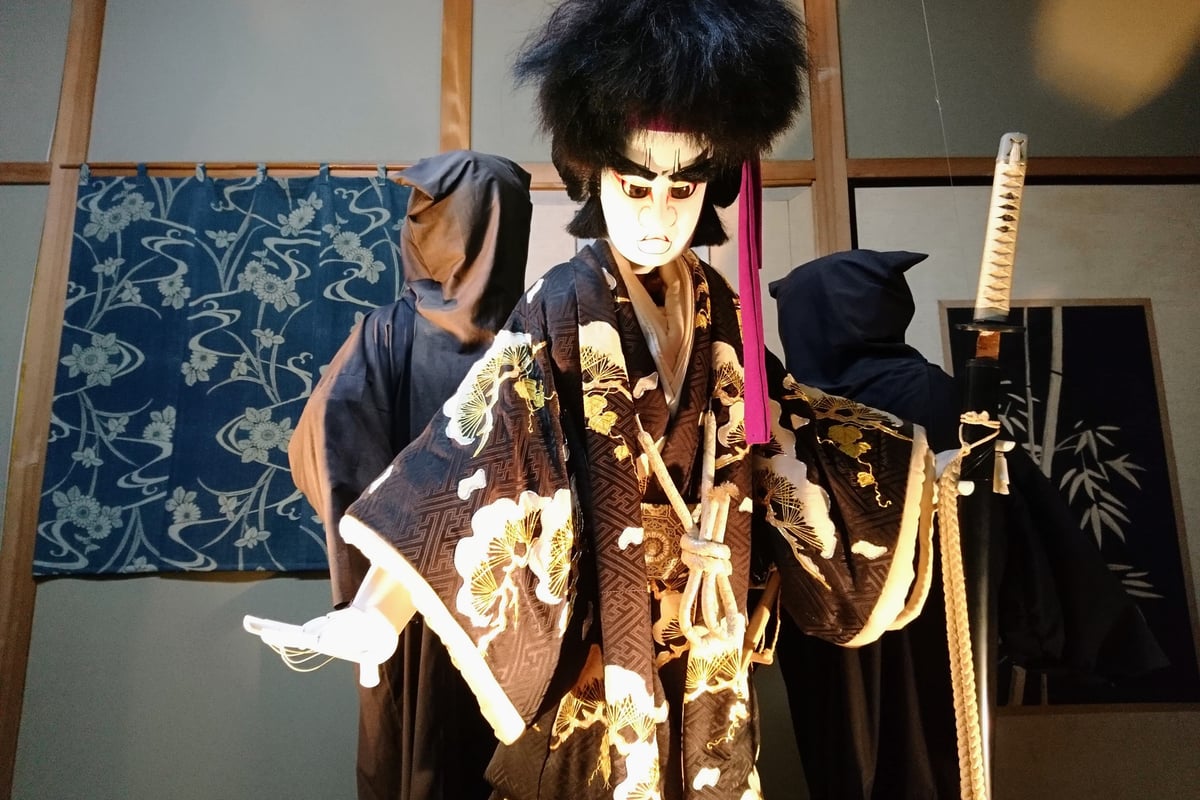
Awa Deko (Awa Puppets)
Awa Deko (Awa Puppets)
Awa Deko are the puppets used in Awa Ningyo Joruri, the puppet theater handed down in Tokushima Prefecture. 'Deko' means a doll made of wood. Awa Ningyo Joruri is a form of ningyo joruri (puppet theater) in which three puppeteers operate a single puppet to the accompaniment of gidayu-bushi (dramatic narrative chanting). It was designated a national Important Intangible Folk Cultural Property in 1999 (Heisei 11). In the past, it was performed during festivals on noson butai (rural stages) in places such as shrine grounds. In Awa, puppet heads (kashira) are basically of the six-sun type, a size larger than the four-sun type used in Bunraku (sun being a traditional unit of length). This is thought to have been devised by puppet makers from the early to mid-Meiji era so that the puppets would stand out even on outdoor stages. Mechanisms are built into the heads, and pulling a string changes the facial expression. The tools and works of three generations of the puppet maker Tenguhisa in Kokufu-cho, Tokushima City, are a national Important Tangible Folk Cultural Property. Works by puppet makers can be seen at the Awa Deko Ningyo Kaikan (Awa Puppet Hall) in Kawauchi-cho, Tokushima City.
Yusanbako (Picnic Boxes)
Yusanbako (Tokushima Picnic Boxes)
Yusanbako (picnic boxes) are small three-tiered wooden lunch boxes handed down in Tokushima, also called 'Awa no Tamatebako' (the treasure box of Awa). 'Yusan' means going out to play in the hills and fields. At the Peach Festival (Momo no Sekku) and the Iris Festival (Shobu no Sekku), children packed these boxes with food and sweets and headed out to the mountains, the sea and the meadows. Typical contents were rice dishes such as maki-zushi (rolled sushi), nishime (simmered vegetables) and sweets such as yokan and uiro. The three tiers fit into a box-shaped frame, are held in place by a lid that slides up and down, and the whole is carried by the handle on top. Said to have been in use since the Edo period, they were a springtime tradition in Tokushima until around the Showa 40s (1965-1974). Changes in lifestyle once made them disappear, but efforts by researchers and woodworkers have led to their being made again. In Tokushima City, Ebuchi Kyodaiten (江淵鏡台店) makes yusanbako using the sashimono (joinery cabinetry) skills it developed making kyodai (dressing stands), and also offers painting experiences.
Tokushima Karaki Butsudan (Hardwood Buddhist Altars)
Tokushima Karaki Butsudan (Tokushima Hardwood Buddhist Altars)
Tokushima Karaki Butsudan are karaki butsudan (exotic-hardwood Buddhist altars) made in Tokushima Prefecture. Karaki refers to hard, beautiful woods such as ebony (kokutan), rosewood (shitan) and tagayasan (iron-wood), mostly brought in from overseas. Unlike gold-lacquered butsudan (kin-butsudan) decorated with gold leaf and lacquer, they keep ornamentation such as gold leaf to a minimum and are finished to bring out the beauty of the wood grain. Tokushima has been a woodworking center since the days of domain rule. While taking on butsudan production for Osaka and other places, it acquired karaki techniques and became a major production area for karaki butsudan. Today it is said to rank first in Japan in shipment value of karaki butsudan. In 2003 they were certified as a Tokushima Prefecture Traditional Specialty Product, and in 2007 'Tokushima Karaki Butsudan' was registered as a regional collective trademark. Production is divided among specialist craftsmen for the wooden body, carving, coating and assembly. A single butsudan is said to consist of 2,000 to 3,000 parts.
Tokushima Kyodai (Dressing Stands)
Tokushima Kyodai (Tokushima Dressing Tables)
Tokushima Kyodai are kyodai (dressing stands) made mainly in Tokushima City, also known as 'Awa Kyodai.' In Tokushima, woodworking has flourished alongside indigo dyeing and shijira-ori weaving, and in the Meiji period butsudan (Buddhist altars) and kyodai called 'Atakemono' thrived as a local industry. Kyodai began in the Edo period as boxes for holding hand mirrors, grew larger in the Taisho period, and in the early Showa period Western-style kyodai also began to be made. From around the Showa 30s to 50s (1955-1984) the number of makers increased greatly, and Tokushima was said to be one of the two great kyodai production areas, alongside Shizuoka. A defining feature is that paulownia is used unfinished (shiraki) for the drawers and other interior parts, with the basic structure being a box assembled from boards with notches cut into them. Kyodai were sought after as part of a bride's trousseau, and with repeated innovations in coating, products suited to each era were made. However, with changes in lifestyle, production has declined sharply. Today, makers such as Ebuchi Kyodaiten (江淵鏡台店) in Tokushima City continue to make kyodai and furniture using sashimono (joinery cabinetry) techniques.
Tokushima's Local Food
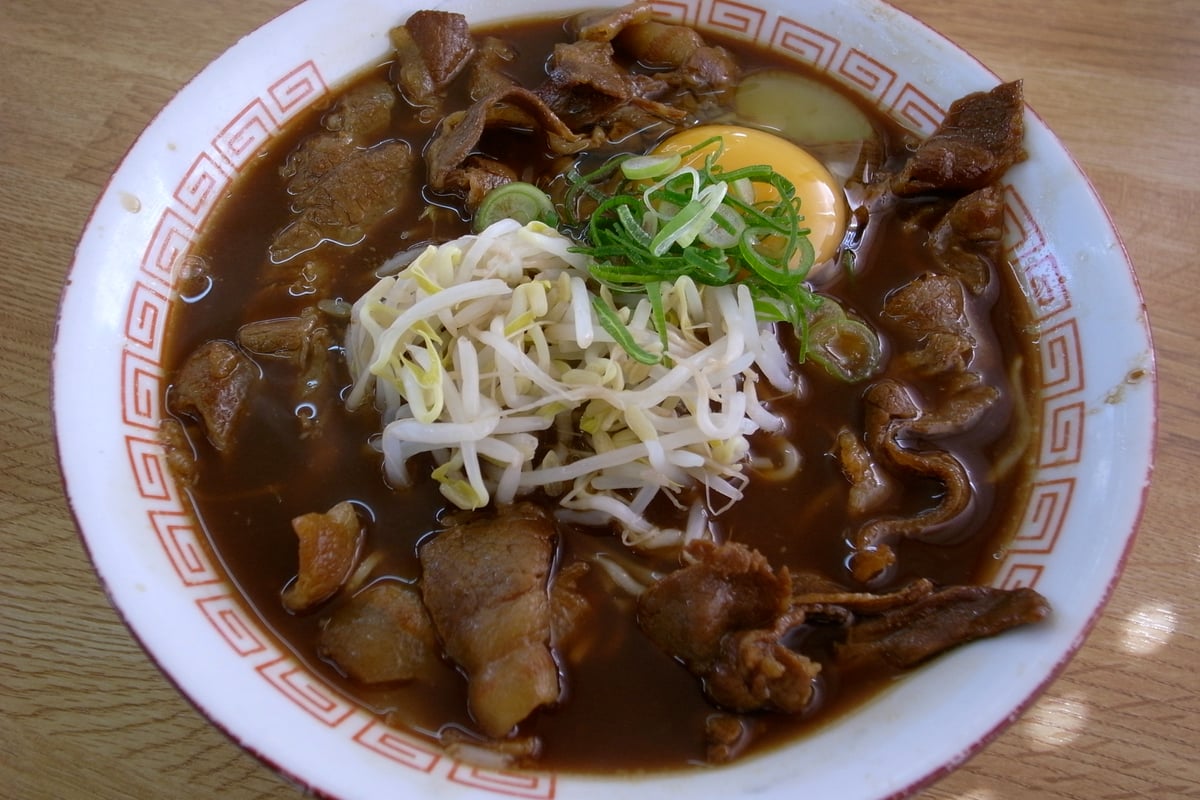
Tokushima Ramen
Tokushima Ramen (Pork Bone Soy Ramen with Sweet Simmered Pork Belly and Raw Egg)
Tokushima Ramen is a local ramen eaten in Tokushima Prefecture. It is broadly divided into three styles according to the color of the soup: brown, yellow and white. What is generally known as 'Tokushima Ramen' is the brown style, a dark brown soup that combines tonkotsu (pork-bone) broth with a tare (seasoning base) of koikuchi (dark) soy sauce. Its distinctive feature is that, instead of chashu, it is topped with pork belly simmered in a sweet and savory sauce. Many shops have customers crack a raw egg into the bowl, and it is sometimes described as 'ramen like sukiyaki.' Locally, many people are said to eat ramen as a side dish with plain white rice. It became known nationwide after いのたに (Inotani) of Tokushima City opened a branch at the Shin-Yokohama Ramen Museum.
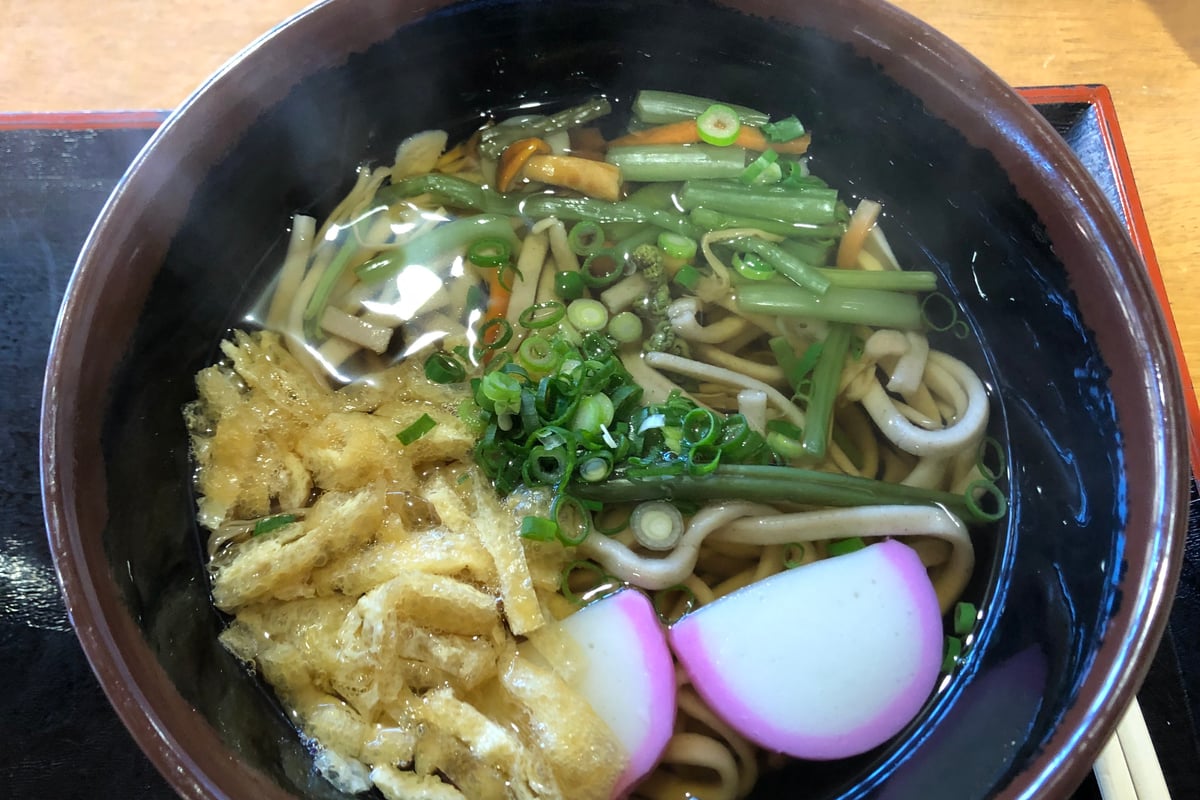
Iya Soba (Iya Buckwheat Noodles)
Iya Soba (Thick, Short Buckwheat Noodles of the Iya Valley)
Iya Soba is a soba (buckwheat noodle) dish handed down in the Iya area of Miyoshi City, Tokushima Prefecture. Iya lies in the deep valleys of the Shikoku Mountains, a land of steep slopes where rice was hard to grow. For this reason, buckwheat, which has a short growing period and grows even in poor soil, has been eaten as a staple food. Iya Soba is characterized by being made with almost no wheat flour as a binder (tsunagi). Because the noodles break easily, they end up thick and short, letting you enjoy a rustic flavor and the aroma of buckwheat. Many legends remain in Iya of Heike ochiudo, defeated warriors of the Taira clan who fled there and settled. Iya Soba, too, is said to have been handed down as the everyday food of these Heike fugitives. Today it is a specialty of Miyoshi City and can be eaten at soba restaurants and roadside stations (michi-no-eki) around the Kazurabashi vine bridge and Oboke.
Handa Somen (Hand-Stretched Wheat Noodles)
Handa Somen (Thick Hand-Stretched Wheat Noodles of Tsurugi)
Handa Somen is a hand-stretched somen (thin wheat noodle) made in the Handa district of Tsurugi Town, Mima District, Tokushima Prefecture. Its most distinctive feature is that it is thicker than ordinary somen, close to the thickness of hiyamugi (a slightly thicker wheat noodle). It has a strong, springy texture (koshi) and a slippery smoothness, and it is sometimes said that 'the noodles bounce on the tongue.' It is said to have begun in the Edo period, when boatmen who handled river transport on the Yoshino River brought the production method back from Miwa in Nara. The cold winds blowing from the Shikoku Mountains and the water flowing from Mt. Tsurugi into the Yoshino River were well suited to making somen. Its only ingredients are wheat flour, salt and water, and because it does not easily fall apart when cooked, it can be eaten either cold or hot. In Tokushima households it is used in a variety of dishes throughout the four seasons. 'Handa Somen' is also registered as a regional collective trademark.
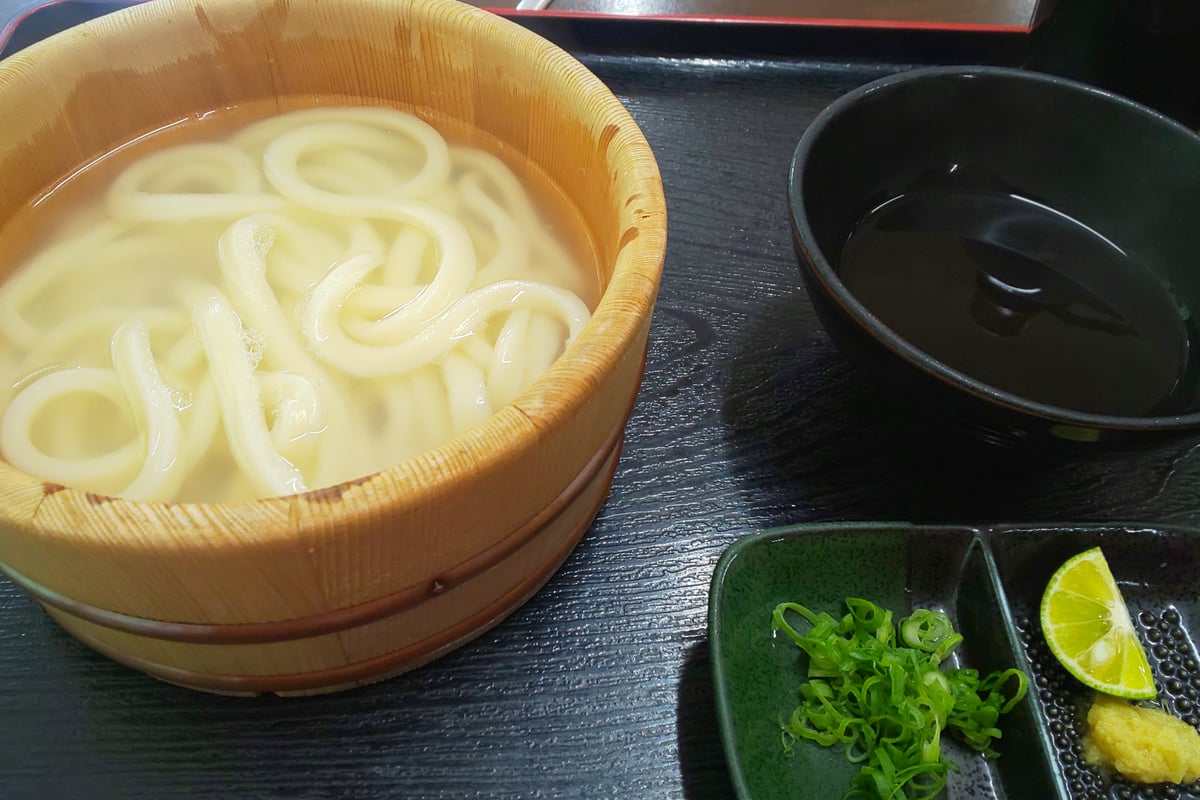
Tarai Udon (Udon Served in a Wooden Tub)
Tarai Udon (Kama-age Udon Served in a Wooden Tub)
Tarai Udon is a local dish handed down in the Gosho (御所) district of Donari-cho (土成町), Awa City, Tokushima Prefecture. Boiled udon is served together with its cooking water in a large wooden tarai (tub). Several people gather around it, and each scoops up the noodles and dips them in a dipping sauce. It is a type of kama-age udon, in which freshly boiled noodles are eaten while still in their hot water. It is said to have begun in the late Edo period, when woodcutters working in the upper reaches of the Miyagochidani River (宮川内谷川) boiled and ate udon on the riverbank. In the past, the dipping sauce was made with dashi (broth) from jinzoku (a river fish of the goby family) caught in the river. The name is said to come from a remark by the then governor of Tokushima Prefecture in the early Showa era, who described it as 'udon in a vessel like a tarai.' Today, specialty restaurants line the Miyagochidani River, and 'Gosho no Tarai Udon' has also been certified as one of the Agency for Cultural Affairs' '100-Year Foods.'
Sobagome Zosui (Buckwheat-Grain Porridge)
Sobagome Zosui (Buckwheat Groat Porridge Soup of Iya)
Sobagome Zosui is a local dish that has been eaten mainly in the Iya (祖谷) area of Miyoshi City, Tokushima Prefecture. Sobagome (hulled buckwheat grains) is buckwheat that, instead of being ground into flour, is boiled in salted water, hulled and dried. It is called 'kome' (rice) because the grains are likened to grains of rice, but it is not rice from the rice plant. Chicken and vegetables are simmered in dashi (broth), the flavor is adjusted with soy sauce, and boiled sobagome is added to finish. Because it has plenty of broth, it is also called 'sobagome-jiru' (sobagome soup). In Iya, surrounded by mountains where rice is hard to grow, buckwheat, which has a short growing period, has been grown as a staple food. There is also a legend that members of the Heike (Taira clan), who fled to Iya after their defeat in the Genpei War, ate this dish at New Year. Today, sobagome is sold in supermarkets in the prefecture, and the dish is also made at home.
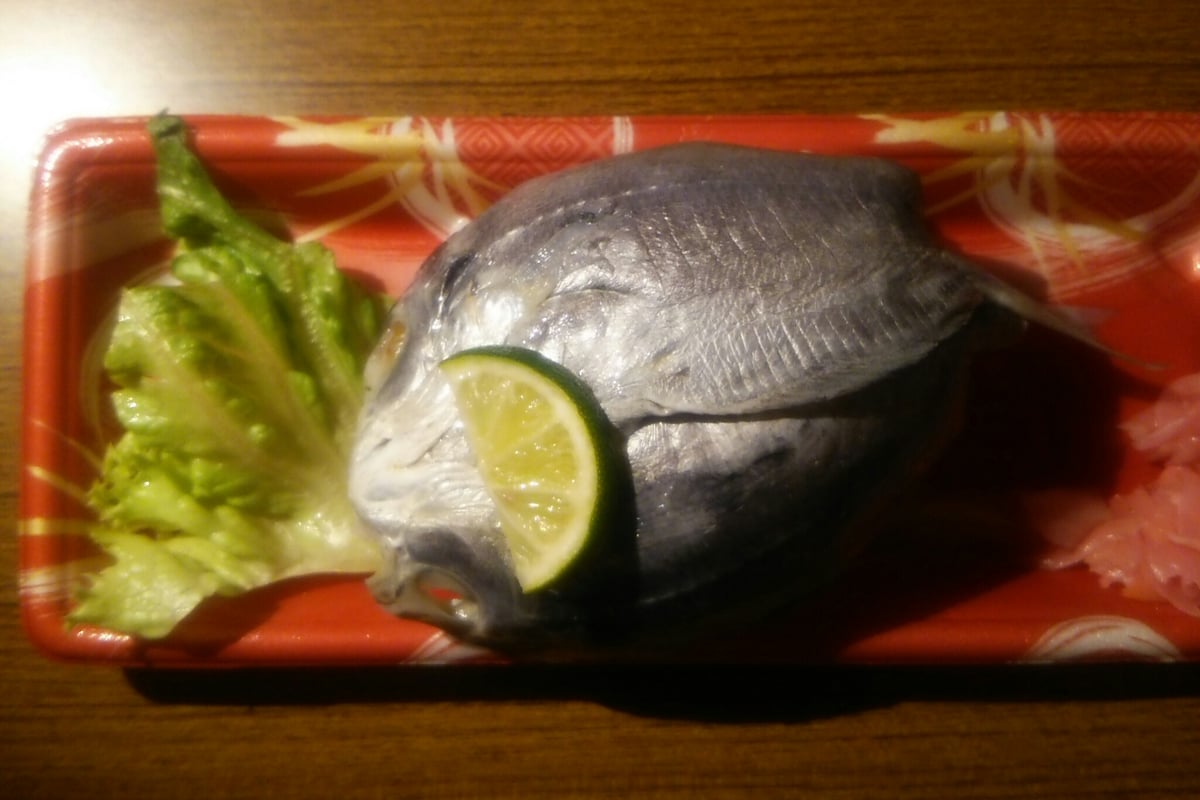
Bouze no Sugatazushi (Whole Butterfish Sushi)
Bouze no Sugatazushi (Whole Japanese Butterfish Pressed Sushi)
Bouze no Sugatazushi is a pressed sushi that has been made in Tokushima Prefecture as a feast for autumn festivals. 'Bouze' is the Tokushima name for the white-fleshed fish whose standard Japanese name is ibodai (Japanese butterfish). The bouze is split open along the back, its bones and innards are removed, and it is cured with salt and vinegar before being wrapped around sushi rice shaped to match the size of the fish. Its defining feature is that it is finished in the fish's whole form, from head to tail. Citrus aromas typical of Tokushima are also put to use, for example by adding yuzu vinegar to the vinegar mixture or garnishing with slices of sudachi (citrus). Bouze comes to the coasts of Tokushima Prefecture from summer to autumn and is caught in abundance around the time of the autumn festivals. On festival days it was served alongside sekihan (red bean rice), kakimaze-zushi (mixed sushi) and clear soup. Each household is said to have its own way of making it, but in recent years there have been fewer occasions to make it at home. In autumn, sugatazushi (whole-fish sushi) and nigiri made with bouze are sold at supermarkets, sushi shops and farmers' markets.
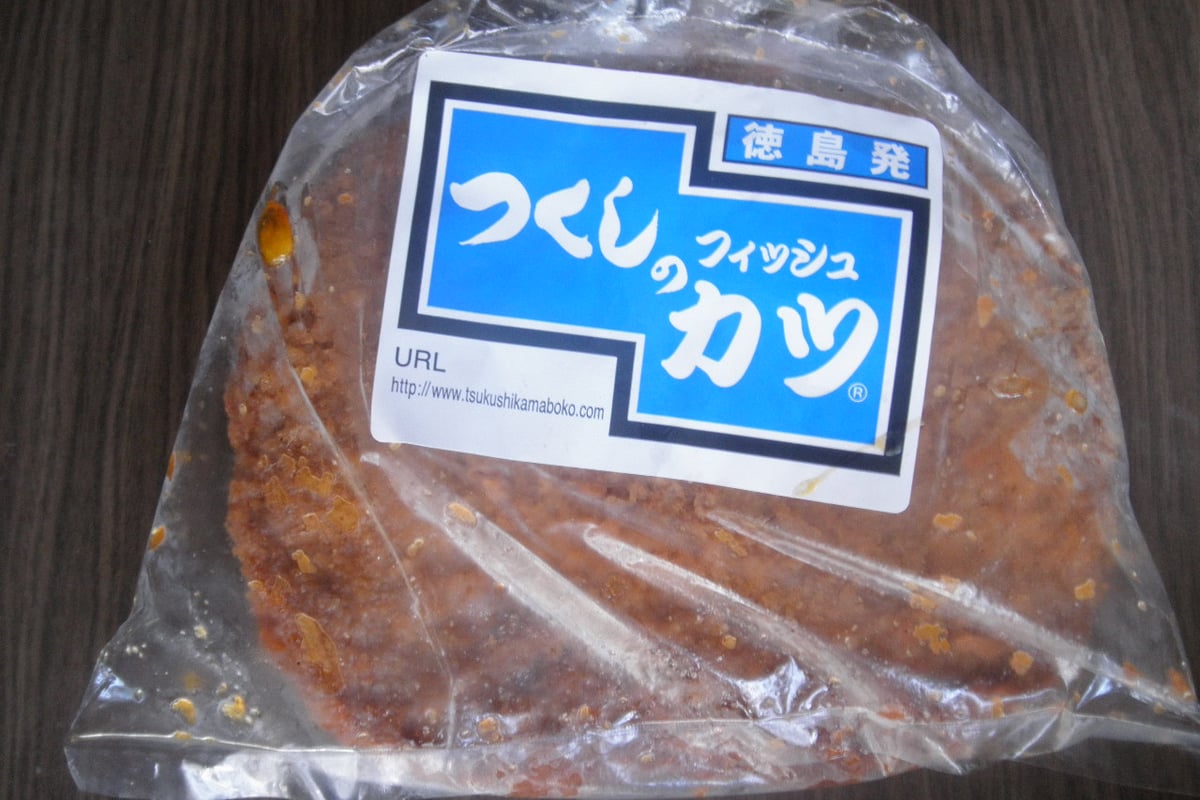
Fish Katsu
Fish Katsu (Curry-Spiced Breaded Fish Cake)
Fish Katsu is a fish-paste product from Tokushima Prefecture, made by seasoning surimi (fish paste) with curry powder, chili pepper and the like, coating it in breadcrumbs and deep-frying it. The name may bring to mind fried fish fillets, but it belongs to the same family of fish-paste products (nerimono) as kamaboko and chikuwa. It is said to have been devised by Tsukushi Kamaboko (津久司蒲鉾), a kamaboko shop in Komatsushima City. Other shops later began making it with their own recipes, and it spread throughout the prefecture. It is made from surimi of fish caught in nearby waters, such as cutlassfish (tachiuo) and lizardfish (eso). Because it is flavored with curry, it tastes good even when cold, and it is eaten every day as a side dish, as a snack with drinks and in bento lunches. In eastern Tokushima Prefecture it is so familiar that 'katsu' means Fish Katsu, and it is also called Tokushima's soul food. Besides being eaten as is, it is enjoyed with a squeeze of sudachi (citrus) or topped with sauce or mayonnaise. It is eaten in many ways, including as a topping for udon or okonomiyaki.
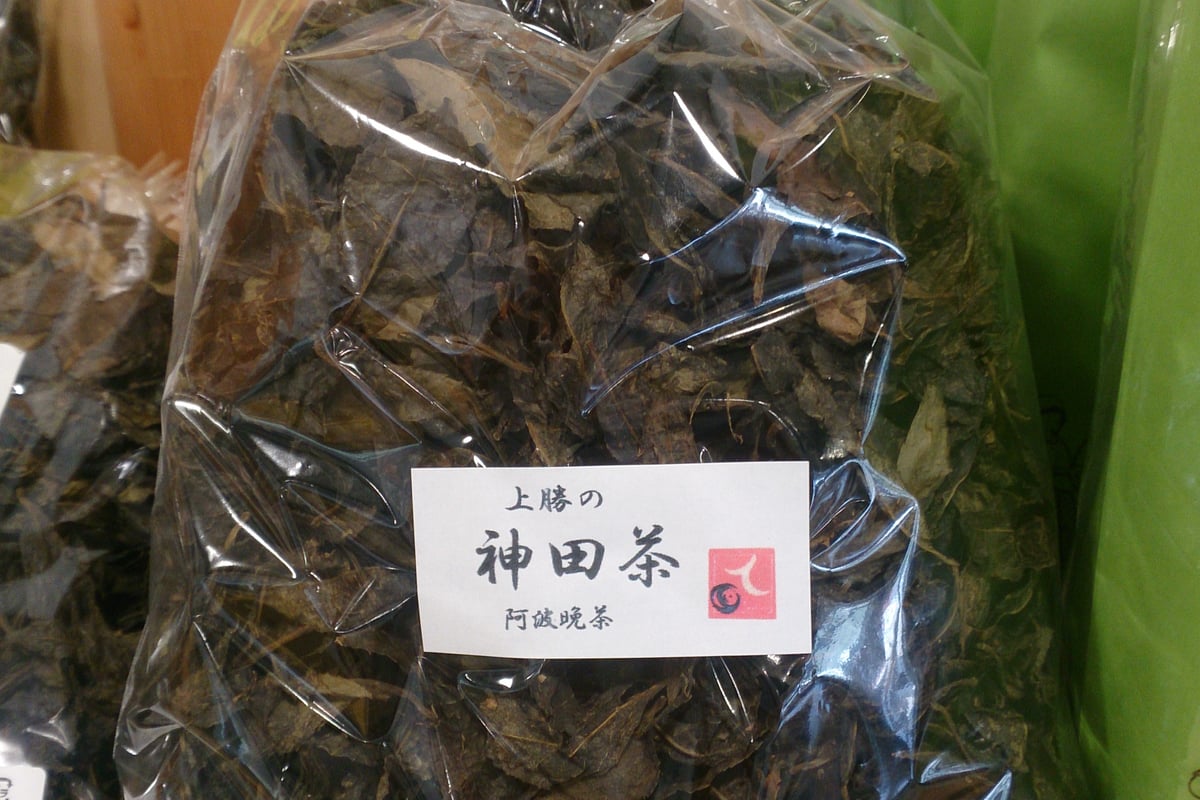
Awa Bancha (Fermented Tea)
Awa Bancha (Lactic-Fermented Tea of Tokushima)
Awa Bancha (fermented tea) is a post-fermented tea made with the help of lactic acid bacteria, produced in the mountainous areas of Tokushima Prefecture. The main production areas are Kamikatsu Town in Katsuura District and the area of the former Aioi Town in Naka Town, Naka District. It is also made in places such as Minami Town in Kaifu District. Large tea leaves that have grown through the summer are picked and boiled in a big cauldron, then rubbed to bruise them, packed into tubs and left to ferment. Finally, they are dried in the sun. It is characterized by a faint sourness from lactic acid fermentation and a soft, gentle mouthfeel. It was originally made by each household for its own consumption, so the method and flavor differ slightly from family to family. In 2018 (Heisei 30), it was selected by the national government as an 'Intangible Folk Cultural Property Requiring Measures Such as Making Records' under the title 'Production Techniques of Fermented Tea in the Shikoku Mountains.' In 2021 (Reiwa 3), the 'Production Techniques of Awa Bancha' were designated a national Important Intangible Folk Cultural Property.
Awa Wasanbon (Fine Japanese Sugar)
Awa Wasanbon (Hand-Refined Sugar and Dry Confections of Tokushima)
Awa Wasanbon refers to wasanbon (fine Japanese sugar) made in Tokushima Prefecture and the higashi (dry confections) made with it. Wasanbon is a sugar refined by traditional handwork from chikuto (a native sugarcane variety), a slender type of sugarcane. First, sugarcane juice is boiled down, then cooled and solidified into 'shiroshita-to.' This then goes through repeated rounds of togi (kneading and polishing the sugar with water), in which a little water at a time is added and the sugar is kneaded by hand, and of pressing under weights to drain off the molasses. Its grains are very fine, it melts away the moment it enters the mouth, and it has a gentle sweetness. Wasanbon is also made in Kagawa Prefecture as 'Sanuki Wasanbon,' and it is a specialty of both prefectures. In Tokushima Prefecture, there are sugar mills in places such as Kamiita Town in Itano District. Since the Edo period it has been prized as an ingredient for high-end wagashi (Japanese confections), and today dry confections such as rakugan made solely from wasanbon remain popular souvenirs of Tokushima.
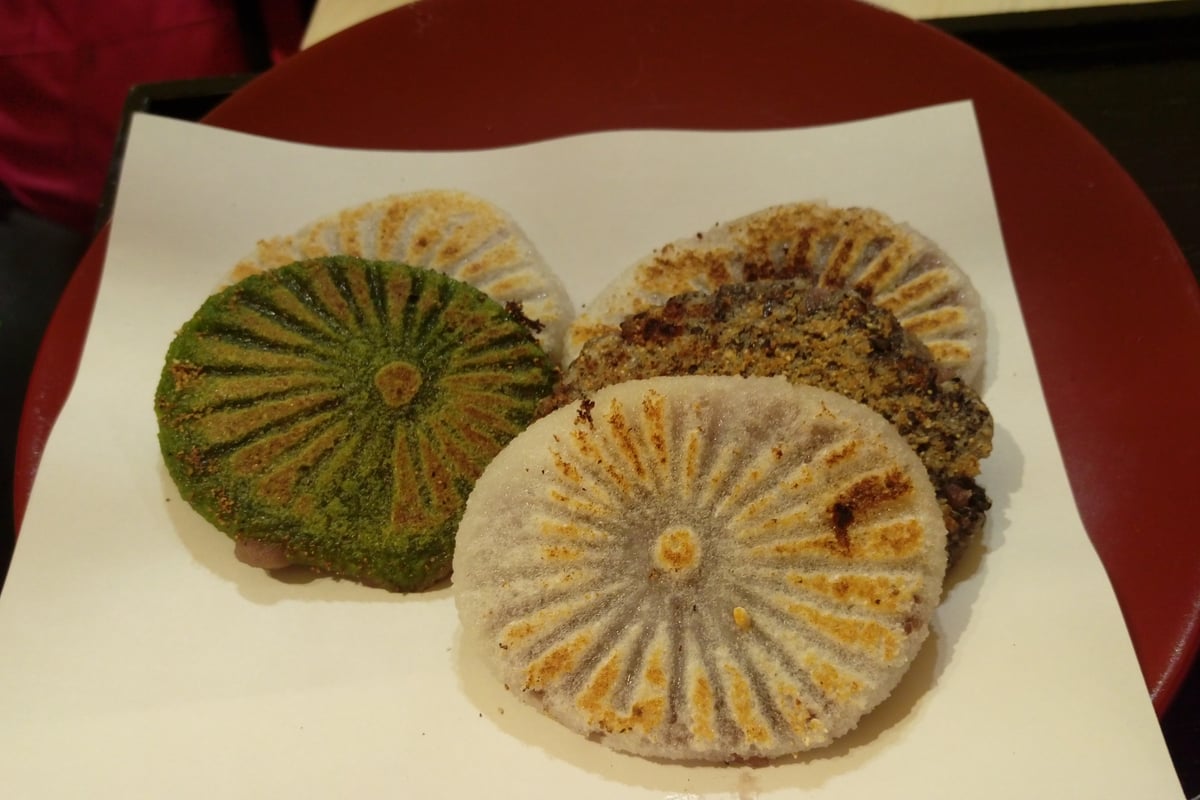
Taki no Yakimochi (Grilled Rice Cake with Sweet Bean Filling)
Taki no Yakimochi (Grilled Rice Cake with Sweet Bean Filling)
Taki no Yakimochi is a wagashi (Japanese confection) that has long been made at the foot of Mount Bizan in Tokushima City. Smooth sweet bean paste (koshian) is wrapped in a dough of rice flour ground in a stone mill, pressed flat in a mold bearing a chrysanthemum crest, and baked on an iron griddle. The name is said to come from Shiraito Falls on Mount Bizan. According to tradition, Hachisuka Iemasa, the founder of the domain (hanso) of the Tokushima domain, was fond of it, and it was presented to him to celebrate the construction of Tokushima Castle. Known as a famous confection of Tokushima with a history of more than 400 years, it is said to have later become an official confection of the domain. The azuki beans for the filling are said to have been cooked with Kinryusui, a renowned spring water that wells up from Mount Bizan. Shops around Mount Bizan still make it by traditional methods today. At a long-established kanmidokoro (traditional sweets shop) at the foot of Mount Bizan, you can enjoy yakimochi baked to order together with tea. It has also been selected as a 'Tokushima Tokusen Brand,' Tokushima's regional brand.
Model Course
Tokushima City course: discover Awa Deko and yusanbako, and taste Taki no Yakimochi and Tokushima Ramen
At 阿波木偶人形会館 in Kawauchi-cho, Tokushima City, about 100 works by the puppet maker Ningyo Ken are on display, and the exhibits introduce how the puppet heads (kashira) are made and the mechanisms that change their expressions (about 800 yen for adults; closed on Sundays and the first and third Mondays). The nearby Awa Jurobei Yashiki is scheduled to be closed for renovation until early April 2027. In the afternoon, try painting a plain unfinished wooden yusanbako (picnic box) at 江淵鏡台店 in Suehiro (about 4,000 to 5,500 yen; reserve by the day before). At 和田の屋本店 at the foot of Mount Bizan, you can enjoy freshly grilled Taki no Yakimochi and matcha while looking out at a waterfall (closed on Thursdays). For dinner, have Tokushima Ramen at 中華そば いのたに本店 in Nishidaiku-machi or at ラーメン東大 大道本店 in Omichi.
Indigo homeland course: try indigo dyeing and Otani Ware, and eat Tarai Udon
藍の館 in Aizumi Town consists of the residence of the Okumura family, indigo merchants of the Edo period, and a museum, where you can learn about indigo from cultivation to distribution. Indigo dyeing experiences start from about 1,000 yen for a handkerchief (admission 300 yen for adults; closed on Tuesdays). Next, head to the Otani district of Ōasa-chō, Naruto City. At 大西陶器 you can try hand-building (2,640 yen) or painting (1,540 yen), and at 森陶器 you can see one of the largest climbing kilns in Japan. Here you can sense the connection between Awa indigo and Otani Ware, which flourished by making indigo vats (aigame). For lunch, head to the banks of the Miyagochidani River in Donari-cho, Awa City, and at じんぞくたらいうどん 樽平 enjoy kamaage udon served in a tub (tarai) with a broth made from river fish.
Iya trip up the Yoshino River: taste Handa Somen, Iya Soba and Sobagome Zosui
At 道の駅 貞光ゆうゆう館, a roadside station in Sadamitsu, Tsurugi Town, you can eat Handa Somen, relatively thick hand-stretched somen noodles, served kamaage-style (hot from the pot), and buy dried noodles at its local products shop. From there, head toward Oboke. At もみじ亭, housed in a relocated old folk house, you can enjoy Iya Soba made by a master soba maker from Higashi-Iya. After crossing the Iya Kazurabashi (vine bridge), go to 祖谷美人 渓谷店, which overlooks the gorge. Besides Iya Soba (about 800 yen), it also serves Sobagome Zosui made with buckwheat grains (about 1,000 yen). This area, where buckwheat and other grains have long been grown on steep slopes, has been designated a Globally Important Agricultural Heritage System (GIAHS) as the 'Nishi-Awa Steep Slope Land Agriculture System'.
Southern Tokushima course: from Fish Katsu in Komatsushima to Awa Bancha in Kamikatsu and tafu in Kito
津久司蒲鉾 in Komatsushima City is a kamaboko (fish cake) shop said to have created Fish Katsu (8:00–15:00; closed on Sundays). If you visit in autumn, you can take home Bouze no Sugatazushi, made from bouze (Japanese butterfish) cured in vinegar, from 田舎寿し なか山 in Katsuura Town. In the mountain town of Kamikatsu, Awa Bancha, a lactic-acid-fermented tea, is produced. At Kamikatsu-TeaMate, 100 g of tea leaves costs 1,620 yen, and seasonal farming experiences are also offered. Further up the Naka River, at 太布庵 in Kito, Naka Town, you can watch and try tafu making, in which cloth is woven from kozo fibers, every Tuesday (free admission).
Events
Tokushima City Awa Odori
Every year, August 12–15 (eve festival on August 11) / Performance venues such as Aibahama and Minamiuchimachi, and other parts of central Tokushima City
Otani-yaki Kiln Festival
Every year on the second Saturday and Sunday of November / Pottery workshops and Torin-in Temple in Otani, Ōasa-chō, Naruto City
View details →