 Image: Wikimedia Commons
Shimane Prefecture
Shimane Prefecture lies in the northern Chugoku region and faces the Sea of Japan. It is made up of three former provinces: Izumo in the east, Iwami in the west, and the Oki Islands in the Sea of Japan, and each area has handed down its own crafts and food culture. The prefecture's four Traditional Crafts designated by the Minister of Economy, Trade and Industry are Unshu Soroban, Sekishu Washi, Iwami-yaki, and Izumo stone lanterns. Within Sekishu Washi, the techniques of Sekishu-banshi were inscribed on the UNESCO Intangible Cultural Heritage list in 2014, together with Hon-minoshi and Hosokawa-shi. The prefecture also designates its own Shimane Prefecture Furusato Traditional Crafts, which include Yakumo-nuri lacquerware from Matsue, tableware from Fujina-yaki and Shussai-gama, Hirose Gasuri from Yasugi, Izumo agate craft from Tamatsukuri, and Iwami Kagura masks from Hamada. In Okuizumo Town, tamahagane, the steel used to make Japanese swords, is still produced by traditional tatara ironmaking. As for food, Izumo Soba, one of Japan's three great soba styles, and the shijimi clams of Lake Shinji are known nationwide. Matsue has handed down 'Yamakawa,' a celebrated confection said to have been a favorite of the domain lord Matsudaira Fumai, known as a master of tea, as well as botebote-cha, eaten by adding toppings to whisked bancha tea. Each area has its own flavors, too, such as nodoguro and akaten in Hamada in Iwami, and Genjimaki and uzume meshi in Tsuwano.
Shimane's Traditional Crafts

Sekishu Washi (Iwami Handmade Paper)
Sekishu Washi (Iwami Handmade Paper)
Sekishu Washi is handmade washi made in the Iwami region of western Shimane Prefecture, mainly in Misumi Town, Hamada City. Sekishu is another name for Iwami Province. It is made from kozo (paper mulberry), mitsumata and gampi by nagashi-zuki (Japanese papermaking by rocking the mould) using a bamboo screen (takesu). Among its papers, Sekishu-banshi, made from locally grown kozo, is known for its strong, tough quality, and in the Edo period it was highly valued by Osaka merchants as paper for account books. In 1969 (Showa 44), the techniques of Sekishu-banshi were designated a National Important Intangible Cultural Property. In 2014, together with Hon-minoshi and Hosokawa-shi, it was inscribed as UNESCO Intangible Cultural Heritage under the title 'Washi, craftsmanship of traditional Japanese hand-made paper'. Sekishu Washi became a Traditional Craft designated by the Minister of Economy, Trade and Industry (a national Traditional Craft) in 1989 (Heisei 1). The number of producers, which exceeded 6,000 households in the Meiji era, has declined, and today four workshops protect the tradition, remaining committed to local kozo.
Unshu Soroban (Okuizumo Abacus)
Unshu Soroban (Okuizumo Abacus)
Unshu Soroban are soroban (abacuses) made in Okuizumo Town, Nita District, Shimane Prefecture. They are said to have originated in the Tenpo era of the late Edo period, when 村上吉五郎, a carpenter from Kamedake, made a soroban from local materials, modeling it on a soroban from Hiroshima. Later, craftspeople in Yokota opened up the techniques and worked to teach them, and in the Meiji era many craftspeople were trained and the production area took shape. Known as sturdy, easy-to-use soroban whose beads move smoothly and make a clear, high-pitched sound when flicked, they are also praised with the phrase 'Unshu for quality'. Today, hard woods are used, such as tsuge (boxwood) and kaba (birch) for the beads and ebony for the frame, and each soroban is finished through more than 180 processes. Along with Banshu Soroban of Ono City, Hyogo Prefecture, it is a production area known throughout Japan, and in 1985 (Showa 60) it was designated a Traditional Craft by the Minister of Economy, Trade and Industry (a national Traditional Craft).
Iwami-yaki (Iwami Stoneware)
Iwami-yaki (Iwami Stoneware)
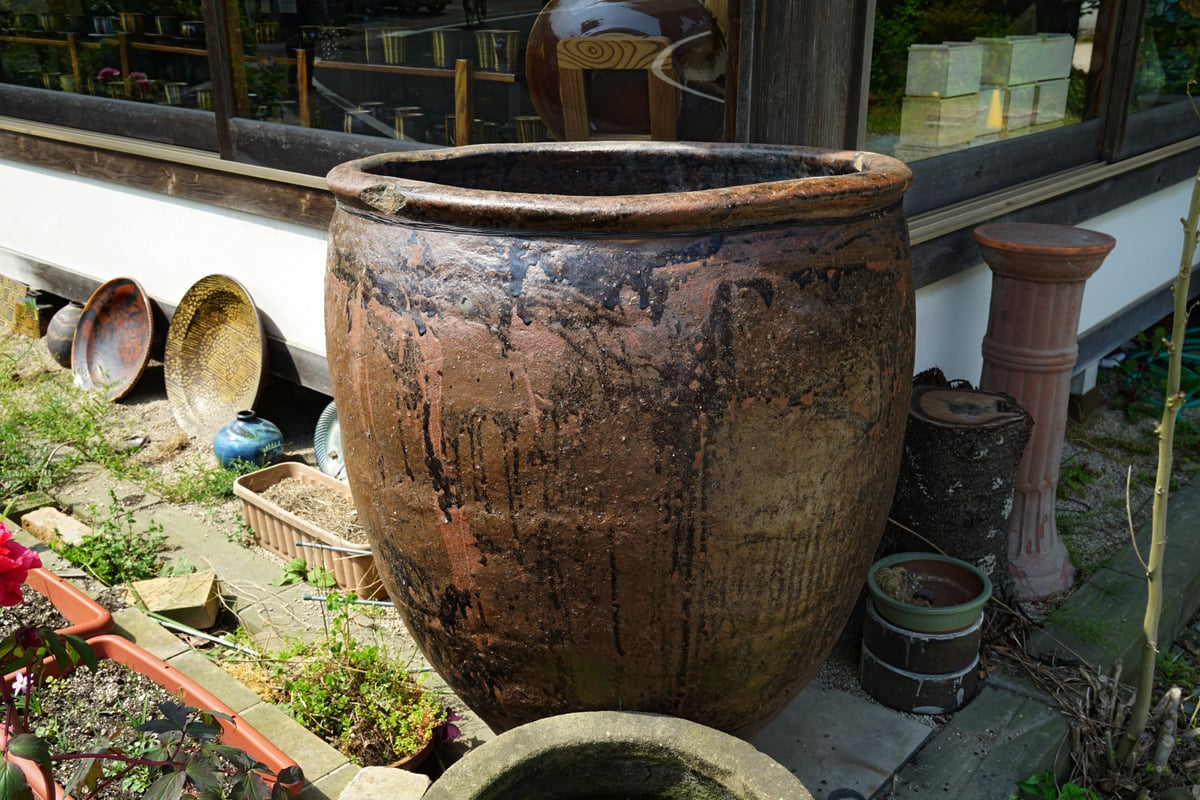
Iwami-yaki is a general term for pottery that has been fired in the Iwami region, centered on Gotsu City, Shimane Prefecture. Full-scale pottery making began in the mid-18th century and developed by adopting techniques from potters of Suo (Yamaguchi Prefecture) and Bizen (Okayama Prefecture). Because it uses clay from the local Tsunozu Formation and is fired at high temperatures of around 1,250 to 1,300 degrees Celsius, the body becomes hard and absorbs little water. Being resistant to salt and acid, it was valued throughout Japan for water jars and for large jars for storing pickles and umeboshi (pickled plums). Its representative product is a large water jar called 'hando' (or 'handou'), and in the late Edo period these jars were carried to various regions by kitamaebune trading ships. Iwami-yaki reached its peak in the Meiji era, and the number of kilns is said to have exceeded 100. It declined with the development of water supply systems and the spread of plastic containers, but today mortars, umbrella stands, tableware and more are also made. In 1994 (Heisei 6), it was designated a Traditional Craft by the Minister of Economy, Trade and Industry (a national Traditional Craft).
Izumo Ishidoro (Izumo Stone Lanterns)
Izumo Ishidoro (Izumo Stone Lanterns)
Izumo Ishidoro are stone lanterns made from Kimachi stone, which is quarried around the Kimachi district of Shinji Town, Matsue City, Shimane Prefecture. The main production areas are Matsue City and Izumo City in Shimane Prefecture, and in Tottori Prefecture, stonemasons in Sakaiminato City carry on their production. Their origins are said to date back to the Nara and Heian periods, when they began to be used as votive lights with the arrival of Buddhism. In the Momoyama period, as the tea ceremony spread, they came to be placed in gardens. In the Edo period, the Matsue Domain designated Kimachi stone as otome-ishi (restricted stone) and protected it by banning its removal from the domain. Kimachi stone is a fine-grained, soft sandstone that is easy to carve, and because moss readily grows on it, it quickly takes on an aged look. In 1976 (Showa 51), Izumo Ishidoro became the first stone craft to be designated a Traditional Craft by the Minister of Economy, Trade and Industry (national Traditional Craft). Japan Traditional Crafts Aoyama Square writes the name as '出雲石燈ろう', while Tottori and Shimane Prefecture materials write it as '出雲石灯ろう'.
Yakumo-nuri (Matsue Lacquerware with Polished-out Designs)
Yakumo-nuri (Matsue Lacquerware with Polished-out Designs)
Yakumo-nuri is lacquerware that originated in Matsue City, Shimane Prefecture, in the Meiji era. Designs are painted with colored lacquer, aogai (thin pieces of shell) and gold and silver powder on a lacquer-coated base, then suki-urushi is applied over them in layers, polished out (togidashi) and burnished to finish. Suki-urushi is a transparent, amber-colored lacquer. Its transparency increases over the years, so the designs painted beneath gradually emerge in vivid color, which is said to be a feature not found in other production areas. It is said to have been devised by 坂田平一, a palanquin lacquerer of the Matsue domain. 籠手田安定, the governor of Shimane Prefecture, wanted to make it a specialty product of the prefecture and named it Yakumo-nuri after 'Yakumo tatsu', an ancient poem of Izumo. It was produced in large quantities from the Meiji era through the Showa era. Main products include flower vases, natsume (tea caddies), fubako (letter boxes), trays, bowls and mirrors. It is designated a Shimane Prefecture Furusato Traditional Craft and is currently made in Matsue City and Izumo City.
Fujina-yaki (Fujina Pottery of Matsue)
Fujina-yaki (Fujina Pottery of Matsue)
Fujina-yaki is pottery that has been fired in Tamayu Town, Matsue City, Shimane Prefecture. It is said to have begun in the mid-Edo period when 舩木与次兵衛村政 opened a kiln in Fujina, on the southern shore of Lake Shinji. Later, 土屋善四郎, who moved from the 楽山窯 kiln by order of the Matsue domain, provided guidance, and the quality improved. Tea utensils to the taste of Matsudaira Harusato (Fumai), the seventh lord of the Matsue domain known as a daimyo tea master, were also fired. It is renowned for vessels with overglaze painting on a yellow glaze, and in the Meiji era its sales expanded not only within Japan but also overseas. In the Showa era, it resonated with the Mingei (folk craft) movement of Yanagi Muneyoshi, Bernard Leach and others, and adopted techniques such as slipware, in which patterns are drawn with slip. Today kilns such as 舩木窯, 雲善窯 and 湯町窯 each make vessels in their own styles, and it is also designated a Shimane Prefecture Furusato Traditional Craft.
Shussai-gama (Shussai Folk Pottery Kiln)
Shussai-gama (Shussai Folk Pottery Kiln)
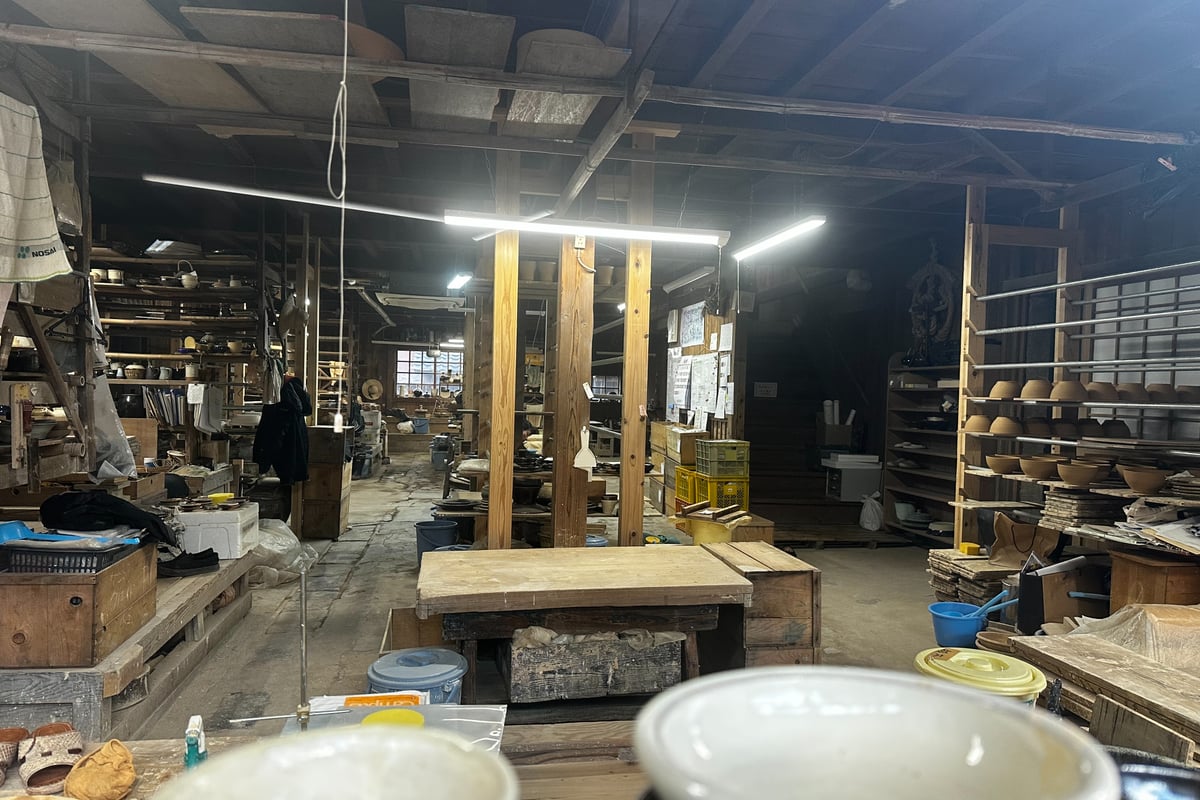
Shussai-gama is a mingei (folk craft) kiln in Shussai, Hikawa Town, Izumo City, Shimane Prefecture. It was founded in 1947 (Showa 22) by five young men who aspired to build a rural-industry community, with the cooperation of two supporters. Under the guidance of leading figures of the Mingei movement such as Kawai Kanjiro, Hamada Shoji, Yanagi Muneyoshi and Bernard Leach, it has continued to make practical vessels for everyday life. Valuing local raw materials, the kiln blends all of its own clay and glazes, mainly from raw materials produced in Shimane Prefecture. Another feature is that it has kept firing its climbing kiln (noborigama) since its founding. Its vessels include black glaze, amber glaze (ame-yu), white slip glaze (shirokake-ji-yu), namako glaze and gosu (cobalt blue) glaze, and its deep blue vessels, also called 'Shussai Blue', have become popular. Next to the workshop is くらしの陶・無自性館, an exhibition and sales space in a relocated rice storehouse from the early Meiji era. It is designated a Shimane Prefecture Furusato Traditional Craft under the name 'Shussai-yaki'.
Hirose Gasuri (Hirose Ikat Cotton)
Hirose Gasuri (Hirose Ikat Cotton)
Hirose Gasuri is an indigo-dyed cotton kasuri (ikat) that has been woven in Hirose Town, Yasugi City, Shimane Prefecture. Kasuri is a textile in which patterns are woven using threads that have been partially dyed in advance. It is said to have begun in Bunsei 7 (1824) when 長岡貞子 brought kasuri techniques learned in Yonago to Hirose, and it spread under the protection of the Hirose domain. Its hallmark is large designs that combine pictorial and geometric patterns in shades of a single indigo color. It reached its peak from the 30s to the 40s of the Meiji era, and annual production is said to have reached 130,000 tan (bolts of cloth). It declined after a great fire in the Taisho era, but in the Showa era a promotion association and a training center were established, and efforts to preserve the techniques and train successors continue. Along with Yumihama Gasuri and Kurayoshi Gasuri, it is one of the representative kasuri of the San'in region, and it is designated both a Shimane Prefecture Intangible Cultural Property and a Shimane Prefecture Furusato Traditional Craft.
Iwami Kagura Men (Iwami Kagura Washi Masks)
Iwami Kagura Men (Iwami Kagura Washi Masks)
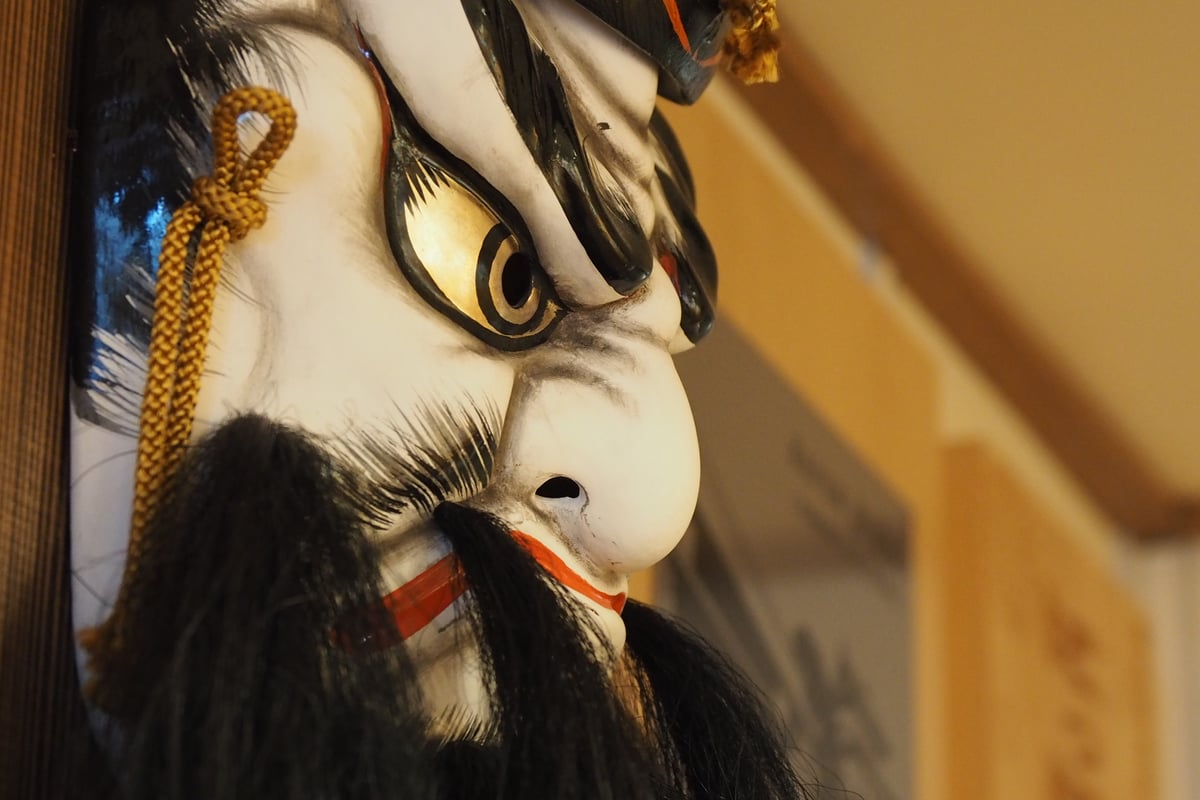
Iwami Kagura Men are masks used in Iwami Kagura, a local performing art handed down in the Iwami region of western Shimane Prefecture. The main production areas are Hamada City and Gotsu City. Many layers of tough Sekishu Washi are pasted onto a clay mold with paste containing kakishibu (persimmon tannin); after drying, the clay inside is broken and removed, and the mask is painted and finished. In the Edo period, carved wooden masks were used, but washi masks are said to have originated with a doll maker who made Nagahama dolls in the Nagahama district of Hamada City and is regarded as the founder of the craft. Washi masks have been made since the late Edo period. Light and durable, washi masks support the fast, powerful dances of Iwami Kagura. Besides kagura masks, hannya masks, tengu masks, Shoki masks and the heads of the giant serpent (orochi) are also made, and they are popular as talismans against evil for new homes and shop openings, as good-luck charms and as interior decorations. They are designated a Shimane Prefecture Furusato Traditional Craft and are also listed as a component cultural property of the Japan Heritage story '神々や鬼たちが躍動する神話の世界' (A World of Myths Where Gods and Demons Come Alive).
Izumo Menou Zaiku (Izumo Agate Craft)
Izumo Menou Zaiku (Izumo Agate Craft)
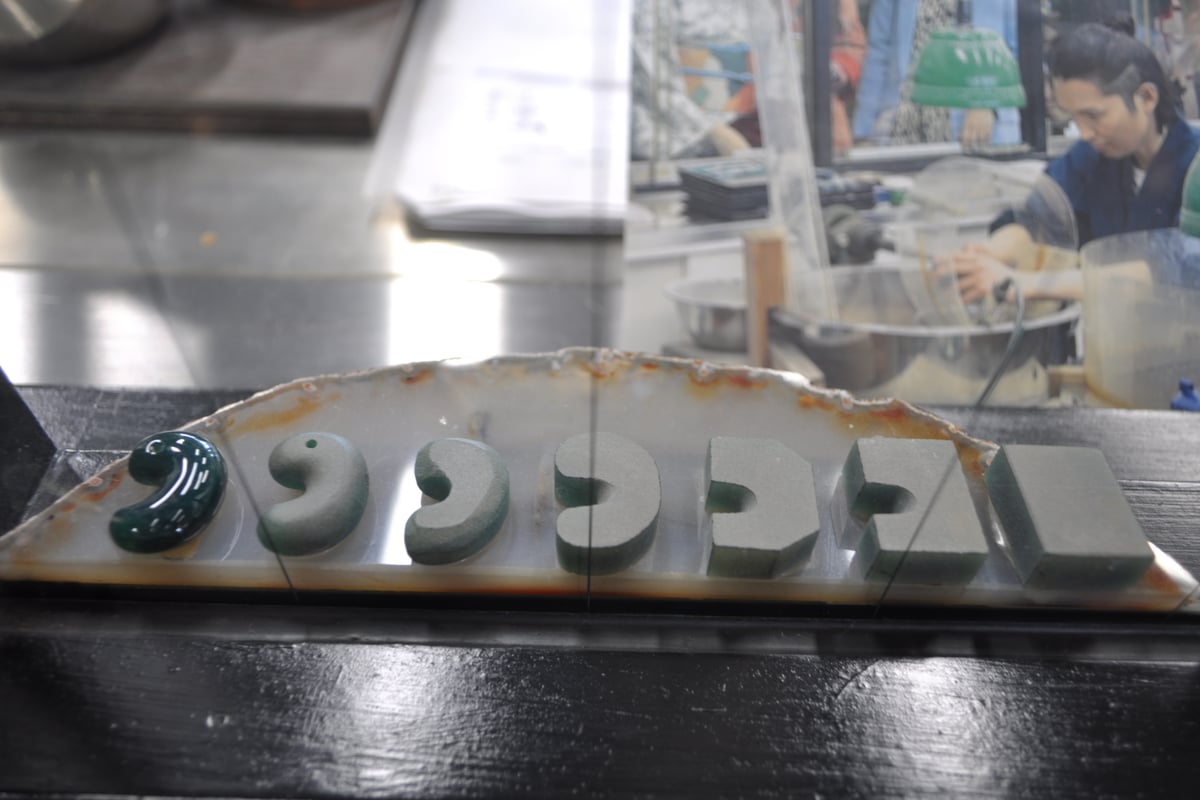
Izumo Menou Zaiku is a precious-stone craft made in Tamayu Town, Matsue City, Shimane Prefecture (around Tamatsukuri Onsen). A single craftsperson works stones such as the blue agate mined on Mt. Kasen in the town entirely by hand, from cutting the rough stone through polishing and finishing. The agate of Mt. Kasen differs in color, blue, red or clear, depending on the part of the rough stone, and from the latter half of the early Kofun period (around the 4th century) it was distributed throughout Japan as colorful beads. At the foot of Mt. Kasen, large-scale bead-making took place from the early Kofun period to the Heian period, and the workshop sites are preserved as the national historic site 'Izumo Tamatsukuri Site'. Bead-making, which once died out in the Heian period, began again at the end of the Edo period as 'Izumo Menou Zaiku'. Tamayu Town is also said to be the birthplace of the Yasakani no Magatama, one of the Three Sacred Treasures of Japan, and the magatama (comma-shaped bead) serves as the town's symbol mark. Today pendants, necklaces, cufflinks, ornaments and other items are made, and it is designated a Shimane Prefecture Furusato Traditional Craft.
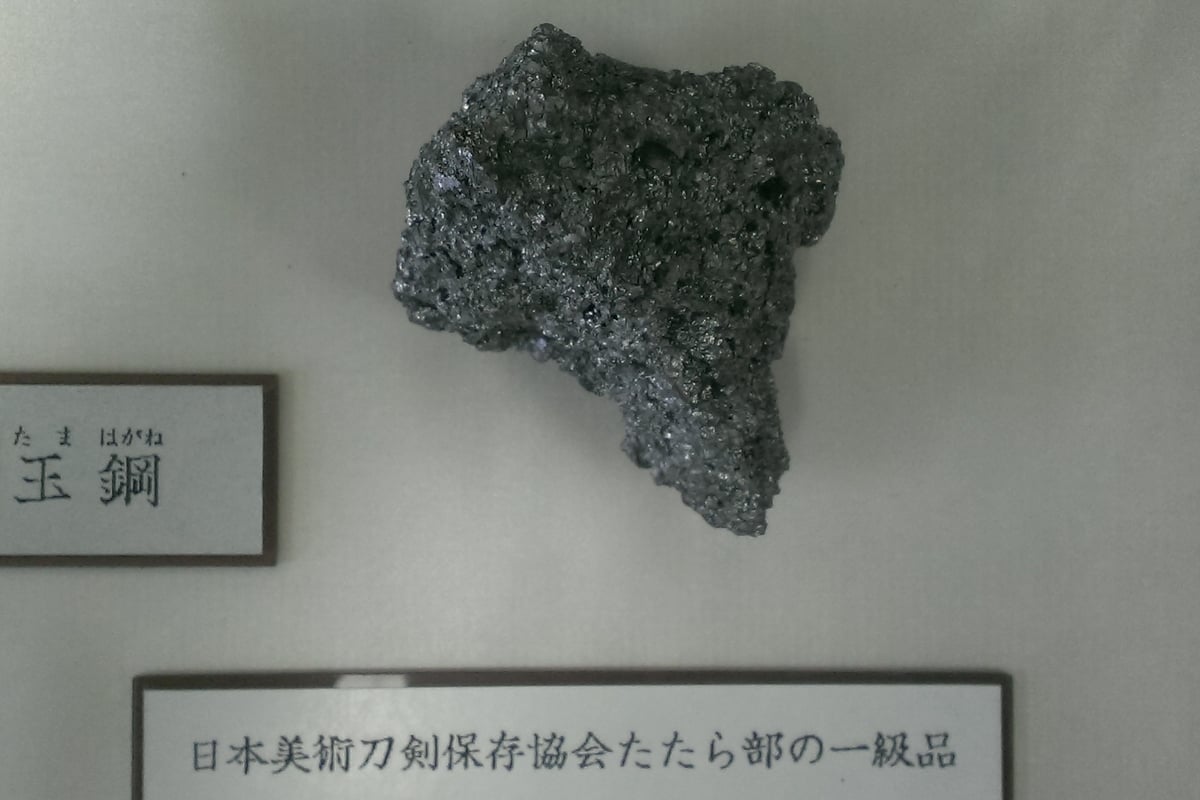
Okuizumo Tatara (Traditional Japanese Iron Smelting)
Okuizumo Tatara (Traditional Japanese Iron Smelting)
Tatara ironmaking is an ironmaking method that developed uniquely in Japan, in which iron sand and charcoal are put into a furnace built of clay and iron is produced while air is blown in with bellows (fuigo). The Okuizumo area of Shimane Prefecture is blessed with iron sand and forest resources, and ironmaking has flourished there since ancient times. According to Shimane Prefecture materials, until the mid-Meiji era this area is said to have supplied about 70 percent of Japan's demand for iron. In the modern era it died out, pushed aside by Western-style ironmaking, but in 1977 (Showa 52) the Society for the Preservation of Japanese Art Swords (Nittoho) revived it as 'Nittoho Tatara' in 大呂, Okuizumo Town. Today it is the only operation in Japan that continues traditional tatara ironmaking: in winter, the furnace is fired for three days and nights to produce tamahagane, the material for Japanese swords, which is supplied to swordsmiths. In 2016, the history of ironmaking in Yasugi City, Unnan City and Okuizumo Town was recognized as the Japan Heritage story '出雲國たたら風土記' (Izumo Province Tatara Fudoki). Tatara ironmaking is not a craft product in itself but a technique that produces material for crafts.
Shimane's Local Food
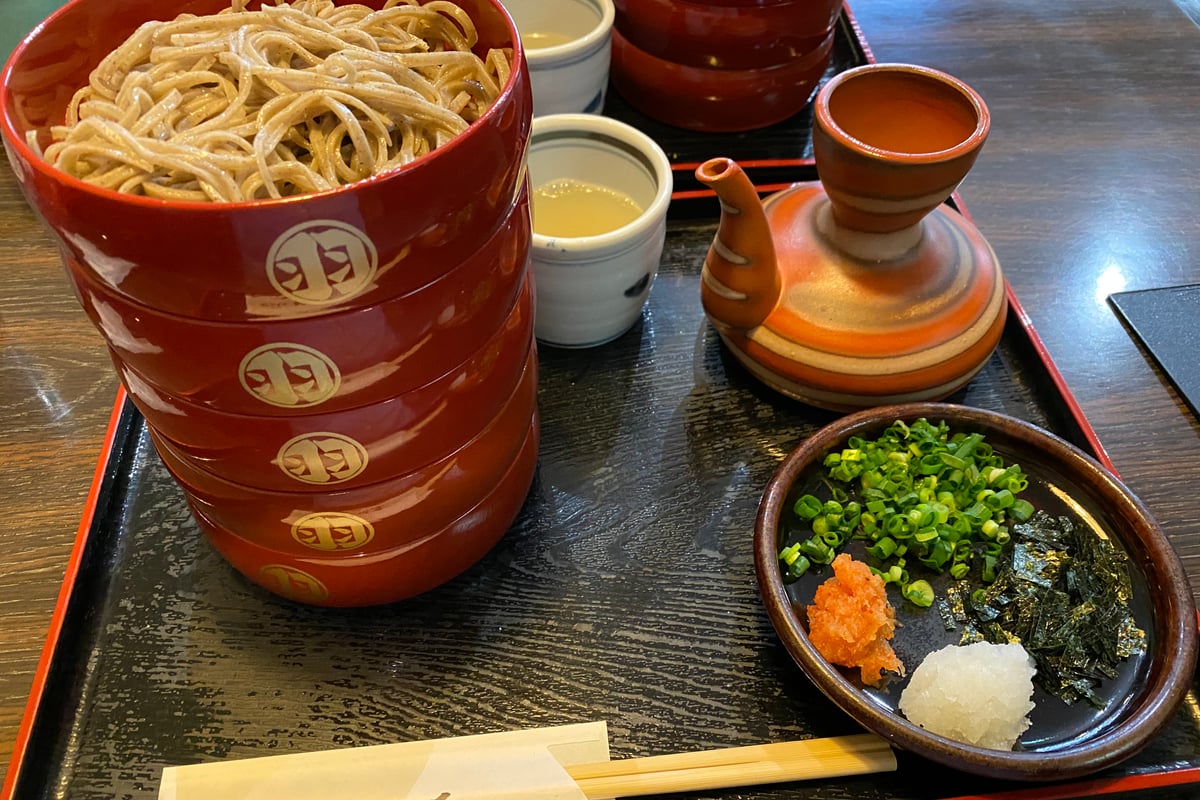
Izumo Soba (Izumo-Style Buckwheat Noodles)
Izumo Soba (Izumo-Style Buckwheat Noodles)
Izumo soba is the soba (buckwheat noodles) traditionally eaten in the Izumo region in eastern Shimane Prefecture. Along with Iwate's wanko soba and Nagano's Togakushi soba, it is counted as one of Japan's three great soba styles. Because the noodles are made by hikigurumi (whole-grain milling), in which buckwheat seeds are ground on a millstone together with their inner husk, they are dark in color and have a strong aroma and flavor. There are two typical ways of eating it. One is warigo soba, in which cold soba is served in stacked round lacquerware dishes called warigo and eaten with the broth poured directly over it. The other is kamaage soba, a hot dish in which boiled soba is placed in a bowl together with its cooking water and eaten with broth and condiments added. A widely known theory holds that it began in the early Edo period, when Matsudaira Naomasa brought soba makers along on moving from the Matsumoto domain in Shinano Province to the Matsue domain. In front of Izumo Taisha and in the castle town of Matsue, there are many soba shops, including long-established ones that have continued since the Edo period.
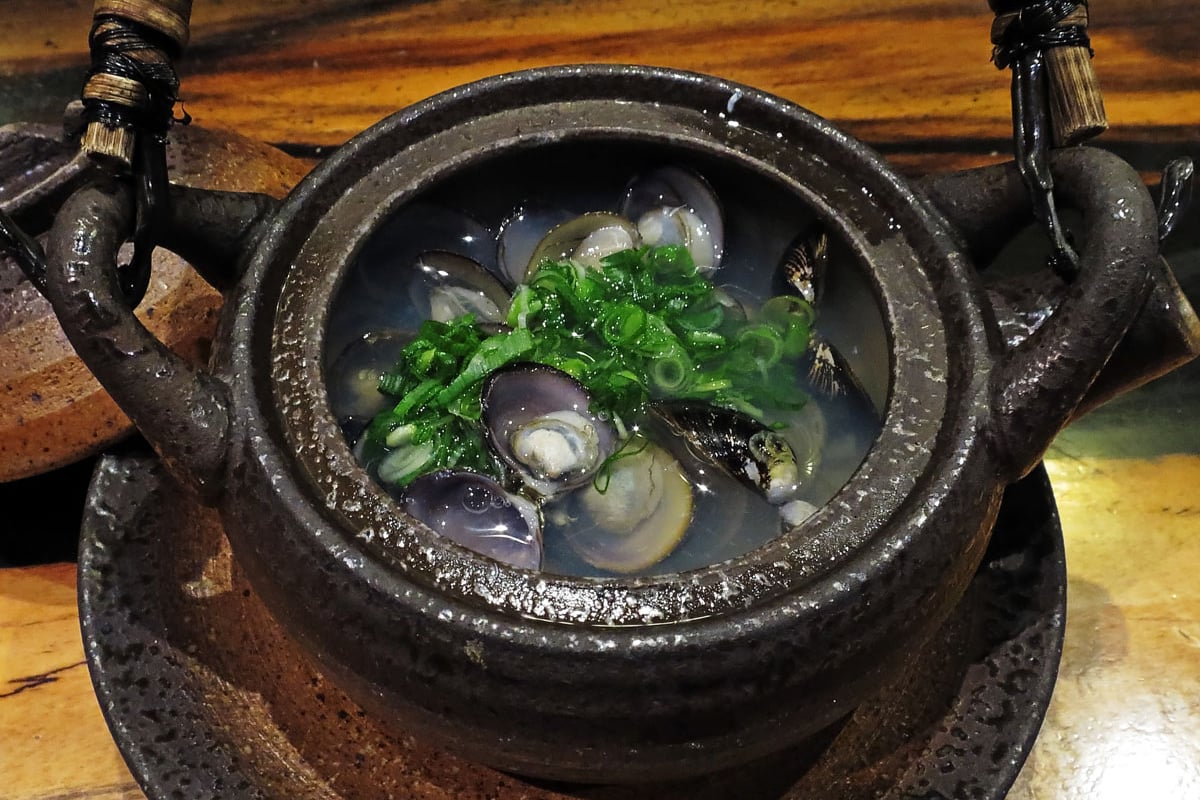
Shinjiko Shijimi (Yamato Freshwater Clams of Lake Shinji)
Shinjiko Shijimi (Yamato Freshwater Clams of Lake Shinji)
Lake Shinji shijimi are Yamato shijimi clams harvested in Lake Shinji, which straddles Matsue City and Izumo City in Shimane Prefecture. Lake Shinji is a brackish lake with a salinity of about one-tenth that of seawater; nutrients flow in from the surrounding rivers, and the phytoplankton the clams feed on grows abundantly. The shijimi caught here are large and plump, and they are an indispensable ingredient for shijimi-jiru (freshwater clam miso soup) and sumashi-jiru (clear soup). From home dining tables to school lunches and restaurant staples, they have supported everyday eating in Shimane. Shijimi account for more than 90 percent of the seafood caught in Lake Shinji, and they are counted among the Shinjiko Shichichin (seven delicacies of Lake Shinji) that represent the lake. In Showa 56 (1981), Lake Shinji's shijimi catch ranked first in Japan. Since then, despite declines in the stock, resource management such as catch limits set by the fisheries cooperative has continued. In November 2025, they were registered under the national Geographical Indication (GI) system as '宍道湖産ヤマトシジミ' (Yamato shijimi from Lake Shinji) and '宍道湖しじみ' (Lake Shinji shijimi).
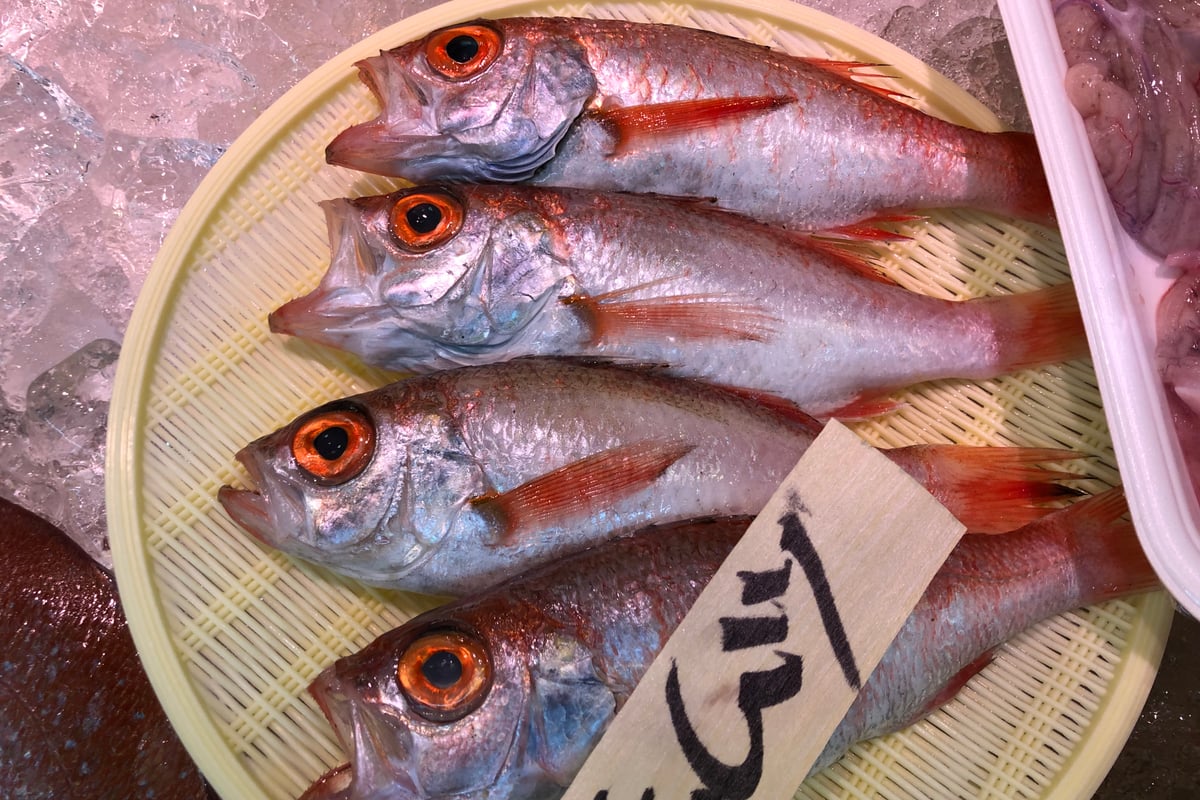
Hamada Nodoguro (Blackthroat Seaperch of Hamada)
Hamada Nodoguro (Blackthroat Seaperch of Hamada)
Hamada Nodoguro refers to akamutsu (its standard Japanese name) landed at Hamada Fishing Port in Hamada City, Shimane Prefecture. Although its body is red, the inside of its mouth is black, so in Shimane and elsewhere it is called nodoguro (literally 'black throat'; blackthroat seaperch). It is a deep-sea fish that lives at depths of around 200 m off the San'in coast, and at Hamada Port it is landed mainly by offshore bottom trawlers. Although it is a white-fleshed fish, it is a premium fish rich in fat; akamutsu caught in the western waters off San'in reaches a fat content of over 30% at most, said to rival the toro (fatty belly) of tuna. In 2009, Hamada City designated nodoguro as the city fish. Together with aji (horse mackerel) and karei (flounder), the city is promoting it as a brand under the name 'Donchicchi Sangyo' (the three Donchicchi fish), and fish that meet the requirements are shipped under the name 'Donchicchi Nodoguro.' It is enjoyed simmered (nitsuke) or salt-grilled, and himono (dried fish), prepared one fish at a time by hand, is also a Hamada specialty. It can be bought at local public markets and dried-fish shops.
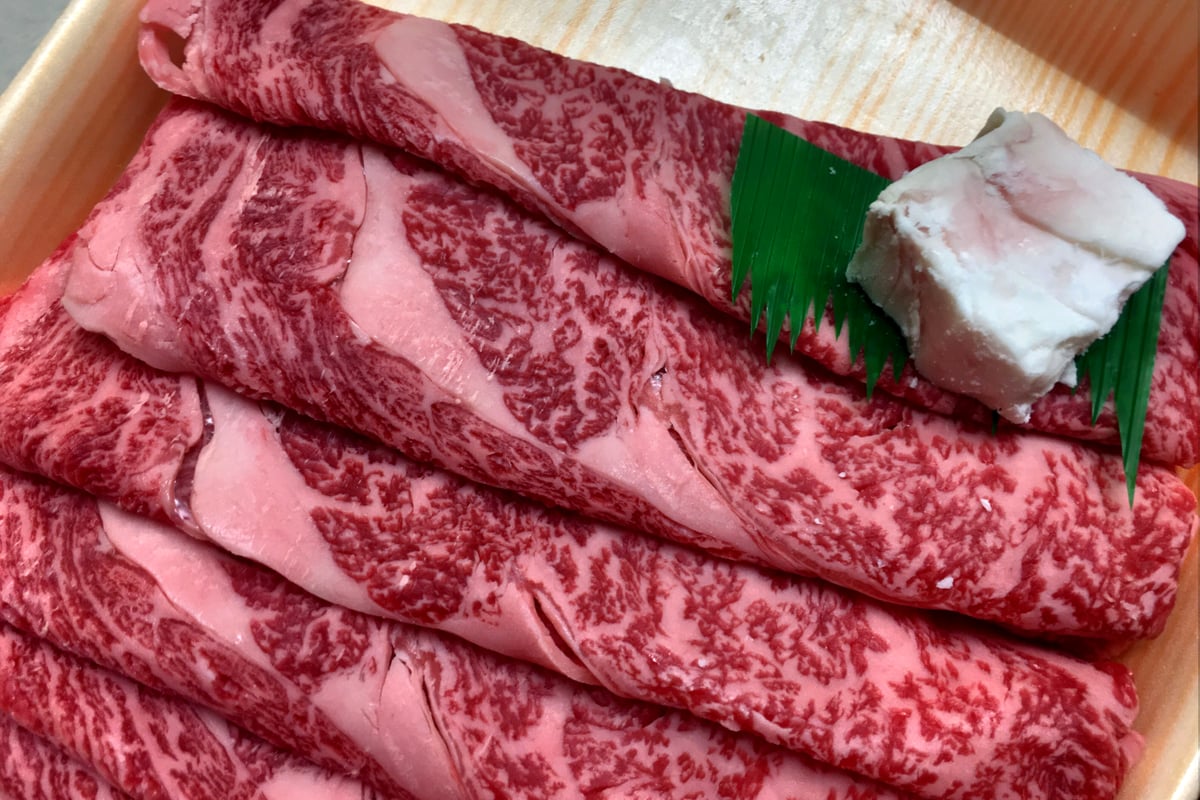
Shimane Wagyu (Shimane Japanese Black Beef)
Shimane Wagyu (Shimane Japanese Black Beef)
Shimane Wagyu is the collective name for Japanese Black steers (castrated males) and heifers that have never calved, raised in Shimane Prefecture. In the mountainous areas of the Izumo region, tatara ironmaking flourished from long ago, and many cattle and horses were kept to transport the iron; this laid the groundwork for the area becoming known as a wagyu-producing region. At the National Wagyu Ability Competition (Zenkyo), where the results of wagyu breeding improvement are judged and which is also called 'the Wagyu Olympics,' Shimane has received the Prime Minister's Award twice. At the 12th competition in 2022, it ranked first in meat-quality evaluation in Category 6 of the overall evaluation group. Within the prefecture there are regional and producer brands such as Izumo Wagyu, Okuizumo Wagyu, Oki Beef, and 松永牛. Meat of the upper quality grades is sold as 'Shimane Wagyu Beef' (しまね和牛肉) at stores designated by the brand promotion council. Finished over nearly two years on grain feed, it is said to be characterized by its vivid color and fine marbling.
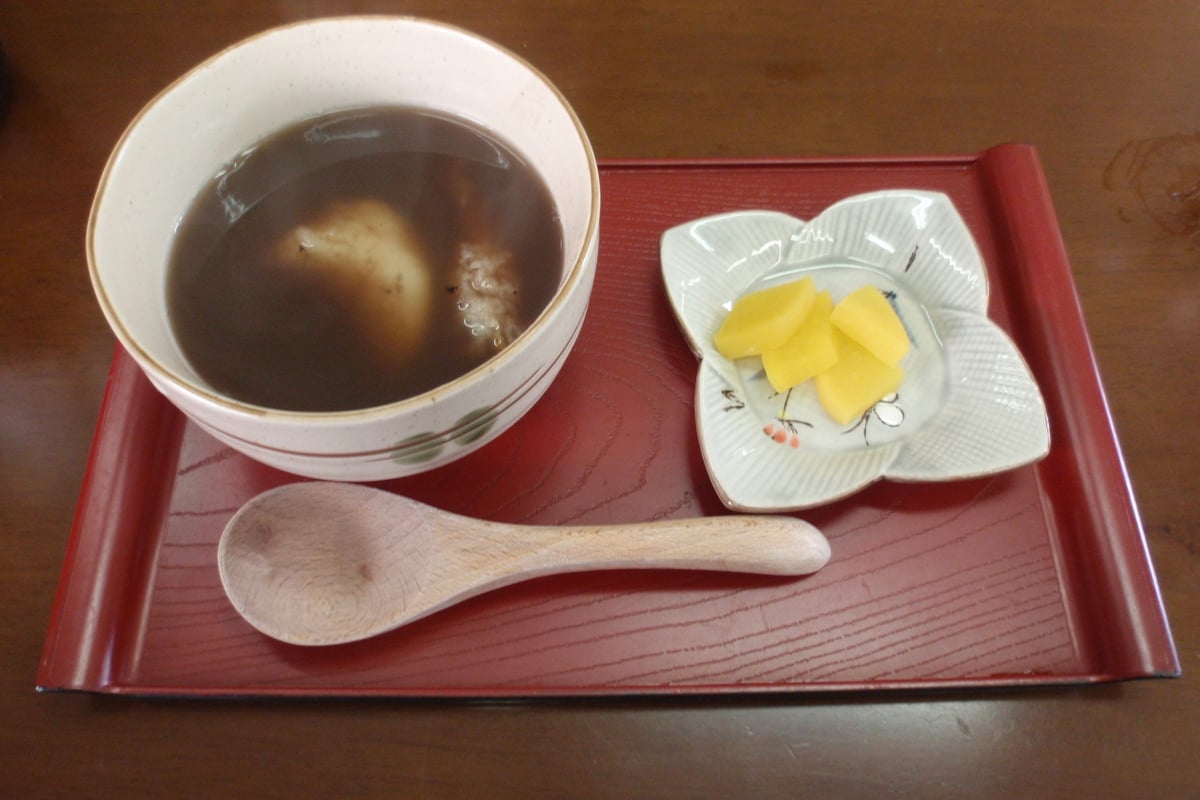
Izumo Zenzai (Izumo Sweet Red Bean Soup with Mochi)
Izumo Zenzai (Izumo Sweet Red Bean Soup with Mochi)
Izumo zenzai is a sweet from the Izumo region made by adding mochi (rice cakes) or shiratama dumplings to a soup of azuki beans simmered with sugar. Based on a theory that jinzai mochi, served at the Kamiari-sai festival in the tenth month of the old lunar calendar, changed in pronunciation to become 'zenzai,' the Izumo region is called the birthplace of zenzai. A topography of the Matsue domain from the Edo period also records a custom of simmering white mochi with azuki beans and eating it on festival days. In front of Izumo Taisha there are shops serving zenzai with red and white shiratama or mochi, and there are also items tied to the area's reputation for enmusubi (matchmaking), such as enmusubi zenzai with grilled mochi. Zenzai in pouches and wagashi (Japanese confections) made using zenzai are also produced, and they are popular as souvenirs of a visit to Izumo Taisha.
Botebote-cha (Whisked Bancha Tea with Rice and Toppings)
Botebote-cha (Whisked Bancha Tea with Rice and Toppings)
Botebote-cha is a local light meal handed down in the Izumo region, centered on Matsue City, in which ingredients are added to frothed bancha (coarse green tea) and eaten. The name is said to come from the 'bote-bote' sound made when bancha, boiled together with dried tea flowers, is whisked with a long-tipped chasen (tea whisk). Small amounts of okowa (steamed glutinous rice), simmered beans, chopped koya-dofu (freeze-dried tofu), pickles, and so on are placed in the froth, and it is eaten without chopsticks. The way of eating it is distinctive: you tap the bottom of the bowl to gather the ingredients to one side, then pour them into your mouth along with the tea. It could be called a tea to eat rather than a tea to drink. There are various theories about its origin: one holds that it was breakfast for workers at tatara ironmaking sites and for people heading out to fish, and another that the Matsue domain lord Matsudaira Harusato (Fumai) recommended it as emergency food during a famine. In Matsue, known as a tea town, it can be enjoyed at teahouses in the castle town, and bancha containing tea flowers is also sold at tea shops.
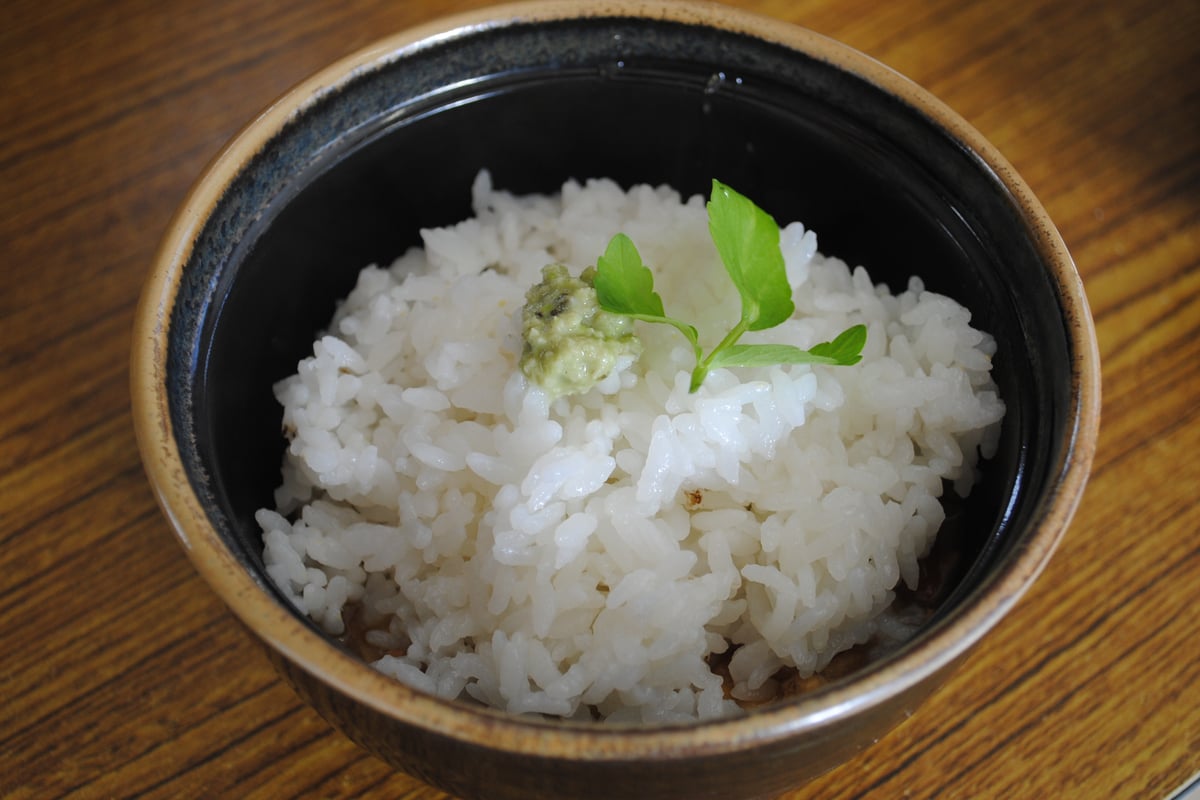
Uzume Meshi (Rice Hiding Simmered Toppings)
Uzume Meshi (Rice Hiding Simmered Toppings)
Uzume Meshi is a local dish handed down in the Iwami region in the western part of Shimane Prefecture, especially in Tsuwano Town. Ingredients such as tofu, shiitake mushrooms, carrots, and kamaboko (fish cake) simmered in dashi (broth) are placed in a bowl, garnished with wasabi and seri (Japanese parsley), and then covered with rice; this 'burying' (uzumeru) of the ingredients is said to be the origin of the name. At first glance it looks like ochazuke (rice with tea poured over it) garnished with wasabi, but when you stir it, the ingredients appear from underneath. It is introduced as having been selected, along with Fukagawa meshi and others, as one of 'Japan's five great rice dishes' in a nationwide survey of local cuisine in 1939 (Showa 14). It is said to have originated in the Edo period, and there are various theories as to why the ingredients are hidden. It has been eaten as supper on cold winter days and as a dish for entertaining guests at kagura performances at New Year. Today it can be enjoyed at restaurants in Tsuwano Town and at town events.
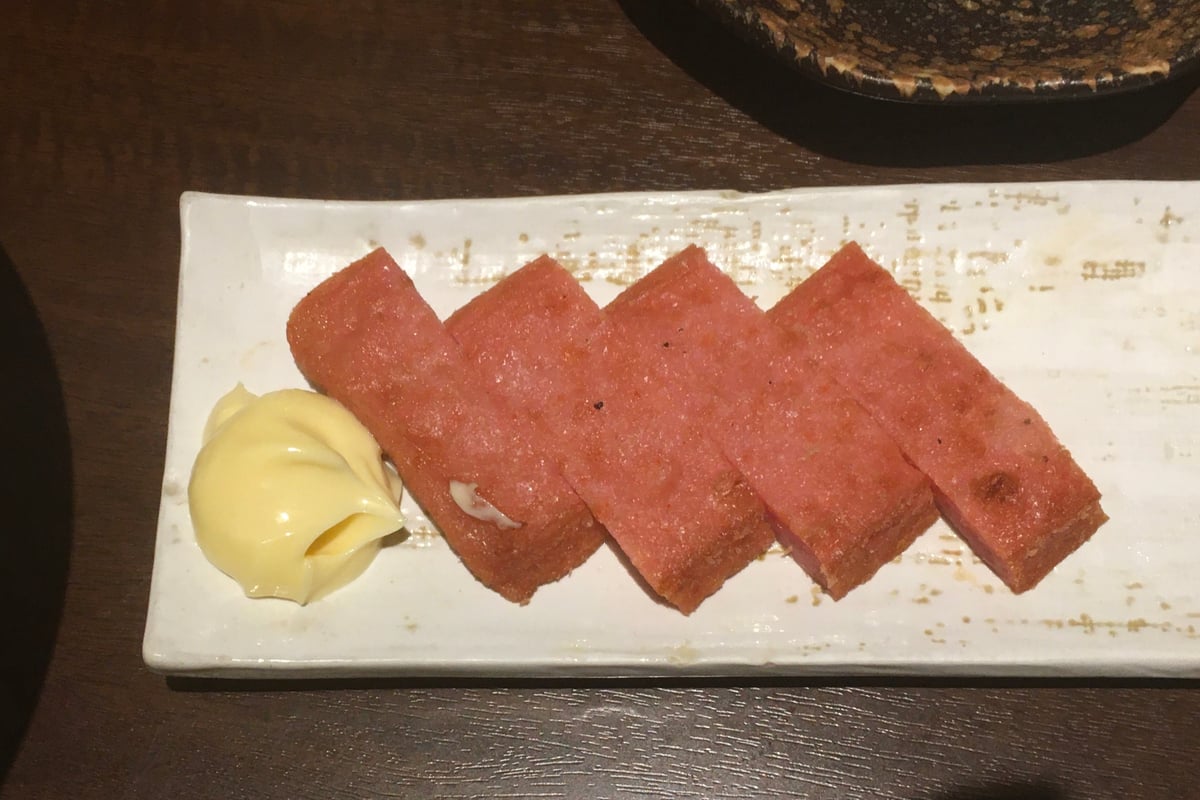
Akaten (Hamada Spicy Breaded Fish Cake)
Akaten (Hamada Spicy Breaded Fish Cake)
Akaten is a fish-paste product beloved in Hamada City, Shimane Prefecture. Red chili pepper is kneaded into surimi (minced fish) made from fish such as Alaska pollock, and the paste is coated with breadcrumbs and deep-fried; when cut, it reveals a red cross section. It is characterized by its tingling spiciness and the crispy texture of the breadcrumbs. It is said to have been devised by a kamaboko (fish cake) shop in Hamada during the food shortages after the war, and two theories have been handed down: that it was made as a substitute for ham cutlets (hamukatsu), and that it was developed to compete with popular fish sausages. It became known nationwide after being featured on television in the 1980s. In Hamada it is enjoyed by children and adults alike as a side dish at meals and in bento lunches and as a snack with drinks, and in 2015 it received the Shimane Prefecture Award at the Japan Gift Awards. Today it is made by shops such as 江木蒲鉾店 and 山本蒲鉾店.
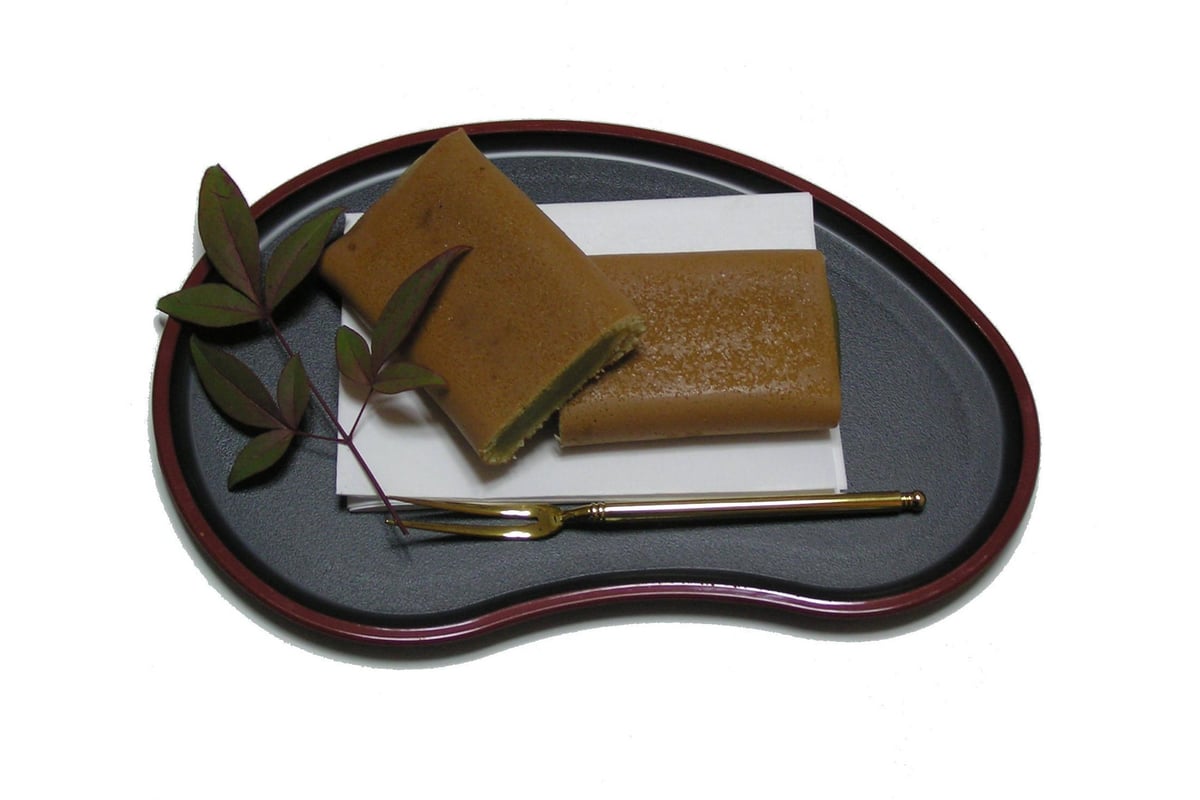
Genjimaki (Tsuwano Bean Paste Roll)
Genjimaki (Tsuwano Bean Paste Roll)
Genjimaki is a renowned confection representative of Tsuwano Town, Shimane Prefecture. It is a baked sweet made by baking a wheat-flour batter into a thin, golden-brown sheet, wrapping it around azuki bean paste (an), and shaping it into a rectangle; the combination of the castella-like (sponge-cake-like) crust and the bean paste is its hallmark. It is enjoyed as a sweet to go with tea, and more than ten confectionery shops in the town each make their own genjimaki and compete on flavor. The name is said to come from a waka poem in the Wakamurasaki chapter of The Tale of Genji, and a well-known theory holds that it began when the official confectioner of the Tsuwano domain presented it to the lord at the end of the Edo period. On the other hand, an anecdote has also been handed down that it was devised in the Genroku era as a gift for Kira Kozukenosuke. In recent years, besides koshi-an (smooth bean paste), genjimaki with shiro-an (white bean paste) and matcha bean paste have also been made. Confectionery shops such as 山田竹風軒本店 and 三松堂 are well known, and it is a popular souvenir among visitors to the town.
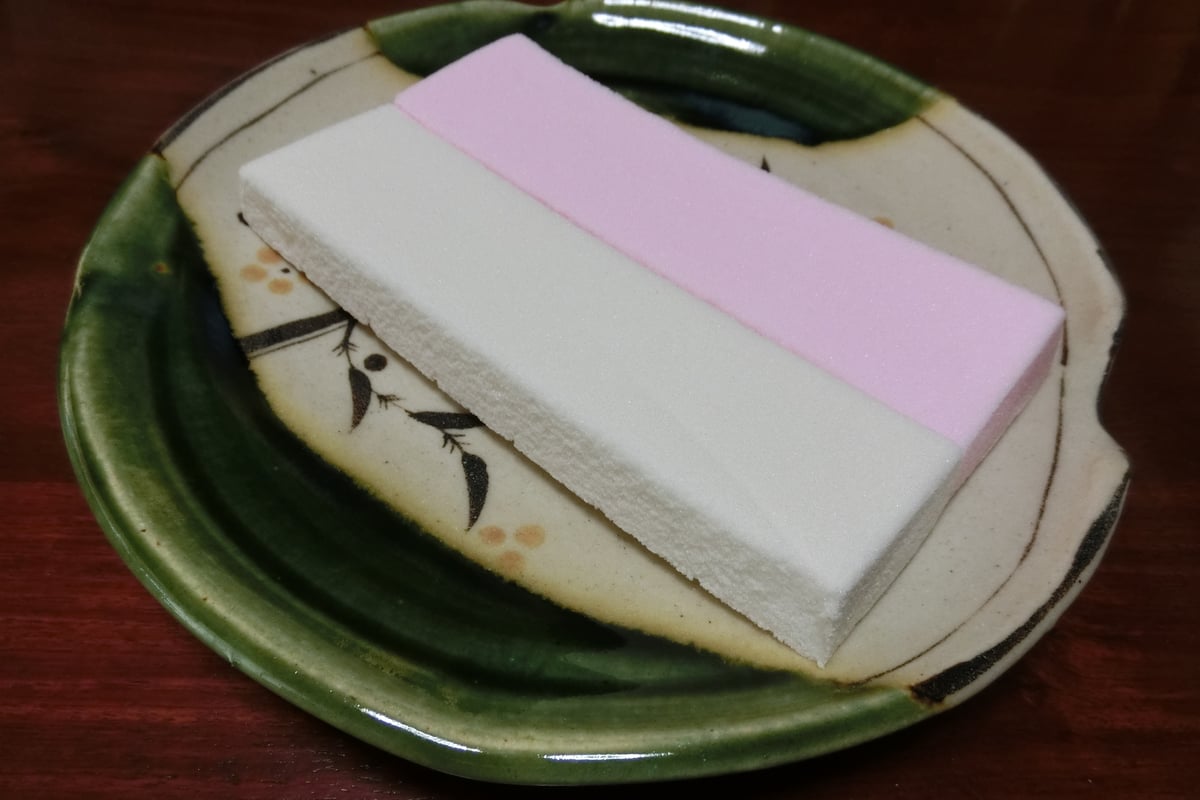
Yamakawa (Matsue Red-and-White Pressed Sugar Confection)
Yamakawa (Matsue Red-and-White Pressed Sugar Confection)
Yamakawa is a red-and-white paired uchigashi (pressed dry confection) made by 風流堂, a long-established confectionery in Matsue City, Shimane Prefecture. Uchigashi are higashi (dry confections) made by pressing flour and sugar firmly into wooden molds. Along with Choseiden of Kanazawa City, Ishikawa Prefecture, and Koshi-no-yuki of Nagaoka City, Niigata Prefecture, it is counted among Japan's three great confections. It is said to have been a favorite of Matsudaira Harusato (Fumai), the seventh lord of the Matsue domain, who was known as a tea master. Its name comes from Fumai's poem '散るは浮き 散らぬは沈む もみじ葉の 影は高尾の 山川の水' (roughly: 'The fallen float, the unfallen sink: reflections of maple leaves in the mountain-stream waters of Takao'), and the red is said to represent mountains of autumn leaves and the white the water of the river. Made from domestic sugar, kanbaiko (a flour made from glutinous rice), and salt, it is characterized by a moist texture and a faint saltiness. The Edo-period confection was once discontinued, but it is said to have been revived in the Taisho period by the second-generation owner of 風流堂. It is a representative confection of Matsue, where the culture of the tea ceremony lives on, and it is also popular as a souvenir.
Model Course
Warigo soba and botebote-cha by the moat of Matsue Castle, with Yakumo-nuri and the confection Yamakawa
In 北堀町 on the north side of Matsue Castle, a street lined with samurai residences, you will find the warigo soba restaurant 八雲庵 and 塩見茶屋, a teahouse overlooking the Horikawa sightseeing boats. At 塩見茶屋 you can try botebote-cha, a Matsue specialty eaten by adding toppings to whisked bancha tea. At 八雲塗やま本 in 末次本町, you can choose Yakumo-nuri tableware and small items while watching artisans at work. At 風流堂 寺町本店 in 寺町, you can buy Yamakawa, the red-and-white pressed confection associated with Fumai (about 756 yen per piece). In the evening, enjoy dishes made with the Shinjiko Shichichin, such as shijimi soup, at 川京 in 末次本町 (reservations recommended).
Tracing the history of Izumo agate craft at Tamatsukuri Onsen, then visiting Fujina-yaki kilns and a Kimachi stone museum on Lake Shinji
At Tamatsukuri Onsen in Matsue City, you can trace bead making from ancient times at 出雲玉作資料館, a museum of ancient beads (300 yen for adults, closed Mondays), and 出雲玉作史跡公園, a historic site park. In the hot spring town, めのうやしんぐう sells agate products such as magatama (closed Sundays). In Fujina on the shore of Lake Shinji, you will find 雲善窯, which began as an official kiln of the Matsue domain (closed Mondays), and 舩木窯, which preserves a yellow glaze made with Kimachi stone. Be sure to call 舩木窯 in advance before visiting. If you go a little farther, you can also pick up an egg baker from 湯町窯. Farther west in Shinji Town, モニュメント・ミュージアム来待ストーン introduces Kimachi stone, the material for Izumo stone lanterns (closed Tuesdays).
Warigo soba and Izumo Zenzai in front of Izumo Taisha, followed by Shussai-gama and Shimane Wagyu
Near Izumo Taisha, 荒木屋 is a long-established Izumo Soba restaurant said to have been founded in the Tenmei era, where you can enjoy warigo soba served in vermilion-lacquered warigo bowls. After your meal, try Izumo Zenzai with red-and-white mochi or shiratama dumplings at 坂根屋 大社店 or 日本ぜんざい学会壱号店 in front of the main gate. If you would rather have Shimane Wagyu for lunch, the barbecue house at 島根ワイナリー in 菱根, Taisha Town, is also recommended (from 11:00). In the afternoon, head to Shussai-gama in Hikawa Town. Choose gosu-glazed tableware at 無自性館, the kiln's exhibition and sales hall, and take a break at 出西くらしのvillage next door (closed Tuesdays).
Making Sekishu Washi in Misumi, nodoguro and akaten from Hamada Port, and Iwami-yaki in Gotsu: a coastal Iwami course
At 石州和紙会館 in Misumi Town, Hamada City, you can try papermaking in the attached workshop (from about 770 yen for two postcard-size sheets, reservations required, closed Mondays). At はまだお魚市場 at Hamada Port, fresh fish such as Donchicchi Nodoguro and processed seafood are on sale (8:00 to 15:00). At 江木蒲鉾店 in 下府町, you can buy akaten with chili pepper mixed in (closed Sundays and public holidays). 柿田勝郎面工房 in 熱田町 is a workshop that makes Iwami Kagura masks from washi (closed Wednesdays). To the east, in Gotsu City, 石州宮内窯 offers pottery experiences guided by a certified traditional craftsperson (2,200 yen per person, reservations required).
Learning the history of the soroban and tatara ironmaking in Okuizumo, then dyeing Hirose Gasuri in Yasugi
At 雲州そろばん伝統産業会館 next to JR Izumo-Yokota Station, you can see works by master makers and soroban-making tools. Nearby, 奥出雲たたらと刀剣館 introduces the operation of Nittoho Tatara and tamahagane (530 yen for adults, closed Tuesdays). On the second Sunday and fourth Saturday of each month, you can also watch swordsmiths demonstrate forging a Japanese sword. Heading north, at 広瀬絣センター in Hirose Town, Yasugi City, you can watch kasuri binding and weaving. With a reservation, you can also try indigo dyeing (about 1,000 yen for one handkerchief, closed Wednesdays). If you have time, stop by 和鋼博物館 near Yasugi Station as well.
Tasting Genjimaki and uzume meshi in Tsuwano, the 'Little Kyoto of San'in'
At 遊亀, about a 5-minute walk from Tsuwano Station, you can enjoy a set meal of uzume meshi, a local dish with the toppings hidden under the rice (closed Thursdays). The uzume meshi set meal at 割烹 石心亭 is available by reservation only from November to April. After eating, compare Genjimaki, a sweet of smooth red bean paste wrapped in a thin cake, along Tonomachi and Honmachi streets. 山田竹風軒本店 本町店 is a long-established shop founded in Meiji 18. 三松堂 菓心庵 also offers bite-size 笑小巻 stamped with a branding iron. At 沙羅の木, you may sometimes see Genjimaki being baked in the shop.
Events
Kamiari-sai Festival (神在祭)
Every year around the 10th to 17th days of the 10th month of the old lunar calendar (the dates on the modern calendar vary from year to year) / Izumo Taisha and Inasa Beach, Taisha Town, Izumo City
Iwami Kagura regular performances
Saturday evenings every week (from around 20:00; an example of the FY2025 schedule according to Hamada City materials) / 三宮神社, 相生町, Hamada City
石州嶋田窯 Climbing Kiln Festival
Every year in May / 石州嶋田窯, 後地町, Gotsu City