 Image: Wikimedia Commons
Nagasaki Prefecture
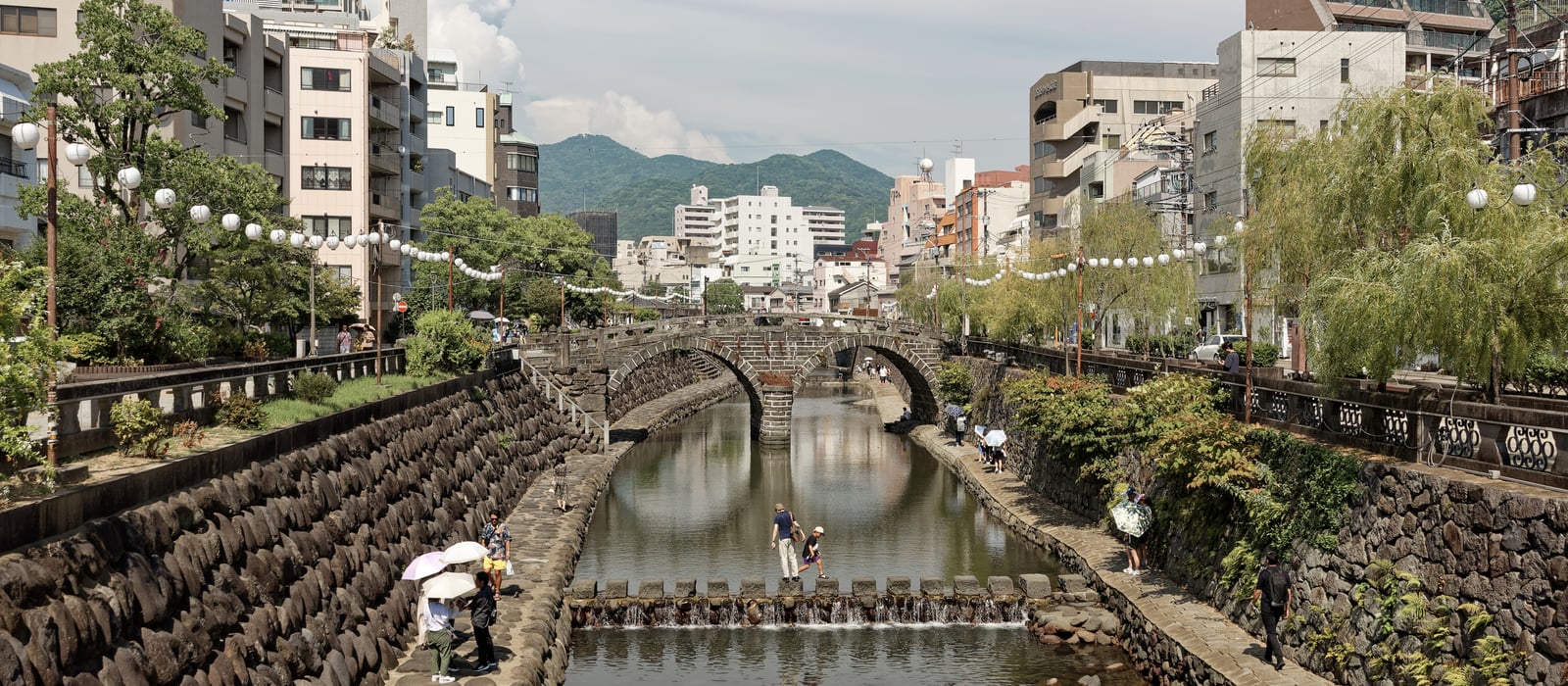
Nagasaki Prefecture is located in northwestern Kyushu and includes many islands, such as the Goto Islands, Iki and Tsushima. Even under the national isolation policy of the Edo period, Nagasaki was a trading port where Dutch and Chinese ships came and went. Through that trade, a distinctive culture blending Japanese, Chinese and Dutch elements developed. Its Traditional Crafts designated by the Minister of Economy, Trade and Industry are three items: Hasami ware from Hasami Town, Mikawachi ware from Sasebo City, and Nagasaki tortoiseshell (bekko) from Nagasaki City. Hasami is a production area that has long made everyday porcelain in large quantities, while Mikawachi ware, made at the official kilns of the Hirado domain, carries on karako-e (paintings of karako, Chinese children) and finely worked pieces. In Nagasaki City, kites are called 'hata', and hata-age (kite flying), in which fliers try to cut each other's lines, is a seasonal sight of spring. Crafts designated by the prefectural governor also remain in various areas, including Sasebo tops (Sasebo-goma), Goto Baramon kites, Wakata stone inkstones from Tsushima, and hand-forged blades from Omura, Kayaki and Shimabara. In food, Nagasaki is known for Nagasaki champon and Sara udon, Shippoku cuisine, in which diners gather around large platters at a round table, and Castella, which began as a Nanban sweet (a confection of early European origin). Shimabara guzoni and Kanzarashi, Goto udon, and Karasumi (dried mullet roe), one of Japan's three great delicacies, are also flavors of Nagasaki.
Nagasaki's Traditional Crafts
Hasami Ware
Hasami-yaki (Hasami Porcelain)
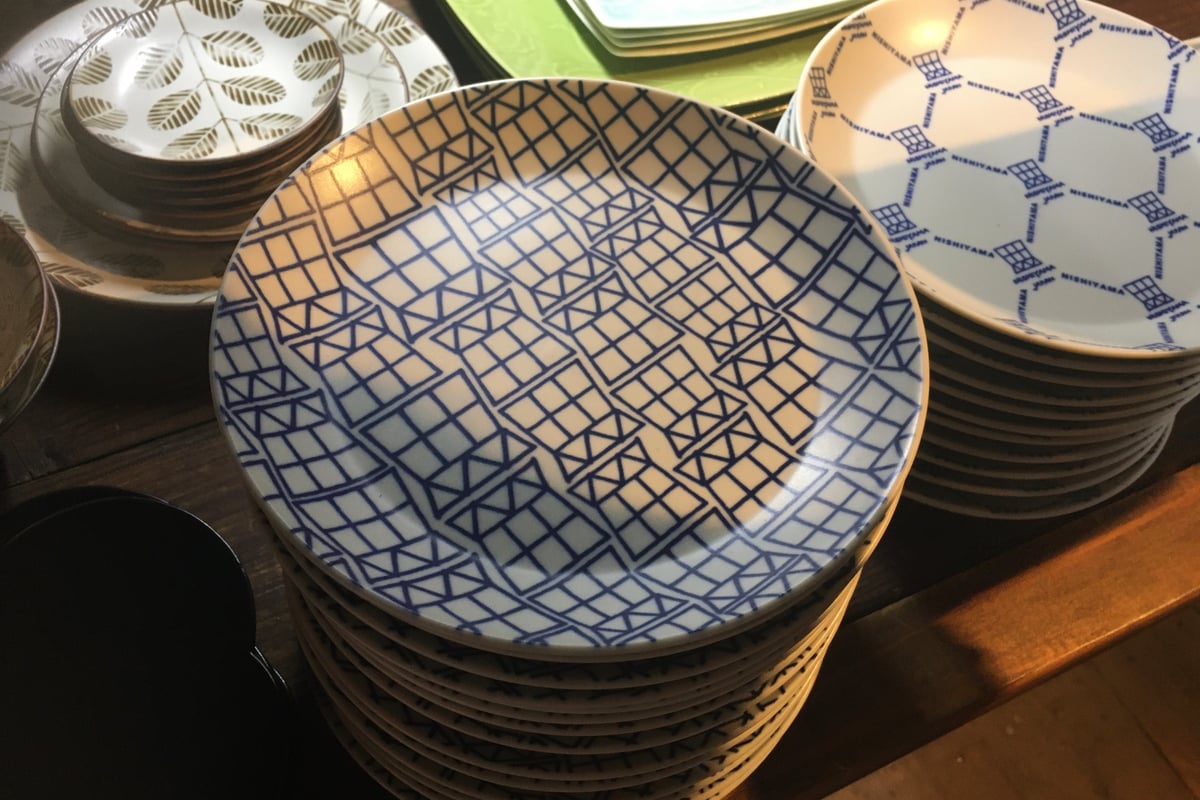
Hasami ware (Hasami-yaki) is porcelain made in Hasami Town, Higashisonogi District, Nagasaki Prefecture. It is said to have begun in 1598 (Keicho 3), when Omura Yoshiaki, lord of the Omura domain, brought Korean potters back with him and built climbing kilns the following year. At first the kilns fired pottery, but after raw materials for porcelain were found, production shifted to porcelain centered on white porcelain with indigo sometsuke (underglaze blue) and on celadon. During the Edo period, the area mass-produced 'kurawanka bowls' for ordinary people and 'Konpura bottles' for export. It is described as having become Japan's largest producer of sometsuke porcelain in the late Edo period. For a long time it was sold under the name of Arita ware, but when rules on labeling the place of origin became stricter in the 2000s, the area began building its own brand as Hasami ware. Today it is popular as tableware and household goods for everyday use. In 1978 it was designated a Traditional Craft by the Minister of Economy, Trade and Industry.
Mikawachi Ware
Mikawachi-yaki (Mikawachi Porcelain)
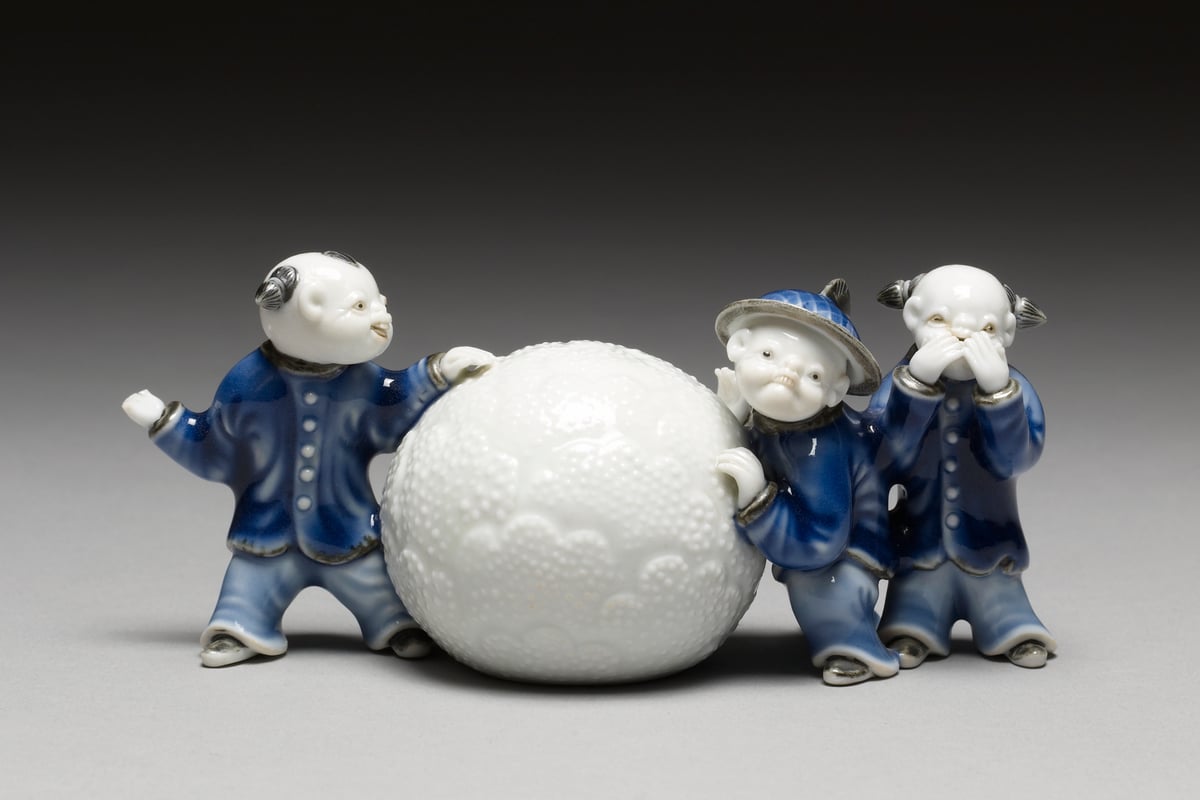
Mikawachi ware (Mikawachi-yaki) is porcelain made in the Mikawachi area of Sasebo City, Nagasaki Prefecture. It is said to have begun in 1598 (Keicho 3), when potters brought back from Korea by Matsura Shigenobu, lord of the Hirado domain, opened a kiln on Hirado Island. They later moved to Mikawachi in search of good raw materials, and in 1637 (Kan'ei 14) an official kiln of the Hirado domain was opened there. Under the domain's generous patronage, tribute pieces were made with no regard for cost, and the craft is described as having refined its high level of skill in this way. It is characterized by delicate sometsuke (underglaze blue) painted with gosu (cobalt pigment) on almost translucent white porcelain. The 'karako-e' design, showing karako (Chinese children) at play, is a representative motif. It is also known for fine crafted pieces such as 'rankakude' (eggshell porcelain), so thin that light shines through, openwork carving, and chrysanthemum ornament work (kikka kazari zaiku). In 1978 it was designated a Traditional Craft by the Minister of Economy, Trade and Industry, and today a dozen or so kilns carry on the tradition.
Utsutsugawa Ware
Utsutsugawa-yaki (Utsutsugawa Pottery)
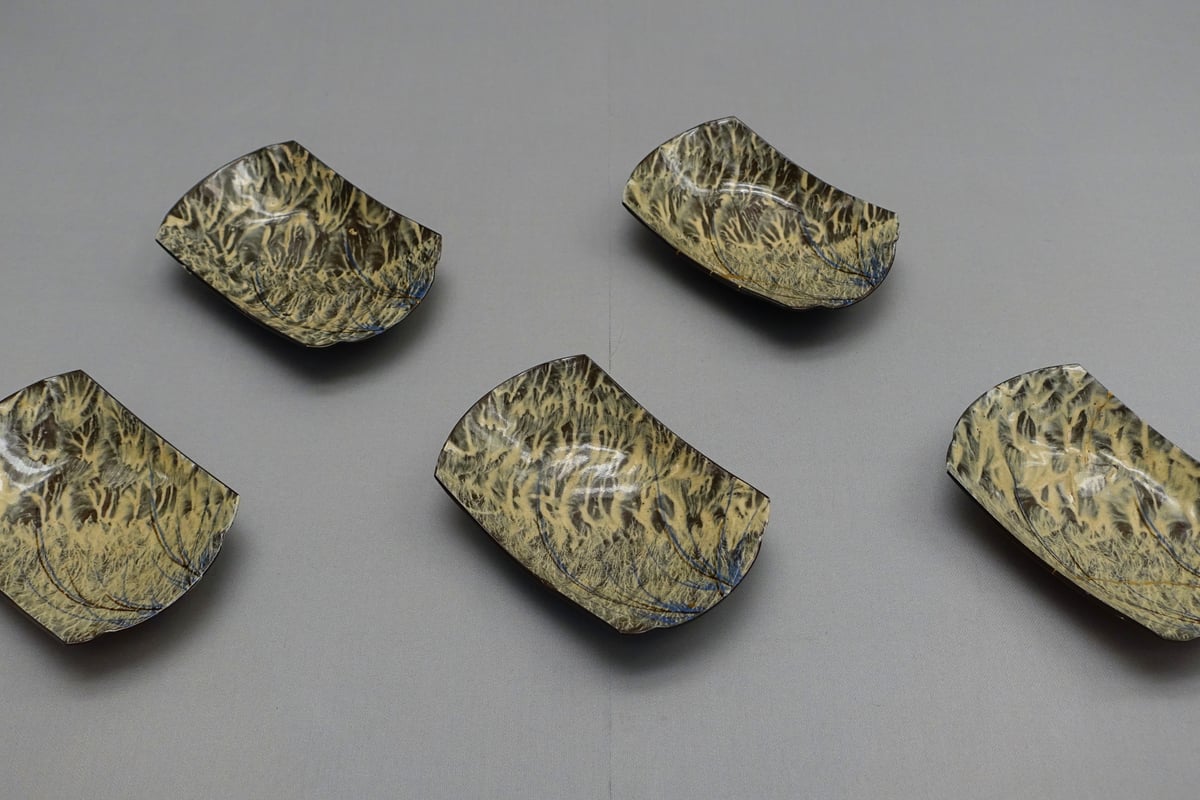
Utsutsugawa ware (Utsutsugawa-yaki) is pottery that was fired in Utsutsugawa-machi, Nagasaki City, during the Edo period. It is said that in 1691 (Genroku 4), Tanaka Gyobuzaemon, a retainer of the Isahaya family, left his post and opened a kiln together with his second son, Jinnai. The iron-rich clay turns a chocolate color when fired, and its greatest feature is hakeme (brushed slip), in which white slip is applied over it with a brush. Its bold shapes, such as boat-shaped and corner-cut forms, and its seasonal motifs were also highly regarded, and it was praised as the 'Ninsei of the West' (after Ninsei, a celebrated Kyoto potter). However, the kiln ceased after only about 60 years, and because few works survive, it is called a 'phantom ware.' Since the Meiji era there have been continued attempts at revival, and kilns such as 臥牛窯 (Gagyu-gama) in Sasebo City have reproduced the techniques. The kiln site that remains where the kiln was first opened is designated a Historic Site of Nagasaki Prefecture.
Nagasaki Tortoiseshell (Bekko)
Nagasaki Bekko (Nagasaki Tortoiseshell Craft)
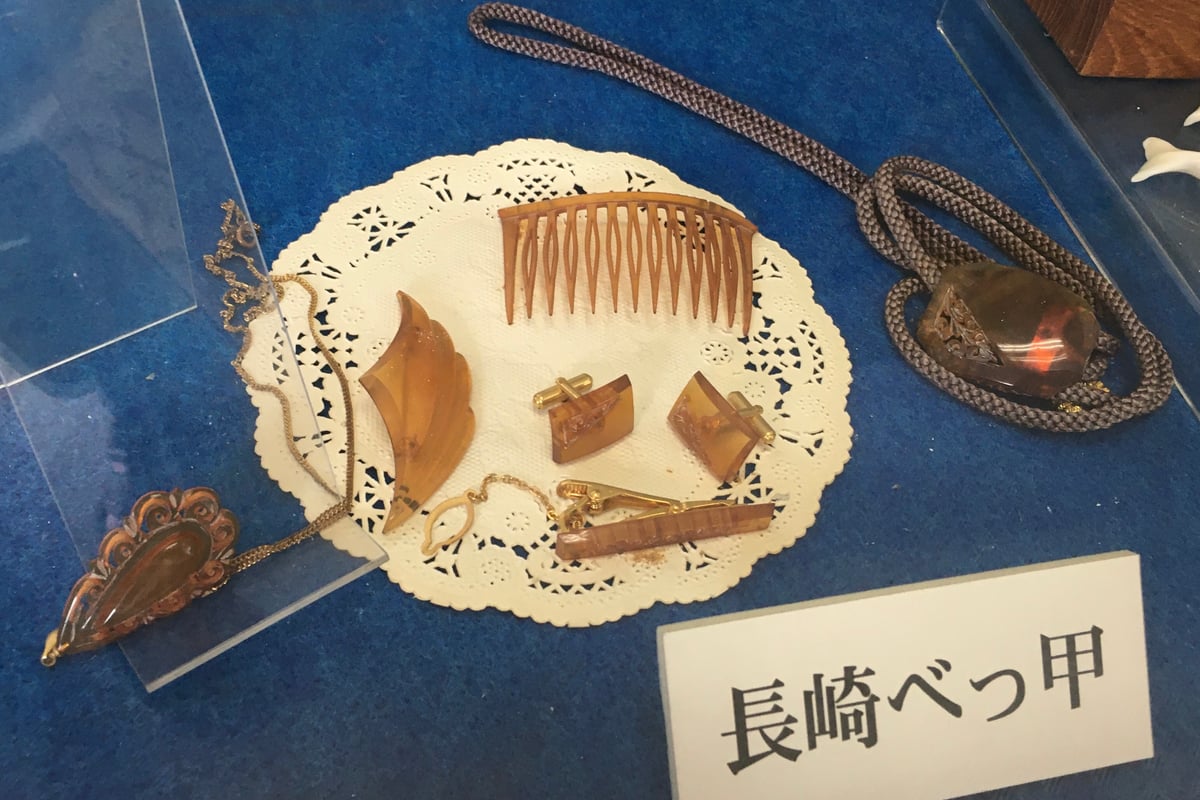
Nagasaki tortoiseshell (bekko) is a traditional craft of Nagasaki made by working the shell of the hawksbill turtle, a type of sea turtle. In the Edo period, under the policy of national isolation (sakoku), Nagasaki Port was the only port for trade with the Netherlands and China, and because the raw hawksbill shell was easy to obtain there, tortoiseshell craft is said to have developed in Nagasaki. Nagasaki's techniques are described as having later spread to Edo and elsewhere. After Japan opened to the world, the craft also became popular with foreigners, and its techniques and designs were refined. Its greatest feature is the technique of joining shell pieces together using only water, heat and pressure, without any adhesive. For this reason it is also called 'the art of water and heat.' Besides accessories such as kanzashi (ornamental hairpins) and brooches, decorative objects such as treasure ships are also made. In 2017 it was designated a Traditional Craft by the Minister of Economy, Trade and Industry. Meanwhile, international trade in hawksbill turtles is banned under the Washington Convention (CITES), and Japan ended its imports in 1992. Craftspeople carry on the techniques while carefully using raw materials imported in the past.

Koga Dolls
Koga Ningyo (Koga Clay Dolls)
Koga dolls (Koga Ningyo) are unglazed clay dolls made in Nakazato-machi, Nagasaki City (formerly Koga Village). Together with Kyoto's Fushimi dolls and Sendai's Tsutsumi dolls, they are counted among Japan's three major clay dolls. They are said to have begun in 1592 (Bunroku 1). According to tradition, Hitachinosuke, an earthenware maker who came from Kyoto, passed on the secrets of earthenware making to Ogawa Kosaburo, the third head of the Ogawa family. Since then, the Ogawa family has carried on the craft generation after generation, and this one household is said to be the only one still making the dolls today. They are characterized by simple forms and a bold use of primary colors such as red and yellow. Many subjects reflect Nagasaki's exchanges with foreign countries, such as 'Acha-san,' a Chinese man holding a shamo gamecock; the 'Western Lady,' modeled on the wife of the head of the Dutch trading post on Dejima; and 'Oranda-san' (the Dutchman), holding a gun. In 1993 they were designated a Nagasaki Prefecture Traditional Craft.
Sasebo Tops (Sasebo-goma)
Sasebo Goma (Spinning Tops of Sasebo)
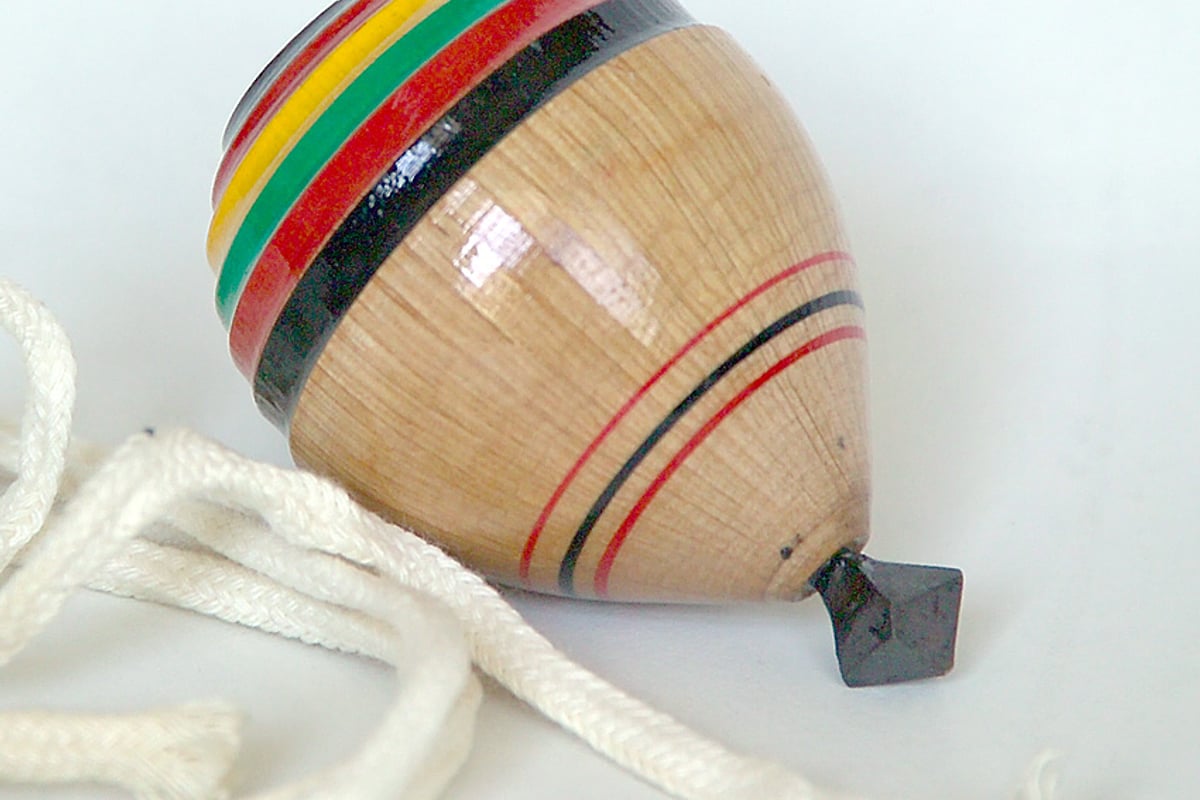
Sasebo tops (Sasebo-goma) are wooden spinning tops handed down in Sasebo City, Nagasaki Prefecture. They are characterized by a rounded body shaped like a rakkyo (Japanese scallion bulb) and an iron tip called a 'ken' (sword) driven into the point. The upper part of the body is painted in five colors, blue (green), red, yellow, white and black, a color scheme said to be influenced by the Chinese theory of yin-yang and the five elements. The top is spun by winding a cord around it and throwing it, and because it is played by striking an opponent's top, it is also called a 'kenka-goma' (fighting top). Its shape is said to belong to a Taiwanese or Indian lineage, and it is said to have come to Nagasaki from the south by way of China. In 1993 (Heisei 5), it was designated a Nagasaki Prefecture Traditional Craft. Today, 佐世保独楽本舗 (Sasebo Koma Honpo) continues to make it. Now that children's play has changed, it is also enjoyed as a good-luck item for the New Year, a gift for seasonal festivals (sekku) and an interior decoration.
Nagasaki Hata (Kites)
Nagasaki Hata (Fighting Kites of Nagasaki)
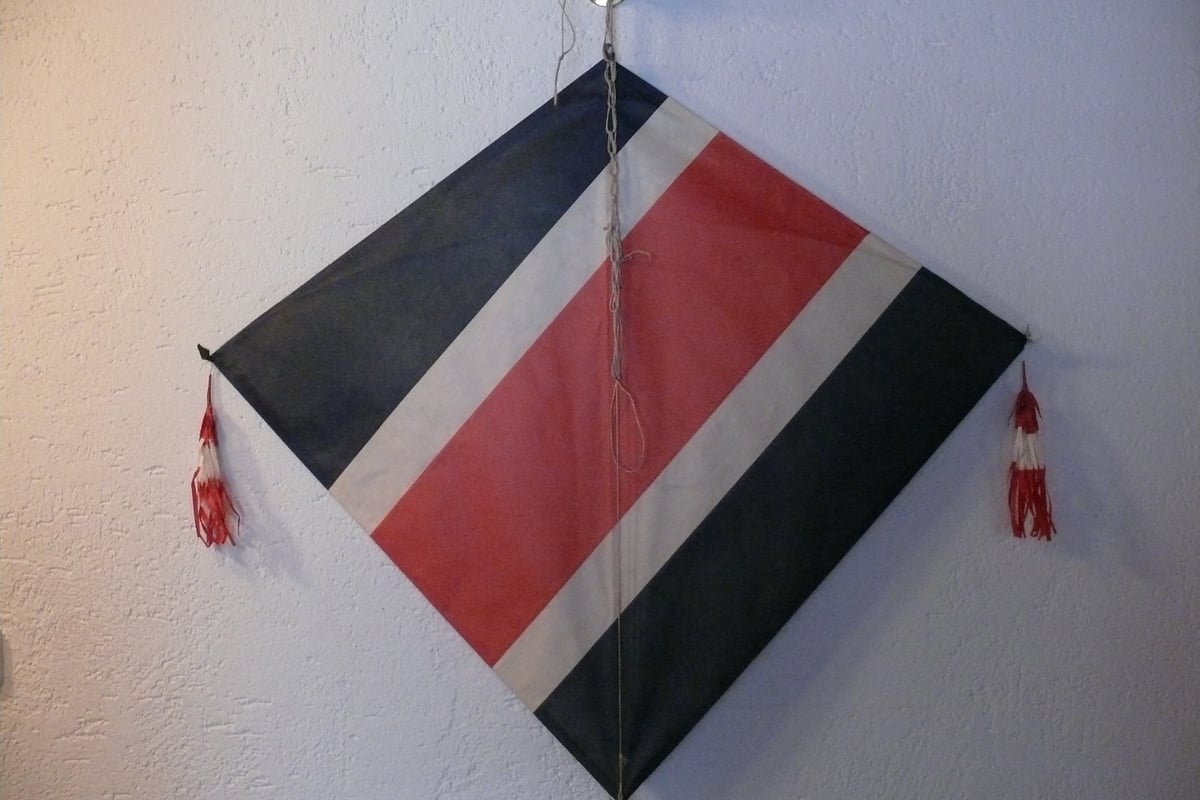
Nagasaki hata are kites handed down in Nagasaki City. In Nagasaki, kites are called 'hata,' and kite flying is called 'hata-age.' They are diamond-shaped, with washi (Japanese paper) pasted onto two bamboo spars, one vertical and one horizontal, and because they have no tail, they can be maneuvered freely in the air. They are characterized by simple, exotic designs made by cutting and pasting red and blue washi onto a white ground. Rather than competing for height, people enjoy 'hata kite fights,' in which they try to cut each other's lines using 'bidoro yoma' (glass-coated kite line), a line coated with powdered glass. For this reason they are also called 'kenka-bata' (fighting kites). The accepted theory is that they were introduced by Indonesians who came to the Dutch trading post on Dejima. Hata-age has long been cherished as one of Nagasaki's three great events, along with Nagasaki Kunchi and Shoro Nagashi. Nagasaki hata (written 長崎凧) and bidoro yoma are described as having been designated Nagasaki Prefecture Traditional Crafts in 1993 (Heisei 5). Every April, the Nagasaki Hata-age Festival is held at Tohakkei Park.
Goto Baramon Kites
Goto Baramon-dako (Demon Kites of the Goto Islands)
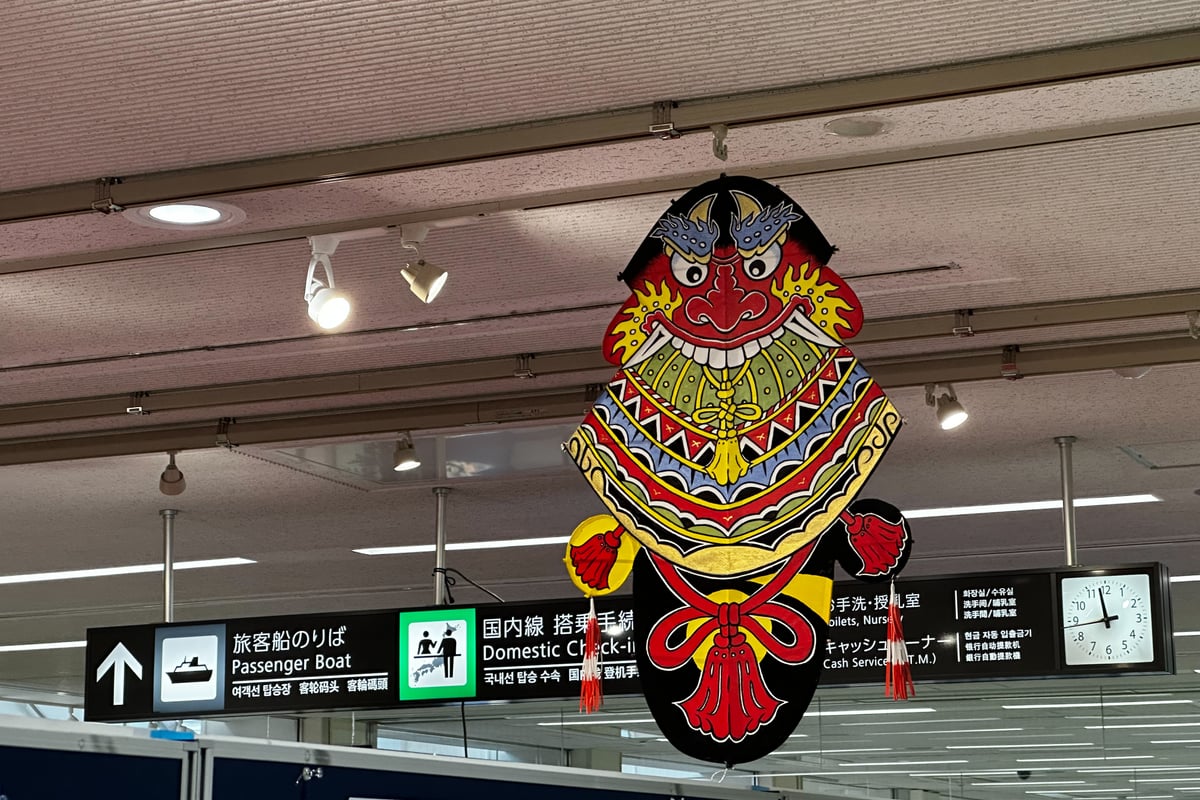
Goto Baramon kites (Goto baramon-dako) are kites that have long been made and handed down on Fukue Island in Goto City, Nagasaki Prefecture. 'Baramon' is said to derive from 'baraka,' a word in the Goto dialect, and to describe an energetic or rough-and-tumble person. They are characterized by a demon at the top, the back view of a warrior's helmet in the middle section, and a swirl in a storm at the bottom. The design is described as expressing the bravery of a warrior who keeps moving forward even with his helmet bitten by a demon. An 'unari' (hummer) is attached to the top of the kite, producing a distinctive humming sound when the kite is flown. There is a custom of fathers and grandfathers flying the kite on a boy's first seasonal festival (hatsu-zekku) to ward off misfortune and pray for the child's healthy growth and success in life. In 1993 (Heisei 5), they were designated a Nagasaki Prefecture Traditional Craft. Today they are also cherished as good-luck items, decorated with the name of a child or a shop and displayed as charms against evil.
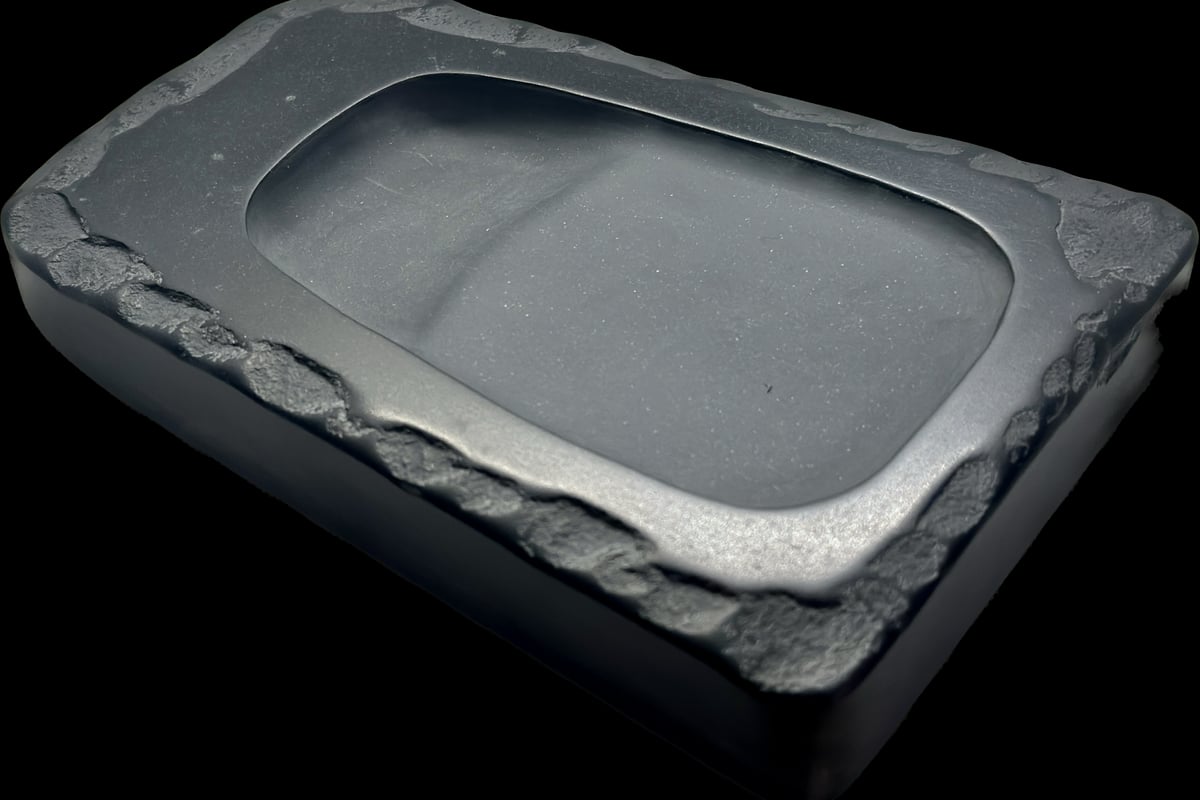
Wakata Stone Inkstones
Wakata-ishi Suzuri (Wakata Stone Inkstones of Tsushima)
Wakata stone inkstones (Wakata-ishi suzuri) are inkstones made in Tsushima City, Nagasaki Prefecture. They use shale (a mudstone that splits into plates) taken from the upper reaches of the Sasu River in the Wakata district of Izuhara Town. The stone is a jet black with a bluish tinge, and many inkstones are said to be made in a natural style with restrained carving that makes the most of the mottling and streaks on the surface. The grinding surface has a good balance of smoothness and hardness, and the inkstones are valued for how well the ink grinds and the color of the ink. There is a legend that Murasaki Shikibu of the Heian period used one with fondness when writing 'The Tale of Genji.' It is also said that Hayashi Razan, a Confucian scholar of the early Edo period, praised them as rivaling China's Duanxi (Tankei) inkstones. In 1991 (Heisei 3), they were designated a Nagasaki Prefecture Traditional Craft. Today, craftsmen of 芳秀堂 (Hoshudo) and 若田石硯匠会 (Wakata Stone Inkstone Craftsmen's Association) carve each one by hand.
Nagasaki Uchihamono (Hand-forged Blades)
Nagasaki Uchihamono (Hand-forged Blades of Nagasaki)
Nagasaki Uchihamono are hand-forged blades made in three production areas in Nagasaki Prefecture: Matsubara in Omura City, Kayaki-machi in Nagasaki City, and Shimabara City. In 1991 (Heisei 3), they were designated a Nagasaki Prefecture Traditional Craft. Using good-quality materials and water, along with yakibatsuchi (clay applied to the blade during quenching), the blades are carefully quenched using traditional techniques. They are valued for their sharpness and toughness. Each production area has its own character: Omura City's Matsubara sickles and kitchen knives, said to have a tradition of about 500 years; Nagasaki City's Kayaki knives (Kayaki-bocho); and Shimabara City's farm tools and kitchen knives are well known. The number of blacksmiths has declined in every area, but workshops where parents and children pass down the skills remain, and some workshops accept blacksmithing experiences.
Nagasaki's Local Food
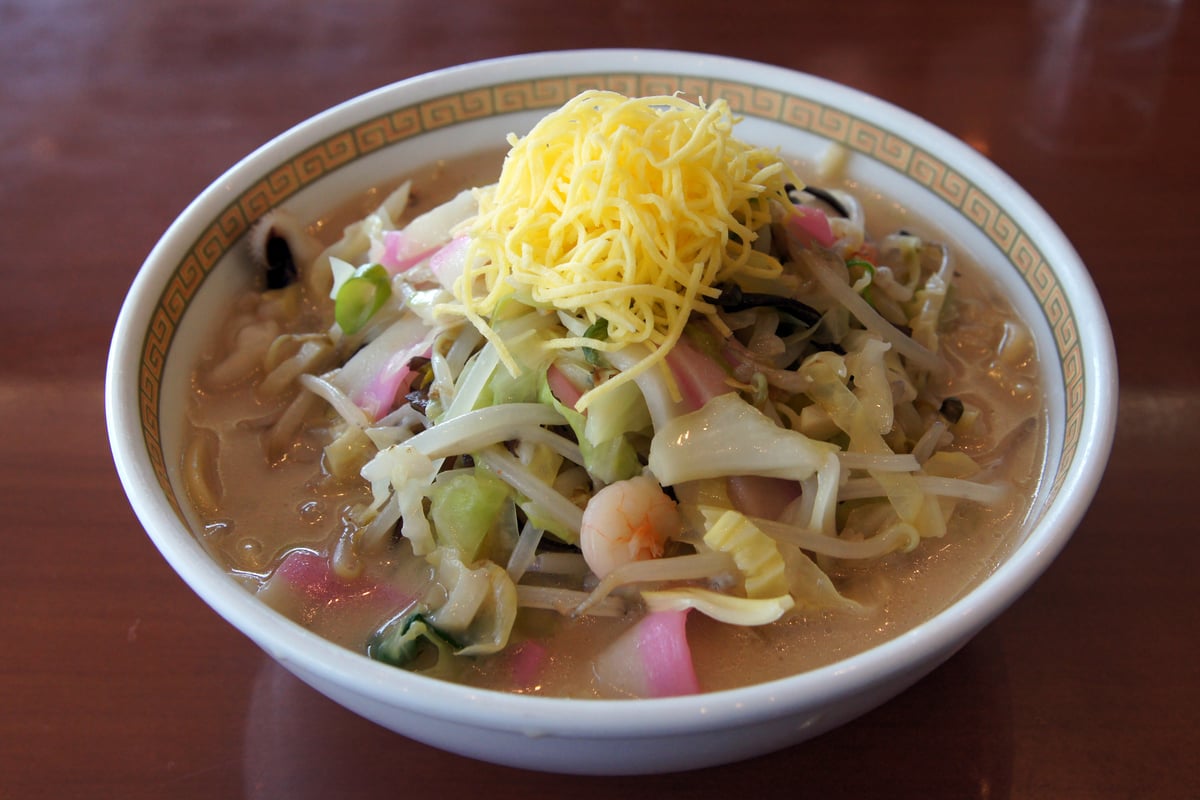
Nagasaki Champon
Nagasaki Champon (Pork-and-Seafood Noodle Soup)
Nagasaki champon is a noodle dish of Nagasaki Prefecture in which pork, seafood, cabbage, bean sprouts and other ingredients are stir-fried in lard, then simmered together with the noodles after broth is poured in. It is said to have begun in 1899 (Meiji 32), when Chin Heijun (陳平順), the founder of the Chinese restaurant Shikairo (四海樓) in Nagasaki, created it for Chinese students studying in Japan and others. It is said that he aimed for a dish that was cheap, nutritious and filling. The mainstream broth combines pork bones and chicken bones. The noodles are champon noodles unique to Nagasaki, kneaded with toaku (a type of kansui alkaline water). Unlike ramen, in which broth is poured over boiled noodles, the noodles are simmered in the same pot as the other ingredients, so it can be made in a single wok. Another characteristic is the red-and-white kamaboko (fish cake) called 'hanpen' in Nagasaki. It is eaten every day at home, in school lunches and at casual eateries, and is known throughout Japan as the representative local taste of Nagasaki.
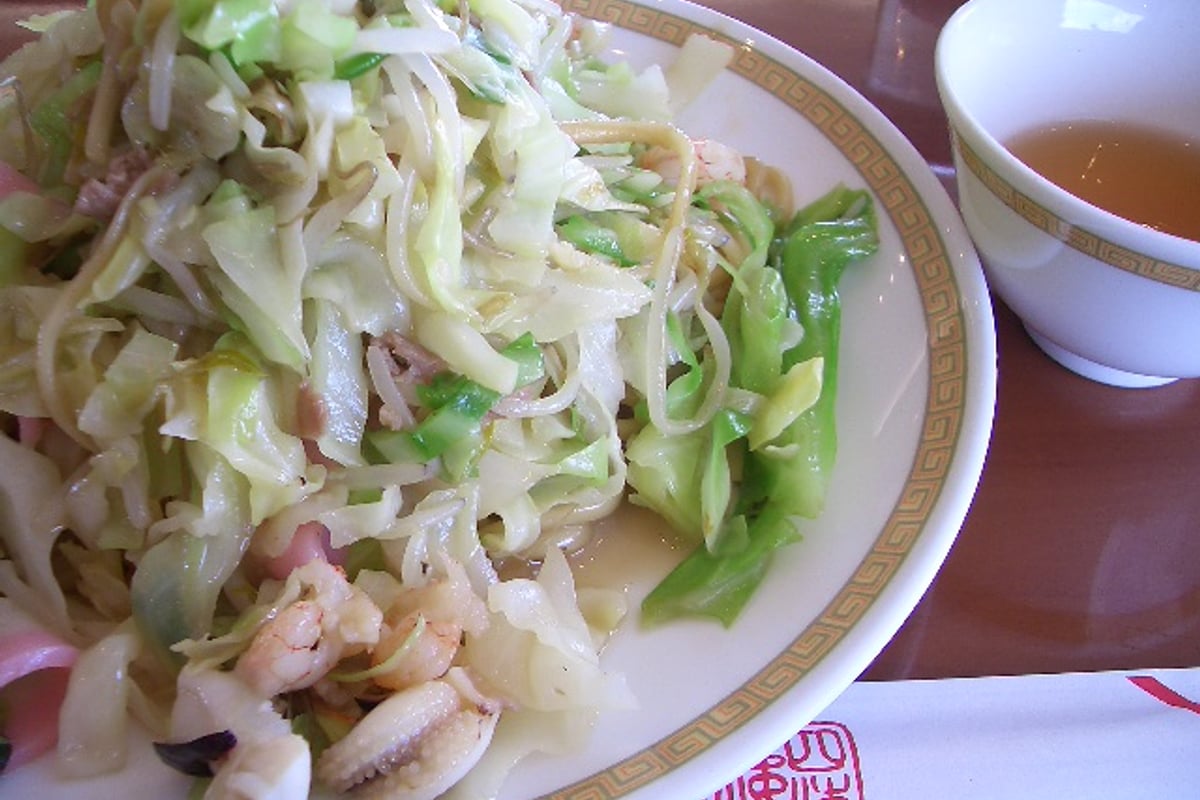
Sara Udon
Sara Udon (Nagasaki Crispy or Pan-Fried Noodles with Gravy)
Sara udon is a soupless noodle dish born from Nagasaki champon. It is said to have been created as a variation of champon by Chin Heijun (陳平順), the founder of Shikairo (四海樓), who devised champon. The name ('sara' means plate) is said to come from the fact that it was served on a flat plate. There are two kinds of sara udon: 'futomen sara udon' (thick-noodle sara udon), in which the same thick noodles as champon are stir-fried with the toppings and made to absorb broth, and 'hosomen sara udon' (thin-noodle sara udon), in which thin noodles are deep-fried until crispy and topped with a thick sauce full of ingredients. People in Nagasaki clearly distinguish between the two. The toppings, such as pork, seafood, cabbage and kamaboko (fish cake), are almost the same as for champon. In Nagasaki, there is a custom of eating it with locally made Worcester sauce. It is a familiar dish on home tables, in school lunches and as a delivery order when guests visit.
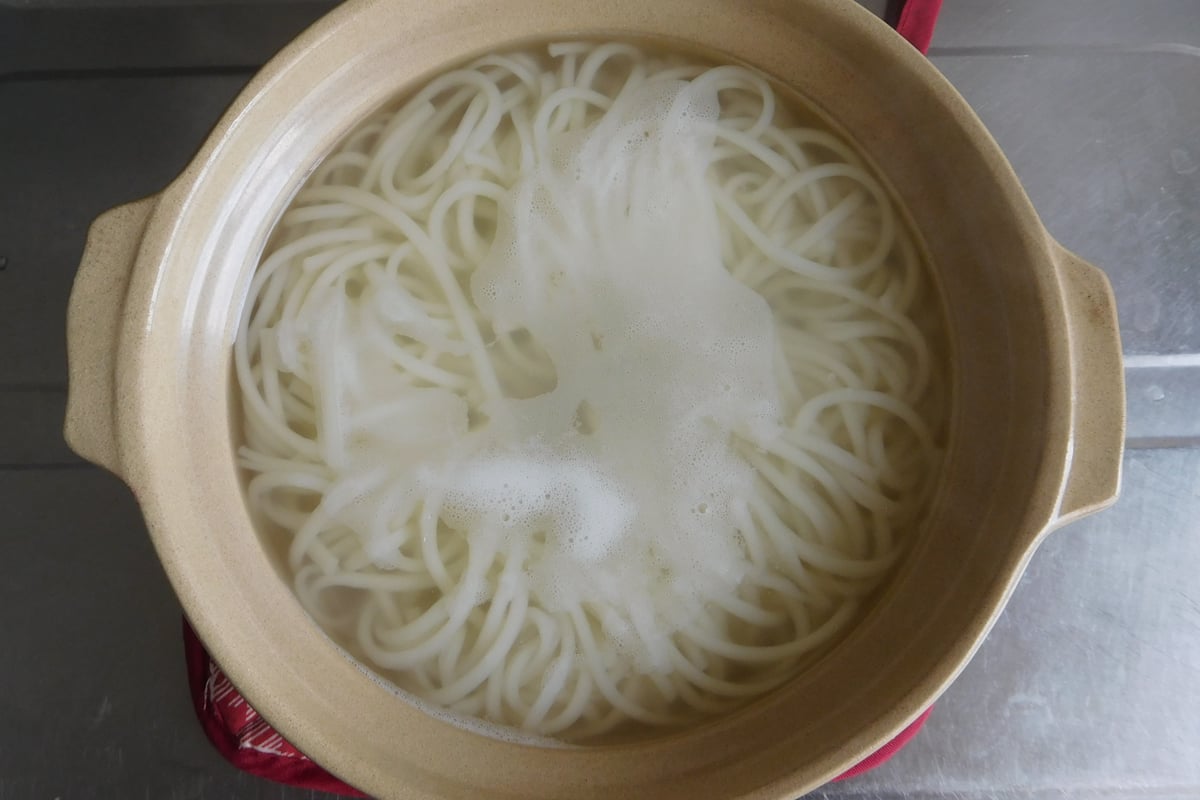
Goto Udon
Goto Udon (Hand-Stretched Camellia Oil Noodles of the Goto Islands)
Goto udon is a hand-stretched dried udon made in the Goto Islands, which lie in the sea west of Nagasaki Prefecture. The main production area is Shinkamigoto Town in Kamigoto. Its most distinctive feature is that camellia oil, a specialty of the islands, is applied to the dough as it is stretched. The boiled noodles are thin and round, and are said to be prized for their firm, chewy texture and smooth slurp. The standard local way of eating them is 'jigokudaki'. Udon boiled vigorously in a large pot is scooped directly out of the pot and eaten dipped in 'ago dashi' (flying fish broth) or coated in egg. As for its origin, a legend that it was brought by envoys to Tang China (kentoshi) who called at Goto is well known. In fiscal 2024 (Reiwa 6), it was certified as a '100-Year Food' by the Agency for Cultural Affairs. It is sometimes counted, along with Sanuki udon and Inaniwa udon, as one of Japan's Three Great Udon.
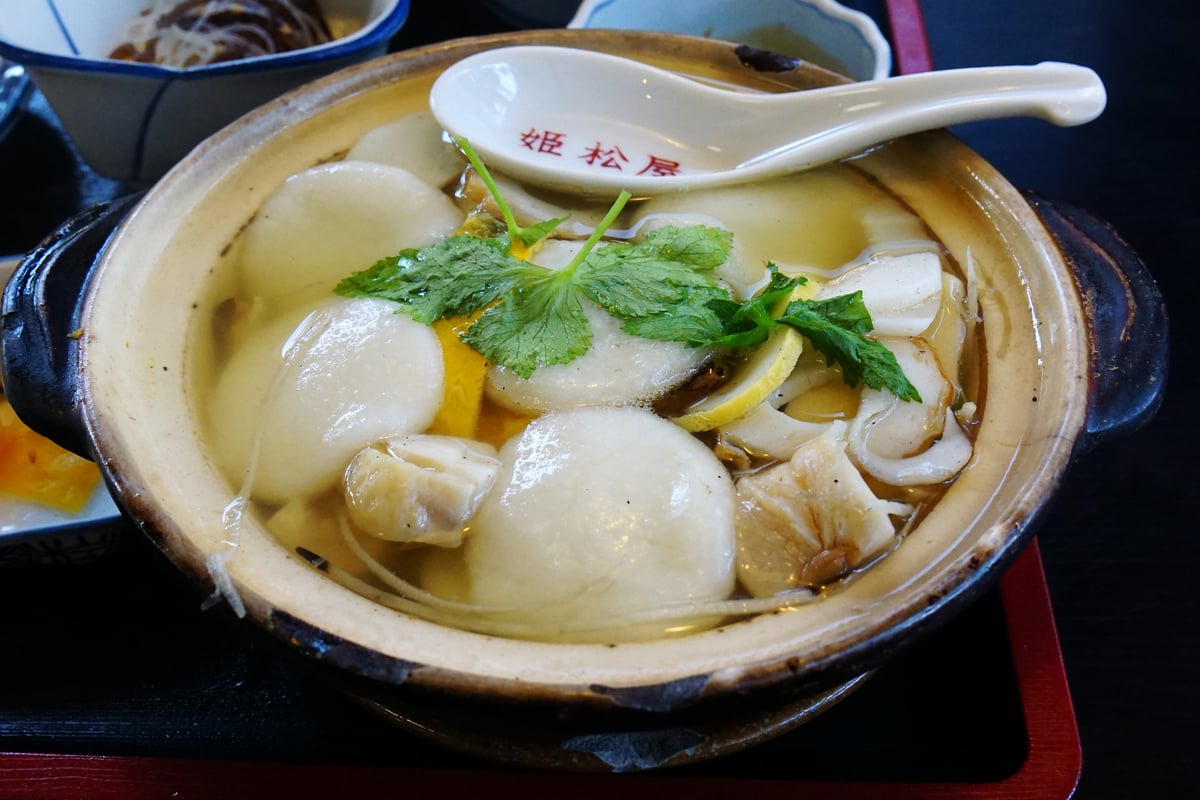
Shimabara Guzoni (Ingredient-Rich Mochi Soup)
Shimabara Guzoni (Ingredient-Rich Mochi Soup of Shimabara)
Shimabara guzoni is a zoni (mochi soup) packed with ingredients, handed down on the Shimabara Peninsula in Nagasaki Prefecture. Round mochi and many other ingredients, such as chicken, napa cabbage, burdock root, dried shiitake mushrooms and koya-dofu (freeze-dried tofu), are put into dashi broth, cooked in an earthenware pot and eaten straight from it. Some households also add grilled conger eel or tamagoyaki (rolled omelet). A well-known story of its origin is the legend of the Shimabara Rebellion, which began in 1637. It is said that when Amakusa Shiro and his followers were holed up in a castle, they boiled their stored mochi together with the bounty of the mountains and sea and ate it to build up their strength, and that this was the beginning. The first restaurant to serve guzoni is said to have been Himematsuya (姫松屋) in Shimabara, and this is said to have been in 1813 (Bunka 10). Locally, it has been eaten at New Year and on festival days. In 2007, it was selected as one of the Ministry of Agriculture, Forestry and Fisheries' '100 Selected Local Dishes of Farming, Mountain and Fishing Villages', and it is now a Shimabara specialty that can be enjoyed all year round.
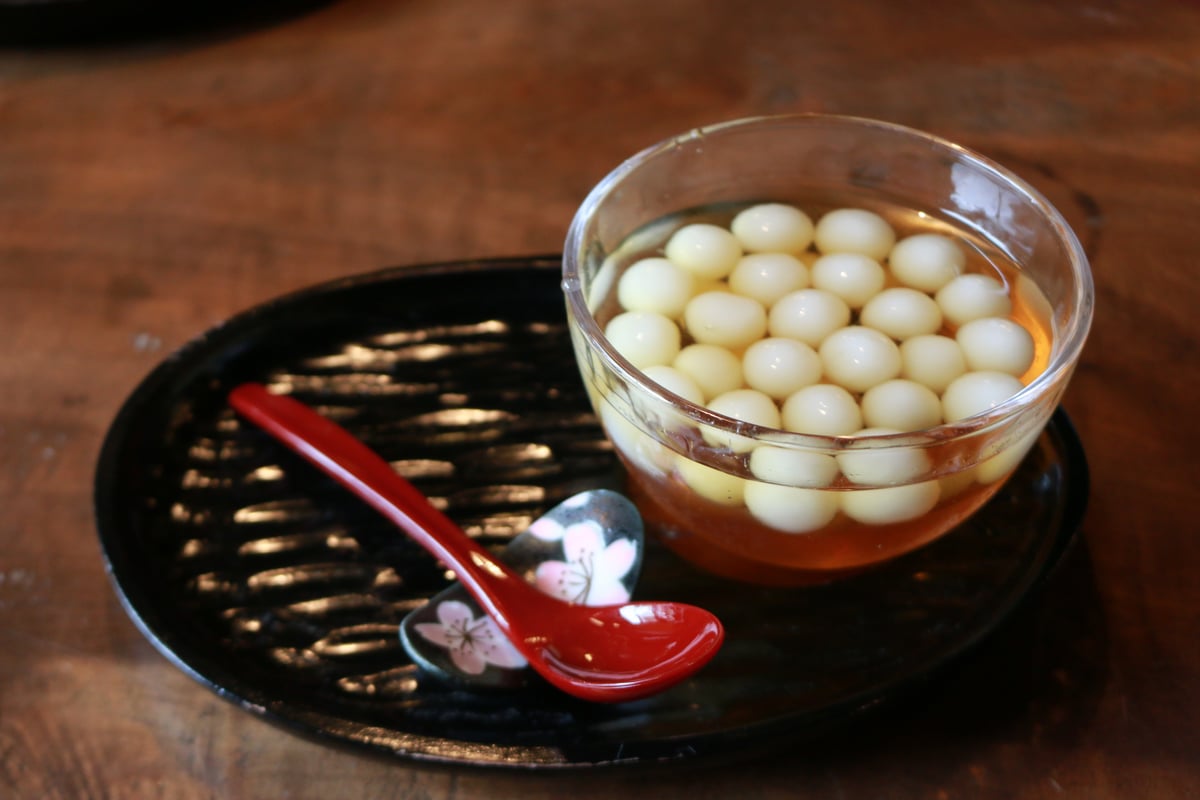
Kanzarashi (Chilled Rice Dumplings in Syrup)
Kanzarashi (Chilled Rice Dumplings in Syrup of Shimabara)
Kanzarashi is a traditional sweet long handed down in Shimabara City, Nagasaki Prefecture. Small dumplings made from shiratamako (glutinous rice flour) are chilled in Shimabara's spring water and eaten with a syrup made from sugar or honey. Its appeal lies in the moist, chewy dumplings and the smooth, lightly sweet syrup. The name is said to come from the fact that shiratamako was made by exposing the raw glutinous rice to water around Daikan (the coldest time of the year). Shimabara is called the 'City of Water', and clear groundwater springs up in many places around town. The spring water, whose temperature stays the same all year round, was well suited to chilling the dumplings. It was once a special treat for entertaining guests in summer, but today it can be enjoyed at many eateries in the city. Ginsui (銀水), a renowned shop founded in the Taisho period, closed once but was revived by Shimabara City in 2016. In fiscal 2021 (Reiwa 3), it was certified as a '100-Year Food' by the Agency for Cultural Affairs.
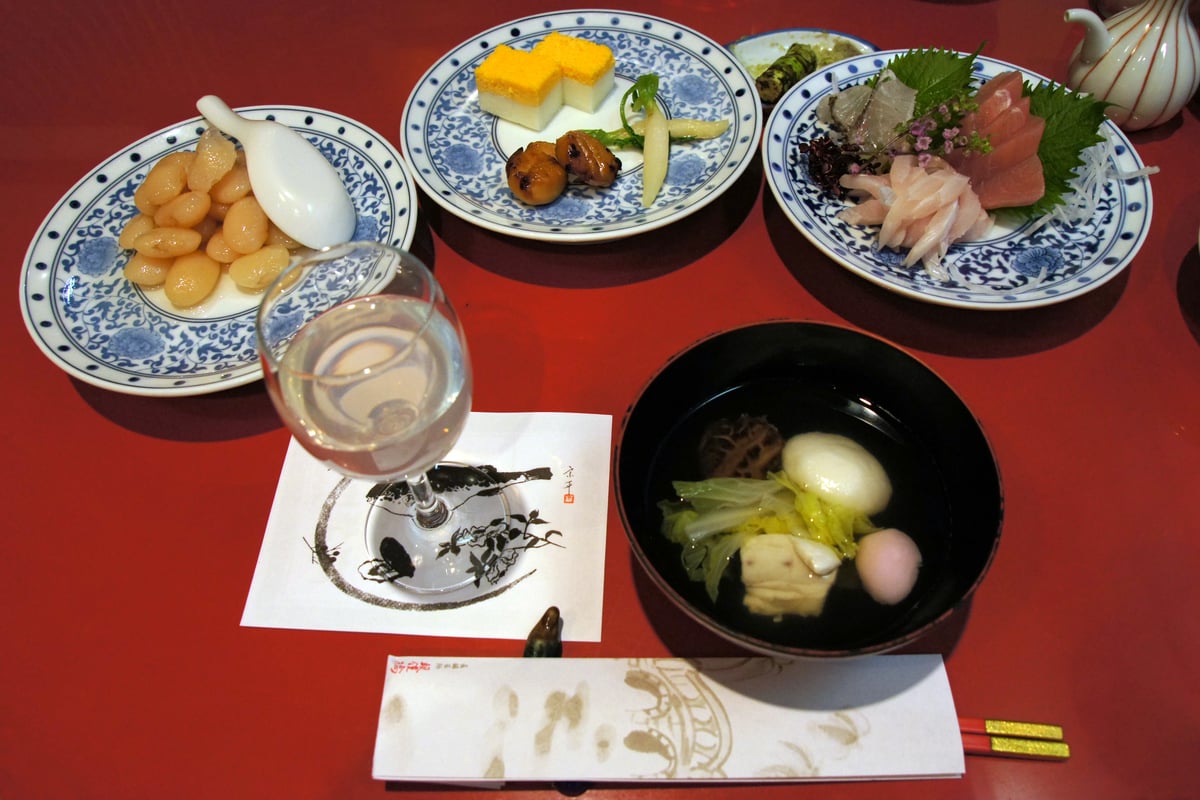
Shippoku Cuisine (Nagasaki Banquet Cuisine)
Shippoku Ryori (Nagasaki Banquet Cuisine)
Shippoku cuisine (shippoku ryori) is a banquet cuisine born in Nagasaki. Because it blends the food cultures of Japan, China and the West, including the Netherlands, it is also called 'wakaran' cuisine (from the characters for Japan, China and Holland). Diners sit around a red-lacquered round table and serve themselves from large platters and bowls directly with their own chopsticks (jikabashi). Gathering around the same dishes with no distinction between host and guest or between ranks is said to be a form of hospitality unique to Nagasaki. The banquet begins with the proprietress (okami) saying 'Please have the ohire,' and guests taste a clear soup containing a sea bream fin before making a toast. This is followed by small dishes such as sashimi, then medium bowls and large bowls, and the meal ends with a sweet red bean soup (oshiruko) called umewan. Dishes that reflect the history of trade are served, such as tobani (braised pork belly), which came from China, and hatoshi (shrimp toast), made by sandwiching minced shrimp between slices of bread and deep-frying it. Today it is mostly enjoyed at ryotei (traditional Japanese restaurants), but it is also made at home for New Year and celebrations.
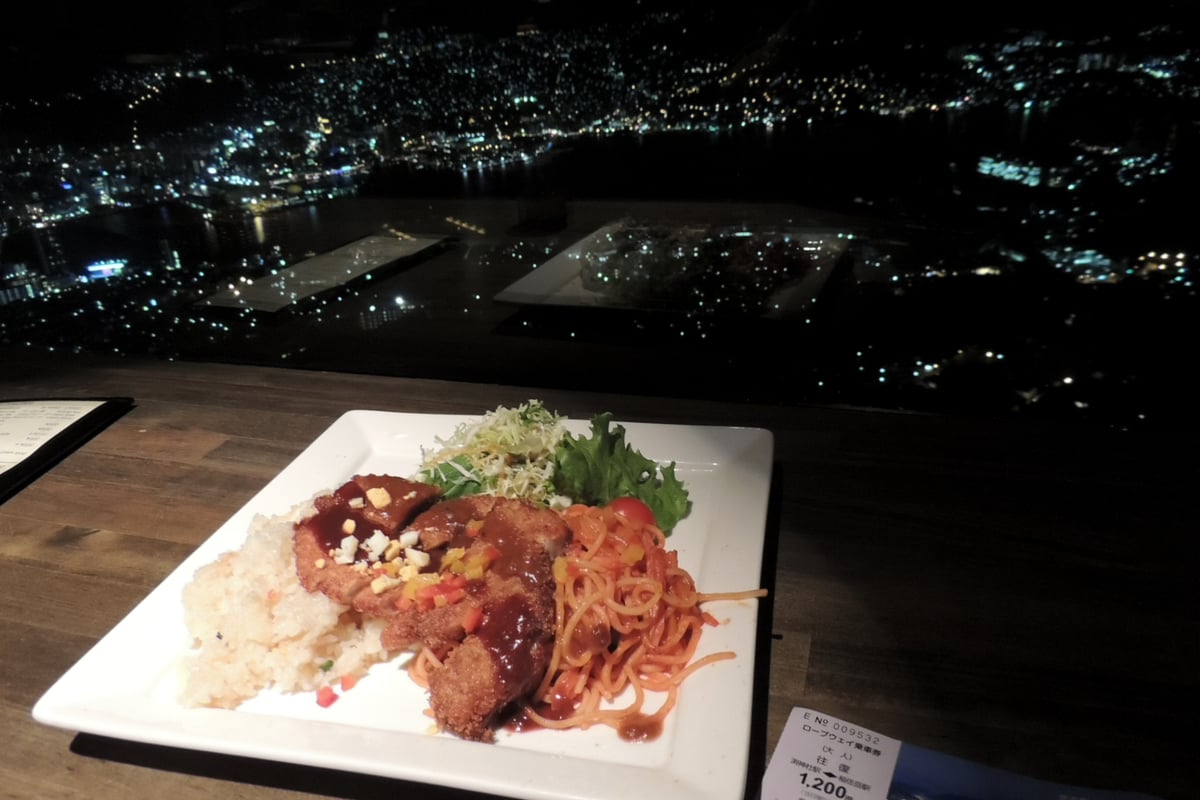
Toruko Rice (Nagasaki Western-style Combination Plate)
Toruko Rice (Nagasaki Western-style Combination Plate)
Toruko rice is a yoshoku (Japanese-style Western) dish loved mainly in Nagasaki City. Its basic form is a single plate with three items: pilaf, spaghetti Napolitan and tonkatsu (pork cutlet). The tonkatsu is topped with demi-glace sauce or curry sauce. However, there is no fixed definition, and it is said that any combination of a rice dish, pasta and a Western-style main dish can pass as Toruko rice. Combinations vary from restaurant to restaurant, such as replacing the pilaf with dry curry or fried rice, or topping the plate with a hamburg steak instead of a cutlet. Although the name includes 'Toruko' (Turkey), its relationship to Turkish cuisine is unclear. There are several theories about the origin of the name, none of them confirmed. It can be enjoyed at coffee shops dating back to the Taisho period and at Western-style restaurants in the downtown area.
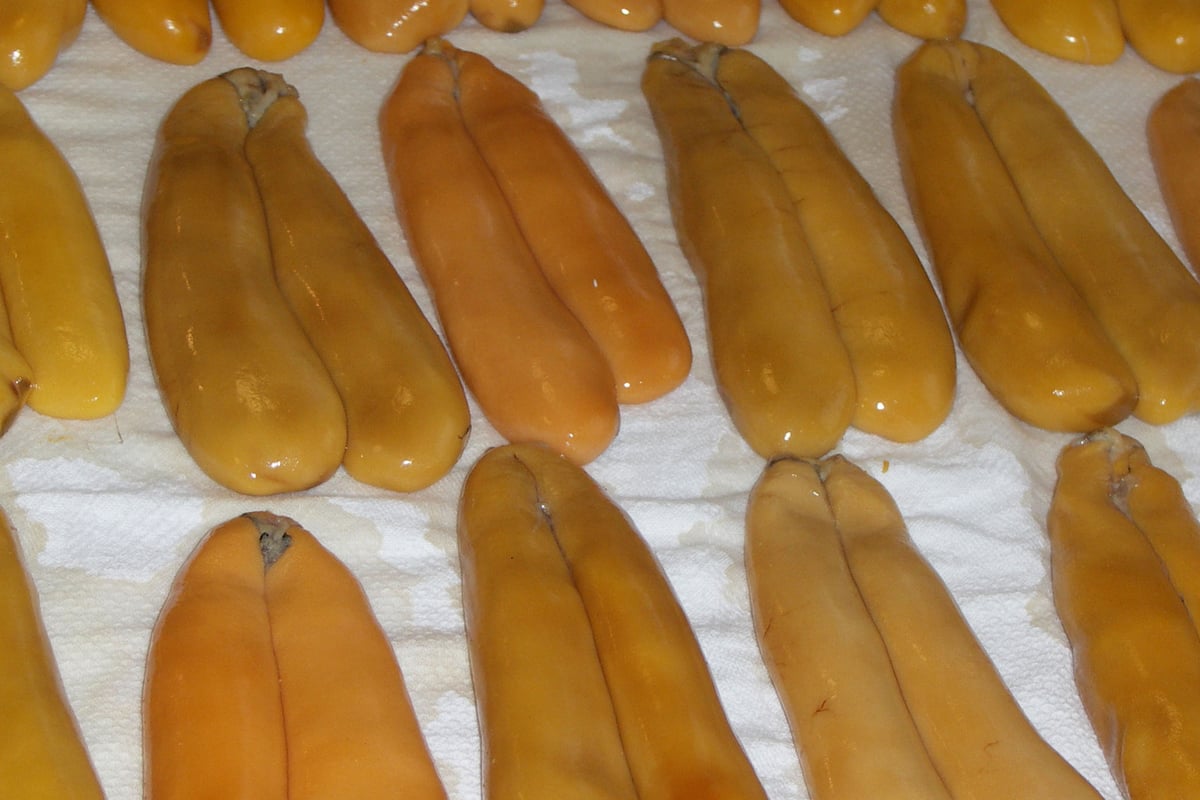
Karasumi (Salted and Dried Mullet Roe)
Karasumi (Salted and Dried Mullet Roe)
Karasumi is a Nagasaki delicacy made by salting the ovaries of grey mullet and drying them in the sun. It has a glossy amber color, also described as tortoiseshell-colored or candy-colored. It is characterized by a dense, sticky texture and the rich savory flavor typical of fish roe. In the Edo period, it is said to have been counted among the three great delicacies, along with uni (sea urchin) from Echizen and konowata from Mikawa. The name is said to come from its resemblance in shape to karasumi (唐墨), an ink stick introduced from China. The food itself originally came from China, and the method of using mullet ovaries is said to have been devised in Nagasaki. Karasumi produced in Nagasaki Prefecture was registered with the national Geographical Indication (GI) system as 'Nagasaki Karasumi' in 2023. Besides being sliced thinly as an accompaniment to sake, it is also served as one of the dishes of Shippoku cuisine. As a rare and expensive item, it is valued as a gift and a high-end souvenir.
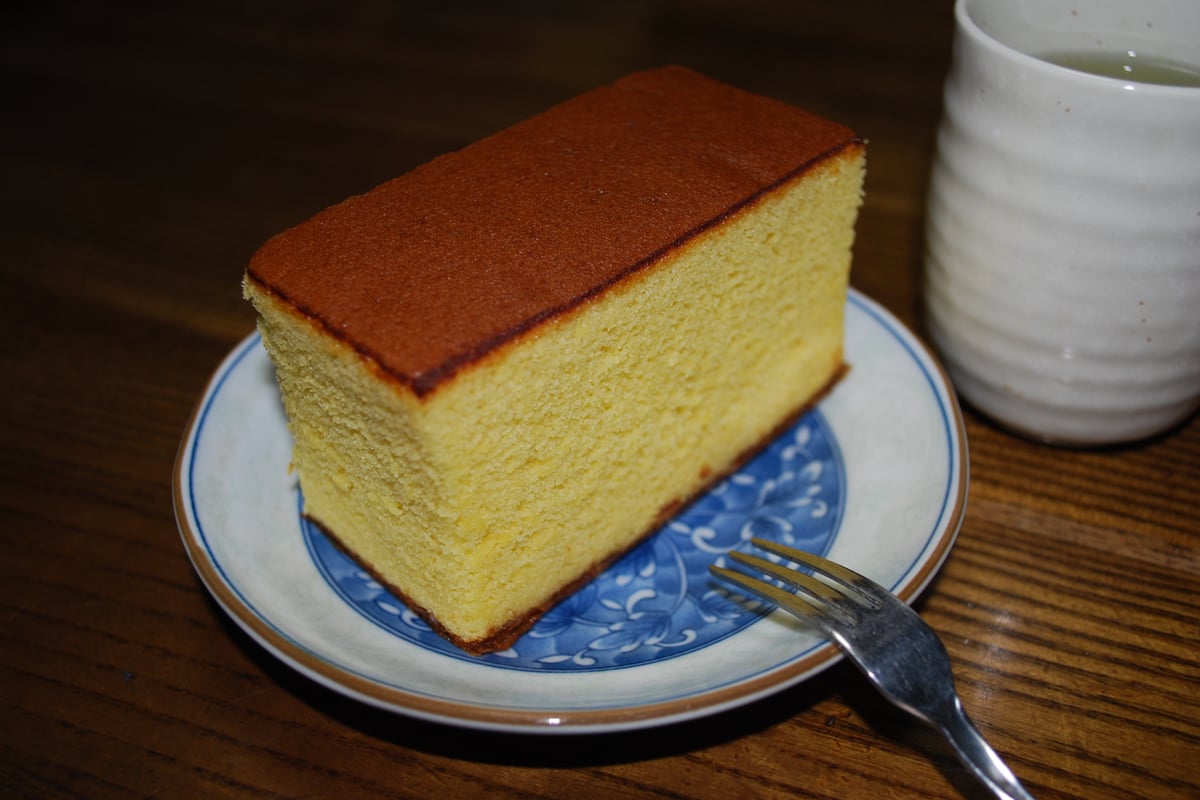
Castella (Nagasaki Sponge Cake)
Castella (Nagasaki Sponge Cake)
Castella is a representative Nagasaki confection baked mainly from eggs, sugar, wheat flour and starch syrup (mizuame). It developed in its own way in Japan from a Nanban confection introduced by the Portuguese in the 16th century. It is said to have become a local specialty because it continued to be made in Nagasaki, which remained open as a trading port even during the period of national seclusion (sakoku) and where sugar was gathered. It is characterized by its moist texture and a sweetness rich in egg flavor. Much of Nagasaki's castella also offers the crunchy texture of zarame (coarse sugar) left at the bottom. The most widely accepted theory is that the name comes from the Kingdom of Castile, which existed in Spain, but there are other theories as well. Nagasaki City is home to long-established shops such as Fukusaya (福砂屋), said to have been founded in 1624, as well as Shooken (松翁軒) and Bunmeido Sohonten (文明堂総本店). It is loved throughout Japan as a gift for visits and as a formal present.
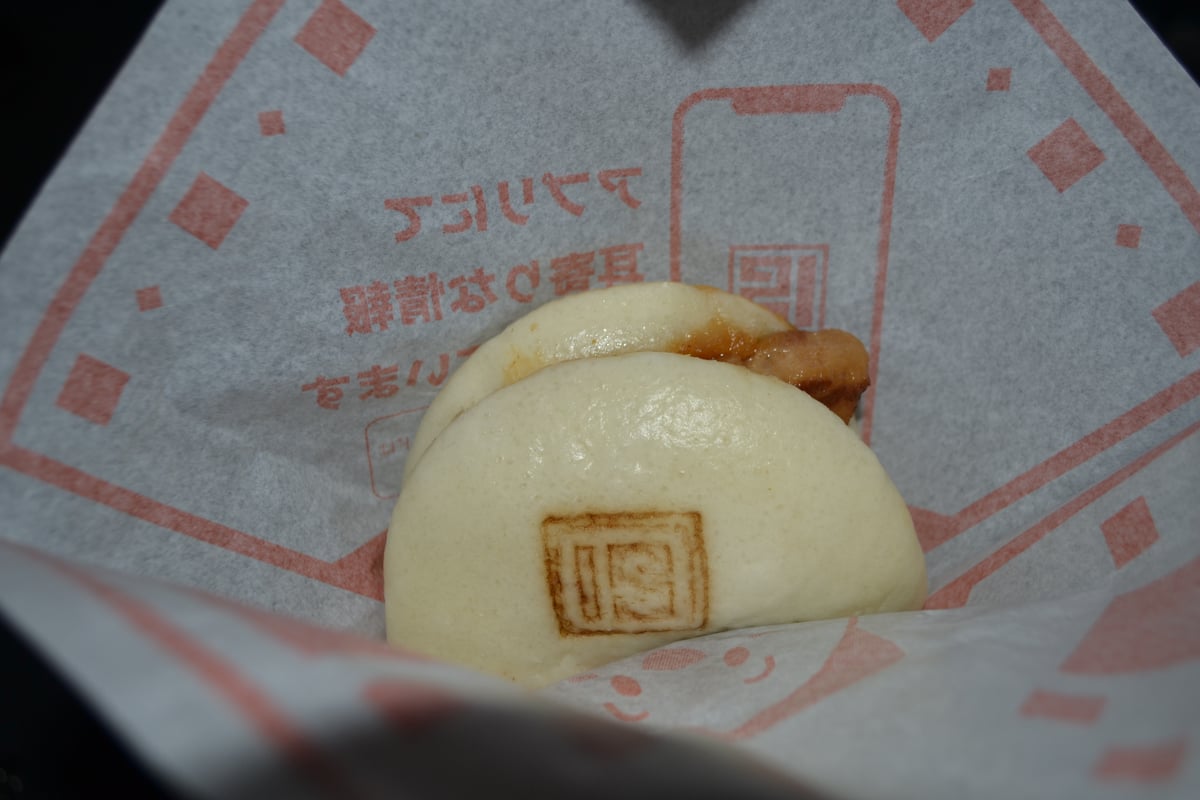
Kakuni Manju (Braised Pork Belly Bun)
Kakuni Manju (Braised Pork Belly Bun)
Kakuni manju is a Nagasaki specialty in which sweet-and-savory braised pork belly (kakuni) is sandwiched in a soft, fluffy white bun. The kakuni is placed inside a bun folded in half, a form that closely resembles Taiwan's gua bao (kuapao). Its roots lie in tobani (braised pork belly), a dish of Shippoku cuisine. At Chinese restaurants in Nagasaki, there was a way of eating in which the kakuni and the bun were served separately and diners sandwiched them together themselves. Products with the kakuni already sandwiched in the bun are relatively new, and are known as having been launched by Iwasaki Honpo (岩崎本舗) of Nagasaki under the name 'Nagasaki Kakuni Manju.' Today they are easy to buy around Nagasaki Shinchi Chinatown and at souvenir shops in stations and airports. They are popular both as street food to eat while still warm and as frozen souvenirs.
Model Course
Have champon at 四海樓 and visit the tortoiseshell craft museum in Oura, eat Kakuni manju in Shinchi Chinatown, and gather around Shippoku cuisine at a ryotei at night
For lunch, head to 中華料理 四海樓 in Oura. It is said to be the birthplace of both champon and Sara udon, and travel guides list each at 1,430 yen. The Champon Museum on the second floor is free to visit. At 長崎市べっ甲工芸館 (100 yen for adults), also in Matsugae-machi, you can see fine bekko pieces and videos of the production process in the building of the former Nagasaki Customs Sagarimatsu Branch Office. In the afternoon, move to Shinchi Chinatown and try Kakuni manju (470 yen each) at 岩崎本舗 西浜町店, right in front of it. In the evening, gather around Shippoku cuisine at 史跡料亭 花月 in Maruyama (dinner from 23,760 yen per person) or at 料亭 一力 on Teramachi-dori. Many restaurants serve Shippoku cuisine by reservation only, so please book in advance.
Discover Nagasaki hata at 小川凧店 in Kazagashira, eat Toruko rice in Aburaya-machi, and buy Karasumi in Tsukimachi and Castella at 福砂屋
At 小川凧店 (長崎凧資料館) in Kazagashira-machi, you can watch artisans making hata. With a reservation, you can also try a hata-making experience (from about 1,800 yen), and small issen-dako (one-sen kites) are reported to start from about 300 yen. For lunch, go to the coffee shop ツル茶ん in Aburaya-machi. Founded in 1925, it is famous for its 'Mukashi Natsukashi Toruko Rice' (old-fashioned nostalgic Toruko rice, 1,780 yen) and its Nagasaki-style milkshake, which is frozen and eaten. ビストロ ボルドー on the Hamanomachi Arcade is also said to be one of the birthplaces of Toruko rice. In the afternoon, choose Karasumi at 高野屋 or 小野原本店 in Tsukimachi. Sliced Karasumi at 小野原本店 is reported to cost 540 yen. Finally, buy Castella at カステラ本家 福砂屋 長崎本店 in Funadaiku-machi.
Tour the kilns and 西の原 in Hasami Town, try porcelain painting at 三川内焼伝統産業会館, and stop by 佐世保独楽本舗
At くらわん館 on the first floor of 波佐見町陶芸の館 (Tourist Exchange Center), compare tableware from the town's kilns and trading companies, then learn about the history of Hasami ware at the museum on the second floor. Painting experiences start from 1,100 yen for a teacup and require a reservation at least one week in advance. The pottery village of Nakaoyama (陶郷 中尾山), nestled in the mountains, is home to 16 kilns (中尾山伝習館 is closed on Tuesdays). At 西の原, which makes use of a former pottery factory, you can look for tableware while taking a break at a café. Drive to Mikawachi in Sasebo City, see fine pieces of white porcelain at 三川内焼伝統産業会館 (free admission), and try painting or openwork carving. Finally, choose five-colored tops (from about 2,000 yen) at 佐世保独楽本舗, about a 10-minute walk from JR Sasebo Station.
Eat guzoni at 姫松屋 in the castle town of Shimabara, and taste Kanzarashi chilled in spring water
For lunch, have Shimabara guzoni with 13 kinds of ingredients (1,300 yen) at 元祖 具雑煮 姫松屋本店 near Shimabara Castle. It is closed on the second Tuesday of the month. After lunch, stroll through this town of spring water to 浜の川湧水観光交流館「銀水」. The facility is the original Kanzarashi shop, founded in 1915, which Shimabara City revived in 2016, and Kanzarashi costs 600 yen. At しまばら水屋敷, a café housed in a Meiji-era merchant house, you can also enjoy Kanzarashi made with spring water (440 yen). Prices may change.
Events
Nagasaki Hata-age (Kite Flying) Festival
Usually on a Sunday in early April / Tohakkei Park, Nagasaki City
Hasami Ceramics Festival (Hasami Toki Matsuri)
Every year, April 29–May 5 / Yakimono Park, Hasami Town, Higashisonogi District
Nagasaki Kunchi
Every year, October 7–9 / Suwa Shrine and other sites throughout Nagasaki City
Mikawachi Pottery Fair
Every year in late November (November 20–23 in 2026) / Mikawachi area, Sasebo City