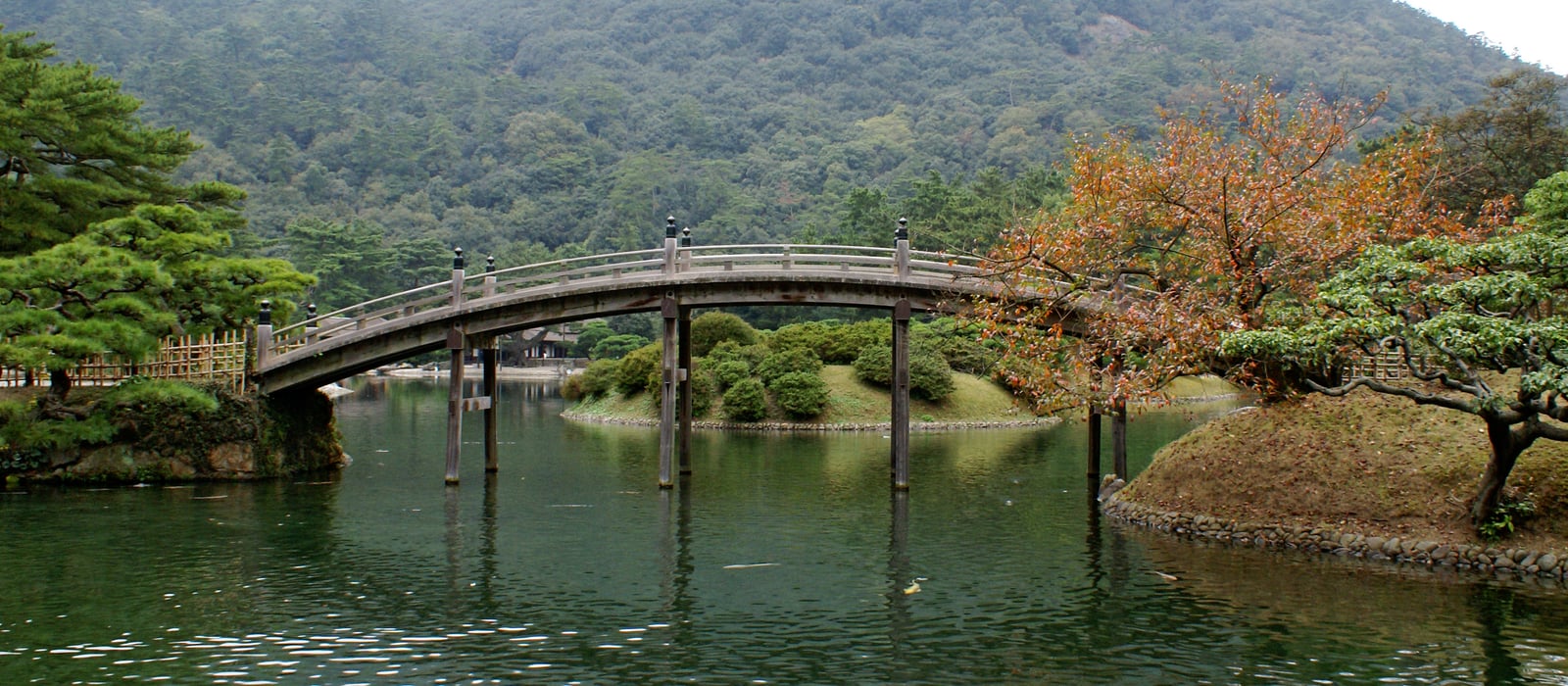
 Image: Wikimedia Commons
Kagawa Prefecture
Kagawa Prefecture lies in northeastern Shikoku and corresponds to the former Sanuki (Sanuki Province). It is the smallest prefecture in Japan by area, and many islands, including Shodoshima Island, dot the Seto Inland Sea off its coast. Because it receives little rain, numerous reservoirs (tameike) have been built on its plains. In the Edo period, the Matsudaira family of the Takamatsu domain protected crafts, and Rihei Ware (Rihei-yaki) and Bota-ori (Bota Weave) are said to have begun under the domain's founder, Matsudaira Yorishige. Its Traditional Crafts Designated by the Minister of Economy, Trade and Industry are two items: Kagawa Lacquerware and Marugame Uchiwa (Round Fans). Kagawa Lacquerware is known for techniques such as kinma, popularized by Tamakaji Zokoku, and Marugame Uchiwa grew from a souvenir of the Konpira pilgrimage into the largest production area in Japan. Aji stone, Sanuki Norizome (Paste-Resist Dyeing), Sanuki Ittobori (Single-Blade Carving), Sanuki Kagari Temari (Embroidered Thread Balls), Takamatsu Hariko (Papier-Mâché) and Koematsu Woodwork are among the prefecture's designated traditional crafts as well. In food, Sanuki Udon, with its firm, springy texture, is well known. Hand-stretched somen and soy sauce brewed in wooden barrels (kioke) from Shodoshima Island, Honetsukidori (Bone-In Chicken Leg) born in Marugame, and Anmochi Zoni, in which mochi filled with sweet bean paste is placed in white miso soup, are also flavors unique to Kagawa. Teppai, made with crucian carp from the reservoirs, the wedding confection Oiri, and Sanuki Wasanbon from Higashikagawa City have also been handed down.
Kagawa's Traditional Crafts
Kagawa Lacquerware
Kagawa Shikki (Kagawa Lacquerware)
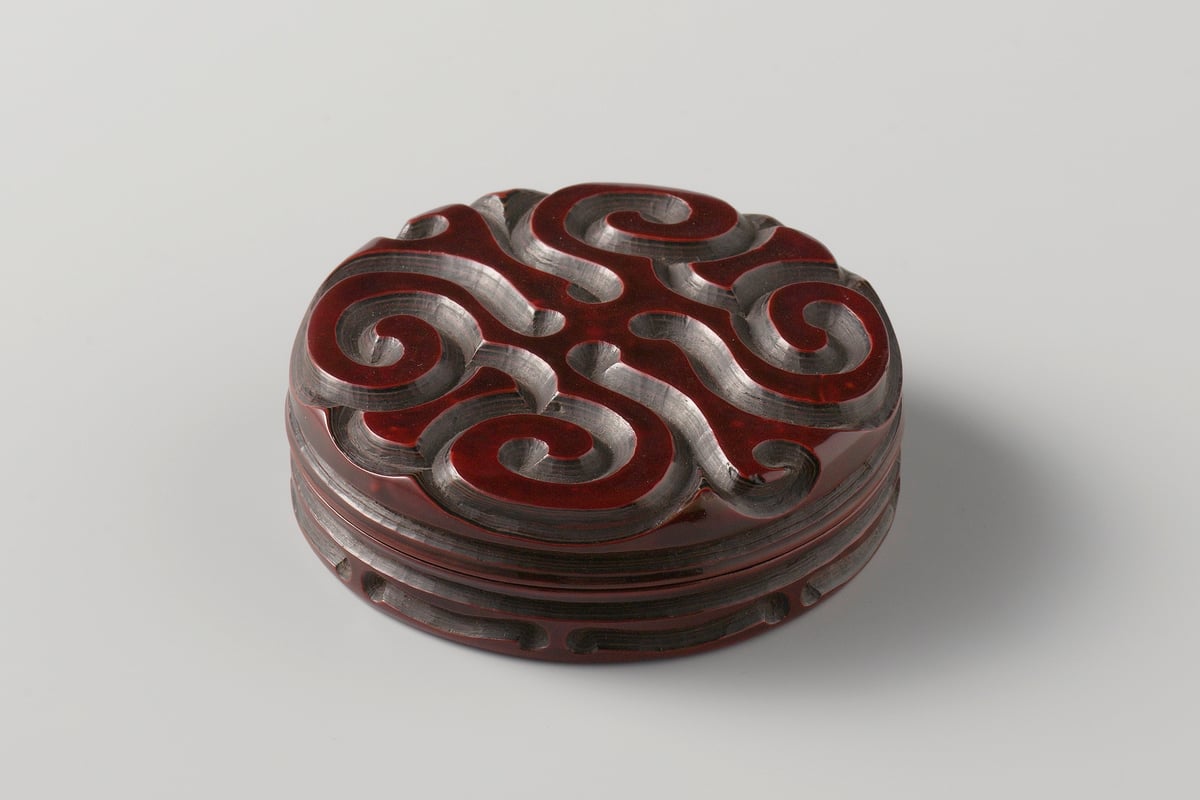
Kagawa Lacquerware (Kagawa Shikki) is lacquerware made mainly in Takamatsu City, Kagawa Prefecture. According to Kagawa Prefecture materials, it is said to have begun in the Edo period, when the Matsudaira family, lords of the Takamatsu domain, promoted and protected lacquer art together with the tea ceremony and calligraphy. In the late Edo period, Tamakaji Zokoku, said to be the founder of Kagawa Lacquerware, added his own innovations to techniques that had come from China and Southeast Asia. Today five techniques are carried on: kinma, zonsei, choshitsu, Zokoku-nuri and Goto-nuri. In 1976 (Showa 51), it was designated a national Traditional Craft. It includes both vivid decoration using colored lacquers and finishes whose luster deepens the more they are used, and pieces range from trays, teacup saucers and confectionery containers to furniture. There are 20 certified Traditional Craftspeople (dento kogeishi) (as of February 2026). At the Sanuki Lacquer Art Museum in Takamatsu City, visitors can also try choshitsu.

Marugame Uchiwa (Round Fans)
Marugame Uchiwa (Marugame Round Fans)
Marugame Uchiwa (Round Fans) are uchiwa fans made mainly in Marugame City, Kagawa Prefecture. They are said to have begun in the early Edo period with shibu-uchiwa (fans coated with persimmon tannin) devised as souvenirs of the Konpira pilgrimage, and they grew into Marugame's representative local industry after the Marugame domain encouraged fan-making as a side job for its samurai. A true Marugame uchiwa has its handle and ribs made from a single piece of bamboo, and each fan involves as many as 47 steps, nearly all of which rely on the handwork of craftspeople. It was designated a national Traditional Craft in May 1997 (Heisei 9). According to the Kagawa Prefecture Uchiwa Cooperative Federation, Marugame accounts for about 90 percent of domestic production, with annual output of roughly 100 million fans or more, and together with its great variety of shapes, it is said to rank first in Japan. As it took on fan-making orders from all over the country, it also incorporated the strengths of other production areas. At the Marugame Uchiwa Museum in Nakazu-cho, Marugame City, visitors can watch craftspeople demonstrate their work and also try making a fan of their own.
Aji Stone Products
Aji-ishi Stone Products (Aji Granite)
Aji Stone Products are stone products made from Aji stone (Aji-ishi), a granite quarried in Aji-cho and Mure-cho in Takamatsu City, Kagawa Prefecture. Aji stone is quarried at the foot of Mt. Gokenzan and is formally classified as fine-grained biotite granodiorite. Because it is fine-textured and hard, it gains luster the more it is polished and resists discoloration even over the years. Its greatest distinguishing feature is 'fu,' a mottled pattern of biotite that emerges when it is polished, and it is also called 'the diamond of granite.' Because it is also well suited to fine carving, it has long been prized as a material not only for high-end gravestones but also for stone lanterns, stone Buddhist statues and sculptures. It is also known as a stone praised by the sculptor Isamu Noguchi. It is designated a Kagawa Prefecture Designated Traditional Craft under the name 'Aji Production Area Stone Products,' and more than 200 businesses are still gathered in the production area today.
Bota-ori (Bota Weave)
Bota-ori (Takamatsu Bota Weave)
Bota-ori is a textile handed down in Takamatsu City, Kagawa Prefecture. It is said to have been devised in the Edo period by Kitagawa Ihei Tsuneyoshi, a weaver from Kyoto, on the orders of the lord of the Takamatsu domain, and the year is traditionally given as 1689 (Genroku 2). As the domain's own textile, its technique was kept secret until the Meiji period, and at first it was a high-quality silk fabric that was also used as tribute to the Takamatsu domain and the shogunate. In the Meiji period, the Iwabe family, relatives of the Kitagawa family, inherited the technique and began weaving it in cotton, and it spread among the general public. Based on plain weave, it is woven with the weft (yokoito) floated at intervals, which creates a raised, grid-like texture on the surface like the squares of a go board. It does not cling easily to the skin and offers excellent absorbency and warmth retention. The name is said to come from the meaning 'lasting for many years' (tanen wo tamotsu), because the cloth is durable and can be used for a long time, and it is also used for gifts as an auspicious item. It is a Kagawa Prefecture Designated Traditional Craft, and 岩部保多織本舗 (Iwabe Bota-ori Honpo) in Togiya-machi, Takamatsu City, continues to make sheets, shirts and more.
Rihei Ware (Rihei-yaki)
Rihei-yaki (Rihei Ware)
Rihei Ware (Rihei-yaki) is pottery fired in Takamatsu City, Kagawa Prefecture. It is regarded as the oniwa-yaki (ware from a lord's garden kiln) of the Takamatsu domain, having begun in 1647 (Shoho 4) when Matsudaira Yorishige, the first lord of the Takamatsu domain, invited Morishima Sakubei, a potter from Awataguchi in Kyoto. The lord gave Sakubei the name 'Kita Rihei' (紀太理兵衛), and the kiln was passed down through the generations along with the Rihei name. In the Edo period, besides Rihei-yaki (理兵衛焼), it was also called Takamatsu-yaki and Ohayashi-yaki (御林焼). After the abolition of the domain, the name was changed to 'Rihei' (理平), and since the Meiji period it has continued making tea ceramics as a private (non-domain) kiln. Its hallmarks are refined forms influenced by Nonomura Ninsei, who perfected Kyo ware (Kyo-yaki), and elegant painted decoration. The kiln stands in front of the North Gate of Ritsurin Garden and is said to have continued without interruption since its founding. In 2026, it was reported that the 14th generation, Kita Yoko (紀太洋子), and Shingo, the candidate to become the 15th generation, are in charge of making the pottery.
Sanuki Norizome (Paste-Resist Dyeing)
Sanuki Norizome (Sanuki Paste-Resist Dyeing)
Sanuki Norizome is a dyeing craft of Kagawa Prefecture in which patterns are resisted with paste (nori) made from glutinous rice, then colors are applied and the cloth is dyed. Dye does not penetrate the areas covered with paste, and the colors do not mix with one another, so the finished piece has crisp, vivid colors. According to Kagawa Prefecture, it developed in the castle town of Takamatsu in the Edo period. Today, besides noren (shop curtains), flags, nobori (banners) and happi coats, items such as 'yutan', the cloth that covers the body in the lion dance (shishimai), are made. In fiscal 1986 (Showa 61) it became a Kagawa Prefecture Designated Traditional Craft, and its production areas are Takamatsu City, Kotohira Town and Kanonji City. 大川原染色本舗 (Okawahara Senshoku Honpo) in Takamatsu City is a long-established business said to have been founded in 1804 (Bunka 1). 染匠吉野屋 (Sensho Yoshinoya) in Kotohira Town has dyed the banners for the Shikoku Konpira Kabuki Oshibai since its first performance.
Sanuki Ittobori (Single-Blade Carving)
Sanuki Ittobori (Sanuki Chisel-Mark Wood Carving)
Sanuki Ittobori is a wood carving of Kagawa Prefecture, produced mainly in Kotohira Town and Manno Town. Made from koematsu (resin-rich pine) or camphor wood (kusunoki), it is characterized by a finish that deliberately leaves the marks of the chisel blade. Kagawa Prefecture describes these chisel marks as 'a harmony of boldness and delicacy.' It is said to have begun in 1837 (Tenpo 8), when shrine and temple carpenters (miyadaiku) who had gathered from all over Japan to build the Asahi-sha hall of Kotohira-gu Shrine competed with one another in their carving skills. The techniques were also passed on to the sculpture course of the Kotohira Industrial Apprentice School, which opened around Meiji 30, and the carvings spread as souvenirs of the Konpira pilgrimage. In fiscal 1985 (Showa 60), it was among the first group of items designated as Kagawa Prefecture Designated Traditional Crafts. Lucky charms such as daruma, Daikokuten and Ebisu are made, and as of February 2026, nine people have been certified as Kagawa Prefecture Traditional Craftspersons.
Sanuki Kagari Temari (Embroidered Thread Balls)
Sanuki Kagari Temari (Sanuki Stitched Thread Balls)
Sanuki Kagari Temari are temari (thread balls) from Kagawa Prefecture whose geometric patterns are created by stitching cotton thread dyed with plant dyes, one stitch at a time. Temari are said to have come to Japan from China in the Heian period. In the Edo period, temari made with plant-dyed thread spun from cotton, one of the Sanuki Sanpaku ('three whites of Sanuki': salt, sugar and cotton), were widely made in Seisan (western Kagawa Prefecture). They declined when rubber balls became common in the Meiji period, but Araki Kazuo, then an employee of Kagawa Prefecture, carried out repeated research and in 1977 (Showa 52) named them 'Sanuki Kagari Temari.' In 1983 he founded a preservation society together with his wife, Yaeko, and in 1987 (Showa 62) they were designated a Kagawa Prefecture Designated Traditional Craft. They are characterized by the matte texture unique to cotton thread and gentle colors. At the workshop of the 讃岐かがり手まり保存会 (Sanuki Kagari Temari Preservation Society) in Takamatsu City, visitors can try making temari.
Takamatsu Hariko (Papier-Mâché)
Takamatsu Hariko (Takamatsu Papier-mâché Dolls)
Takamatsu Hariko are papier-mâché (hariko) dolls from Takamatsu City, Kagawa Prefecture, made by pasting layer upon layer of washi paper onto clay or wooden molds. According to Kagawa Prefecture, the method of making them is said to have been brought when Matsudaira Yorishige entered the Takamatsu domain in Sanuki. The best-known piece, 'Hoko-san,' is a doll of a round-faced girl in a red kimono. It is said to derive from the legend of O-Maki, a girl who took the place of a sick princess, and it has long been cherished as a charm against children's illness and as a doll for brides. There are said to be more than 100 kinds of hariko besides, including Tai-mochi Ebisu (Ebisu holding a sea bream), lion heads (shishigashira) and tigers. In fiscal 1985 (Showa 60), it was among the first group of items designated as Kagawa Prefecture Designated Traditional Crafts, and today 乃村七重 and 臼井融, both Kagawa Prefecture Traditional Craftspersons, continue to make them.
Koematsu Woodwork
Koematsu Mokkohin (Resinous Pine Woodcraft)
Koematsu Woodwork is woodwork from Takamatsu City, Kagawa Prefecture, made from koematsu, the heartwood at the center of the trunks of old pine trees several hundred years old. Koematsu contains a great deal of pine resin (matsuyani), has a lustrous sheen, and when held up to the light, its growth rings show through in red. It is finished as bare wood without any coloring, and the more it is used, the more its luster deepens as it turns reddish brown. In Kagawa, with its warm climate and little rain, high-quality koematsu has long been available, and woodwork is said to have been made from it since the Edo period. The craft once came close to dying out, but right after the war the woodturner (kijishi) 有岡良益 revived it at the urging of the lacquer artist Isoi Joshin. In fiscal 1990 (Heisei 2), it was designated a Kagawa Prefecture Designated Traditional Craft, and tea utensils, tea saucers, tableware, trays and other items are made. The old pine trees used as material have become almost impossible to obtain, and it is becoming a precious craft.
Kagawa's Local Food
Sanuki Udon
Sanuki Udon (Firm Wheat Noodles of Kagawa)
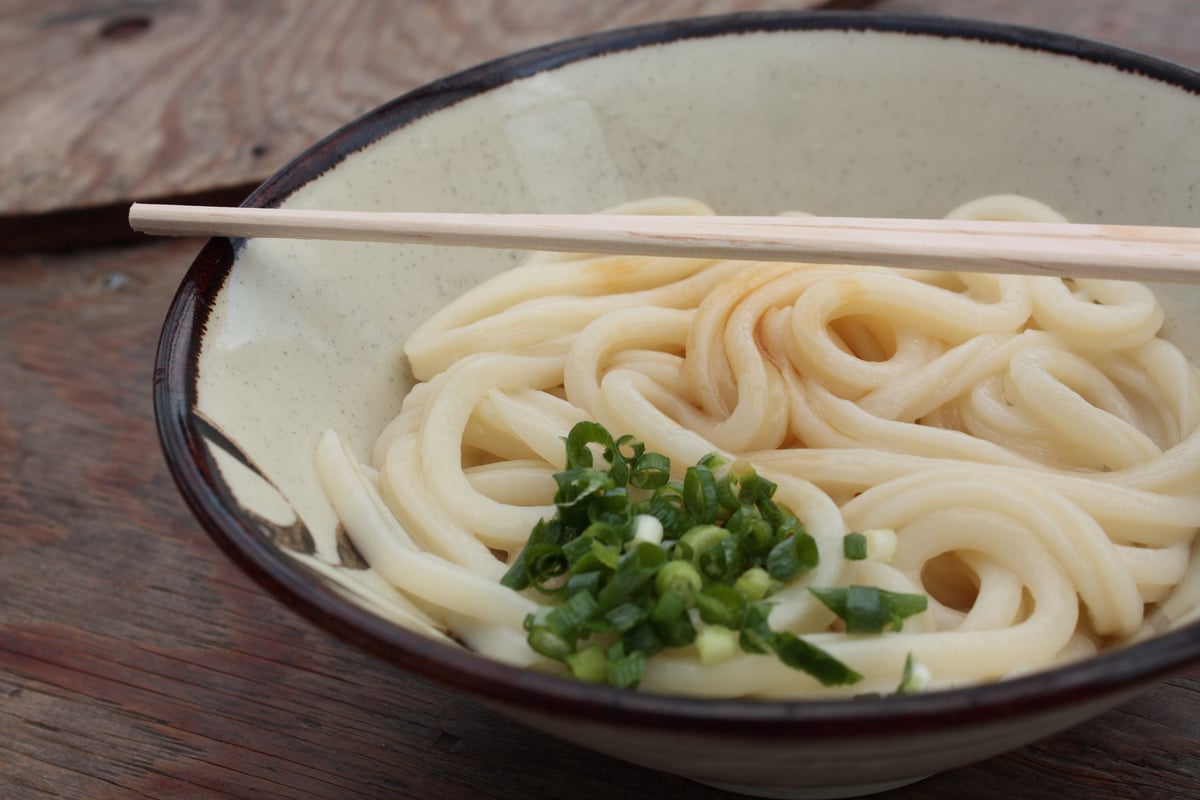
Sanuki Udon is udon that has long been eaten in Kagawa Prefecture. It is characterized by its strong, springy texture (koshi) and the smooth way it goes down. Because Kagawa has little rainfall and mild winters, wheat has long been widely grown as a second crop after rice. Another reason udon culture took root is said to be that all the ingredients needed for udon could be found within the prefecture: salt from Sakaide and other places, iriko (dried anchovies) from Ibukijima Island, and soy sauce from Shodoshima Island. There are many ways to eat it, such as 'kake,' topped with hot dashi broth; 'bukkake,' topped with a stronger tsuyu sauce; 'kamaage,' freshly boiled noodles served in their cooking water; and 'zaru,' noodles chilled in cold water and dipped in tsuyu. Udon is a familiar part of everyday meals for people in the prefecture. According to a 2009 survey by the Ministry of Agriculture, Forestry and Fisheries, Kagawa Prefecture ranked first in Japan in consumption of flour for udon. Since 2011, Kagawa Prefecture has run a tourism campaign calling itself 'Udon Prefecture,' which made it known throughout Japan. In fiscal 2025 (Reiwa 7), it was also recognized as a '100-Year Food' by the Agency for Cultural Affairs.
Shodoshima Hand-Stretched Somen
Shodoshima Tenobe Somen (Hand-Stretched Somen of Shodo Island)
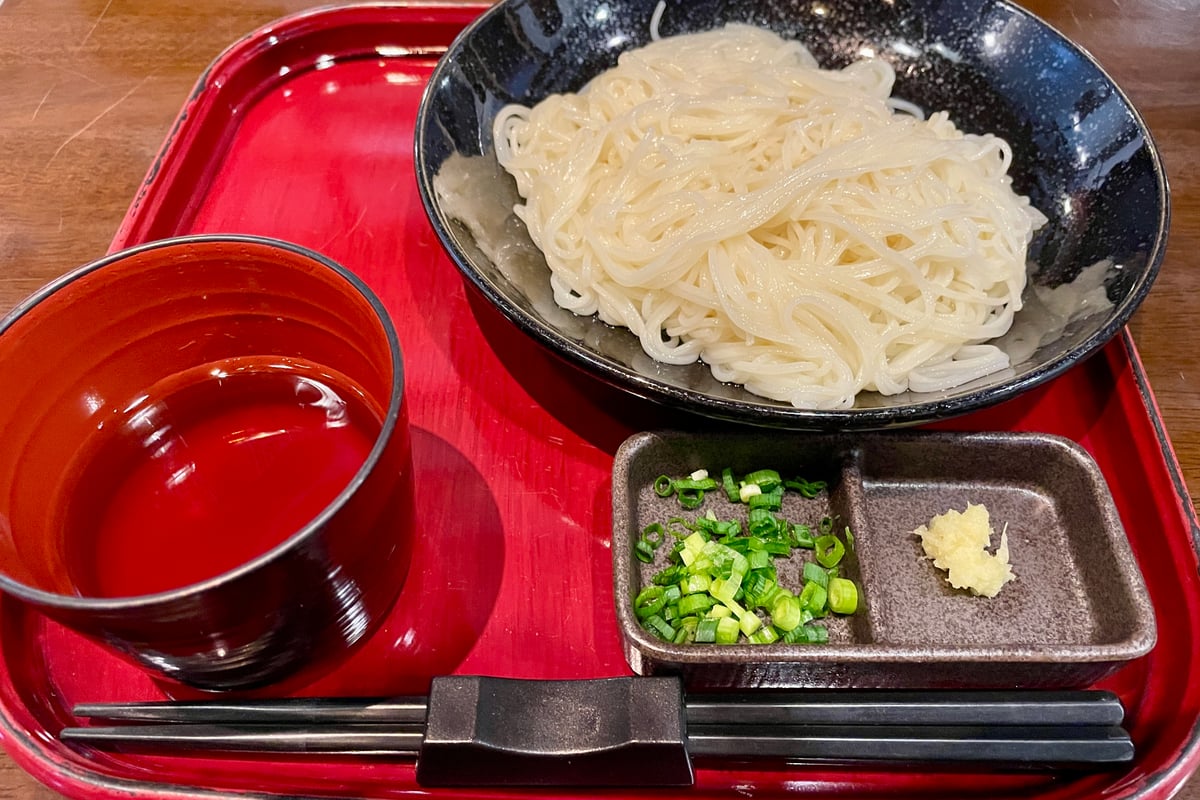
Shodoshima Hand-Stretched Somen is hand-stretched somen made on Shodoshima Island in Kagawa Prefecture. It is said to have begun about 400 years ago, when islanders returning from an Ise pilgrimage learned the production method in Miwa, Nara, and brought it back with them. The cooperative's products are shipped under the brand name 'Shima no Hikari' and are divided into grades such as Kuro-obi (Black Band) and Aka-obi (Red Band) according to quality. Its greatest feature is the use of sesame oil in the process of stretching the dough thin. It has a strong, springy texture and a faint aroma of sesame oil, and the use of salt from the Seto Inland Sea is also said to be a feature. The noodle ends are sold as 'fushimen' and are also used in island home cooking. Somen made in the cold winter months and dried outdoors on sunny days is regarded as a seasonal sight of the island. It originally began as a side job that farming families made together during the winter off-season. It is reported that there are about 110 noodle makers on the island, many of which are still family-run. In fiscal 2021 (Reiwa 3), it was recognized as a '100-Year Food' by the Agency for Cultural Affairs under the name 'Shodoshima Somen.'
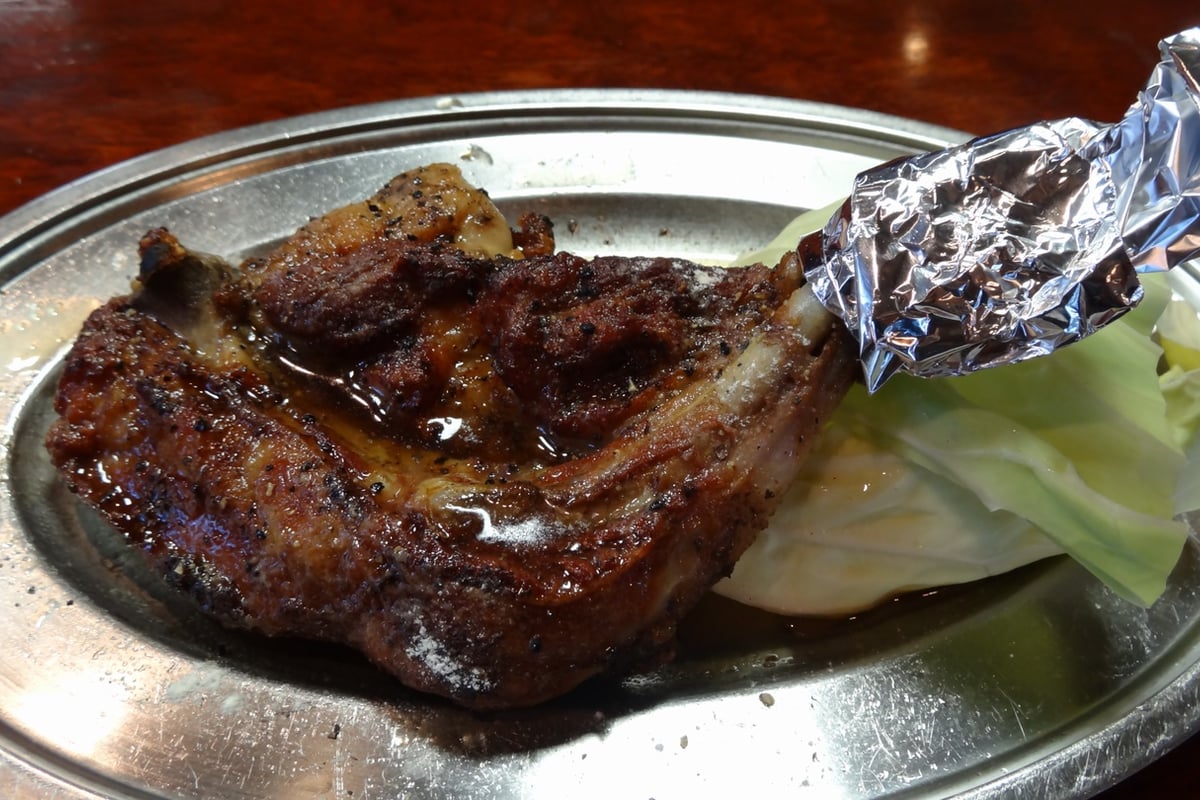
Honetsukidori (Bone-In Chicken Leg)
Honetsukidori (Spicy Roasted Bone-In Chicken Leg of Marugame)
Honetsukidori is a chicken dish known as a specialty of Marugame City, Kagawa Prefecture. A whole bone-in chicken thigh is seasoned with salt, pepper, garlic and other ingredients and then roasted. Its skin is crisp and fragrant, and it has a spicy flavor. Part of its appeal is the hearty way of eating it, holding it in your hand and biting right in. It is said to have begun when Ikkaku (一鶴), a restaurant in Marugame City, started selling it in 1953 (Showa 28). Restaurants often let you choose between the chewy oyadori (mature hen) and the tender hinadori (young chicken), and it is typically enjoyed with the cabbage served alongside. Today Ikkaku has restaurants not only in Kagawa Prefecture but also in Osaka, Yokohama and Hakata. Seasoning differs from restaurant to restaurant: some marinate the chicken in herbs and olive oil, while others finish it with a soy sauce-based glaze and chicken fat (chiyu). It is now served not only in Marugame City but also at izakaya (Japanese pubs) and specialty restaurants elsewhere in the prefecture, such as in Takamatsu City, and it is known as a Kagawa specialty second only to Sanuki Udon.
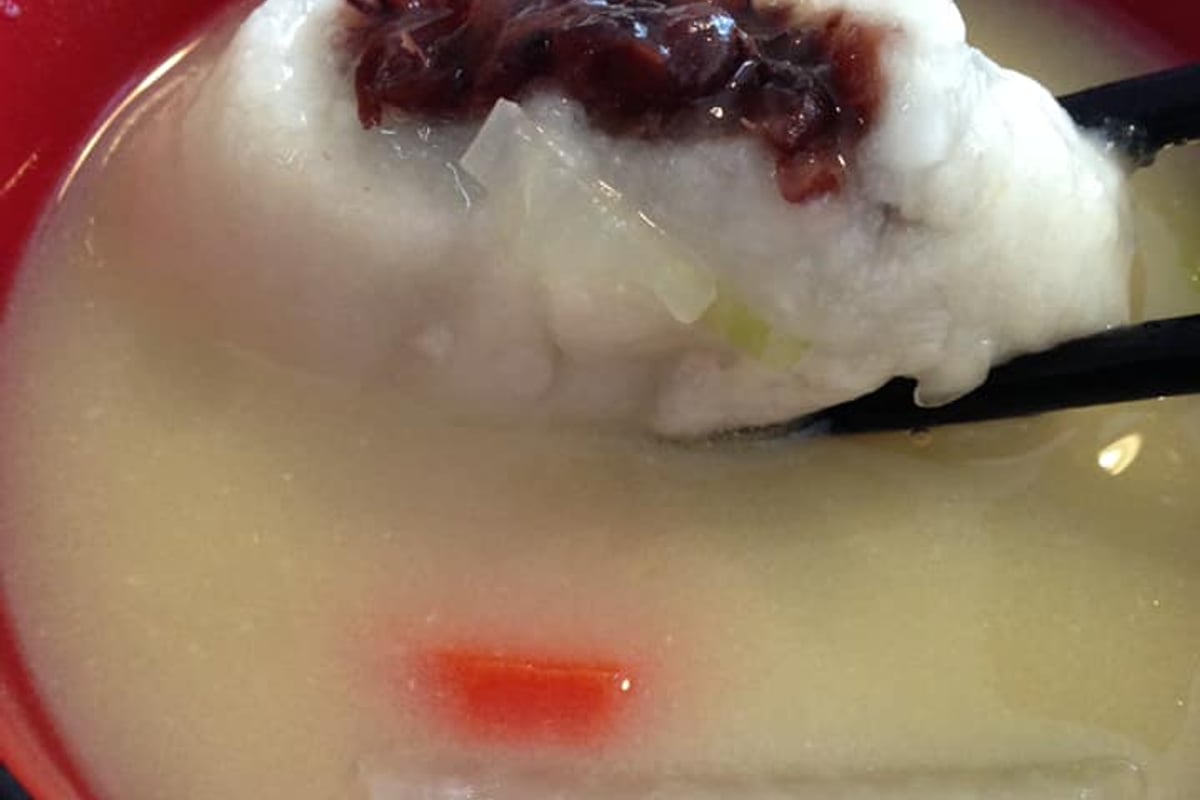
Anmochi Zoni (Zoni with Bean-Paste Mochi)
Anmochi Zoni (White Miso New Year Soup with Bean-Paste Rice Cakes)
Anmochi Zoni is a zoni (New Year soup with mochi rice cakes) that has been eaten at New Year in Kagawa Prefecture. Its most distinctive feature is that round mochi filled with anko (sweet red bean paste) are placed in a broth made with white miso. Ingredients include daikon radish and kintoki carrots (a deep red carrot variety) cut into rounds, and depending on the household, taro, burdock root or aburaage (fried tofu) may also be added. With its 'sweet and salty' flavor, combining the sweet bean paste with the saltiness of the white miso, it is known as an unusual zoni even by nationwide standards. It is said to have been born from the wish to enjoy something sweet at least at New Year, in an era when sugar was precious. There are said to be about six kinds of zoni in Kagawa Prefecture, and the combination of white miso and bean-paste mochi is reported to be the most common among them. In a 2025 questionnaire survey, it was ranked second among the Kagawa local dishes people want to eat at New Year. As opportunities to make it at home decrease, it is also served in school lunches in Takamatsu City and elsewhere, passing it on to children.
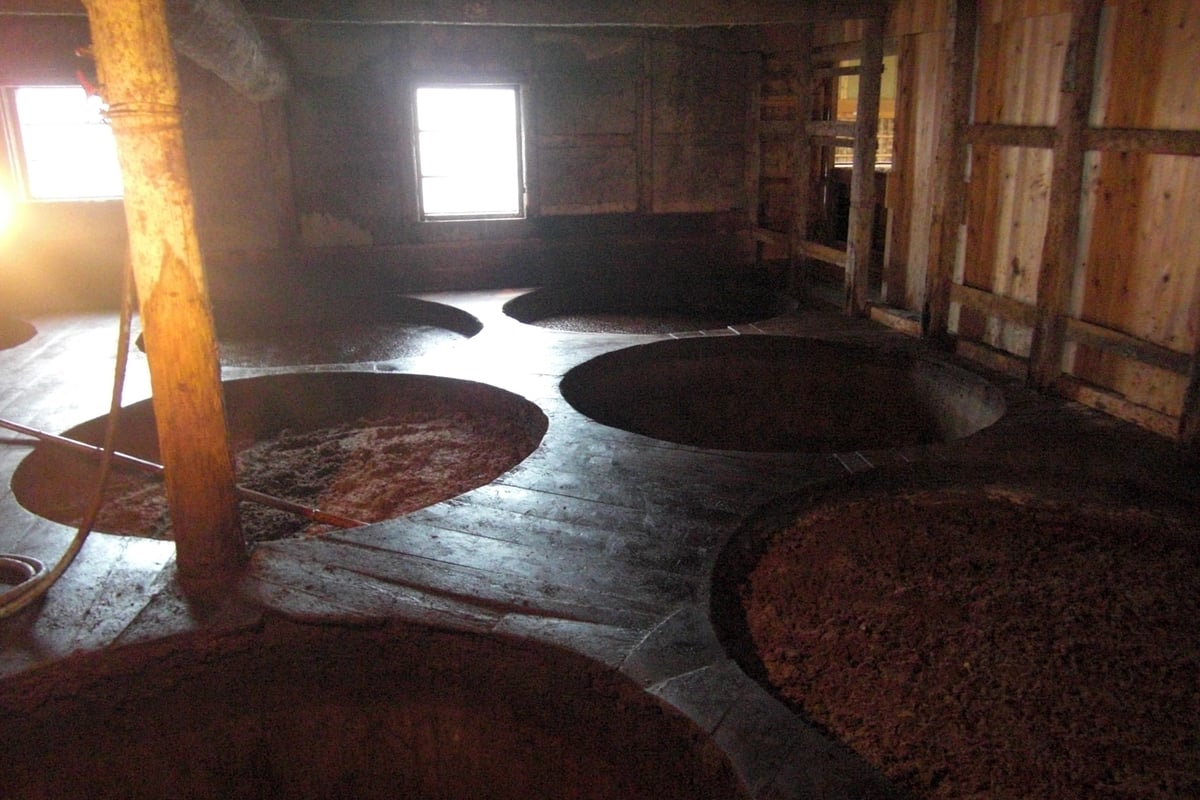
Shodoshima Shoyu (Soy Sauce)
Shodoshima Shoyu (Wooden-Barrel Soy Sauce of Shodo Island)
Shodoshima Shoyu is soy sauce brewed on Shodoshima Island in Kagawa Prefecture. Shodoshima has long been a producer of good salt, and the method of making soy sauce is said to have been introduced from Yuasa in Kishu (present-day Yuasa Town, Wakayama Prefecture) in the Bunroku era (1592–1596) of the Azuchi-Momoyama period. At its peak in the Meiji era, the island is said to have had about 400 soy sauce breweries. About 20 breweries still continue to make soy sauce today. A distinctive feature is that, even now when most soy sauce is made in tanks of stainless steel and other materials, many breweries still preserve the traditional method of slowly maturing moromi (fermenting mash) in large cedar wooden barrels (kioke). In the eastern part of the island, from Umaki to Noma in Shodoshima Town, soy sauce breweries and tsukudani factories are concentrated in an area called 'Hishio no Sato.' Many buildings registered as national Registered Tangible Cultural Properties remain in its streets, where the aroma of soy sauce drifts through the air.
Teppai (Crucian Carp with Vinegared Miso)
Teppai (Vinegared Fish and Daikon Dressed in Sweet White Miso)
Teppai is a dish of fish and vegetables dressed in sumiso (vinegared miso), handed down throughout Kagawa Prefecture. Originally, crucian carp caught in reservoirs (tameike) were cured in vinegar and dressed, together with thinly sliced daikon radish and other ingredients, in a vinegared miso made from sweet white miso. Kagawa Prefecture is known for its low rainfall and its many agricultural reservoirs. Crucian carp caught when the reservoirs are drained from autumn to winter are called 'kanbuna' (winter crucian carp) and are said to be rich in fat with little fishy smell. In farming villages where sea fish were hard to obtain, they were an important source of protein. There is a theory that the name is a corruption of 'teppo-ae,' but its origin is not clear. It is said that it was once an indispensable dish at winter guest meals, served as a snack to go with sake at community gatherings. Now that crucian carp have become hard to obtain, it is often made with sea fish such as konoshiro (gizzard shad) and mackerel.
Oshinuki-zushi (Pressed Sushi)
Oshinuki-zushi (Mold-Pressed Spanish Mackerel Sushi of Kagawa)
Oshinuki-zushi is a sushi made throughout Kagawa Prefecture by packing ingredients into a mold, pressing them, and pushing the sushi out to shape it. Because it is topped with vinegar-cured sawara (Spanish mackerel), which comes into season in the Seto Inland Sea from spring to early summer, it is also called 'Sawara no Oshinuki-zushi' (Spanish Mackerel Oshinuki-zushi). Sushi rice is packed into a press mold with sweet-and-savory simmered vegetables sandwiched in between, then sawara, broad beans, tamagoyaki (rolled omelet), kinome (young sansho pepper leaves) and other toppings are arranged on top before the sushi is pressed out. Most molds are square, but there are also fan, pine and plum blossom shapes. In farming households there was a custom called 'Haruio' (spring celebration fish), in which people bought sawara and invited relatives in the period before the mugi (wheat and barley) harvest and rice planting, and this sushi was the centerpiece of that hospitality. It is made from around late April to June, when the seasons for sawara and broad beans overlap, and in season it still appears in supermarkets in the prefecture and is served at restaurants.
Uchikomi-jiru (Udon and Vegetable Miso Soup)
Uchikomi-jiru (Miso Soup Simmered with Unboiled Hand-Made Udon and Vegetables)
Uchikomi-jiru is a simmered soup of udon noodles and vegetables that has been eaten in winter in farming villages throughout Kagawa Prefecture. Noodles made by kneading wheat flour with water alone are not boiled separately; instead, they are put straight into a dashi broth in which daikon radish, carrot, taro, aburaage (deep-fried tofu) and other ingredients have been simmered, and cooked together. The name is said to come from 'uchikomu' — putting (literally 'throwing in') the freshly made noodles directly into the pot. It is basically seasoned with miso, though some households make it with soy sauce. Sanuki Udon is well known in Kagawa, but whereas hand-made udon was made on hare no hi (days of celebration and special events), uchikomi-jiru has been made easily as an everyday winter dish. Because the noodles are stretched by hand, their thickness is uneven, and this is said to be part of the fun of the dish. It is also fondly known as 'Uchikomi Udon,' and it is still made in homes when winter comes.
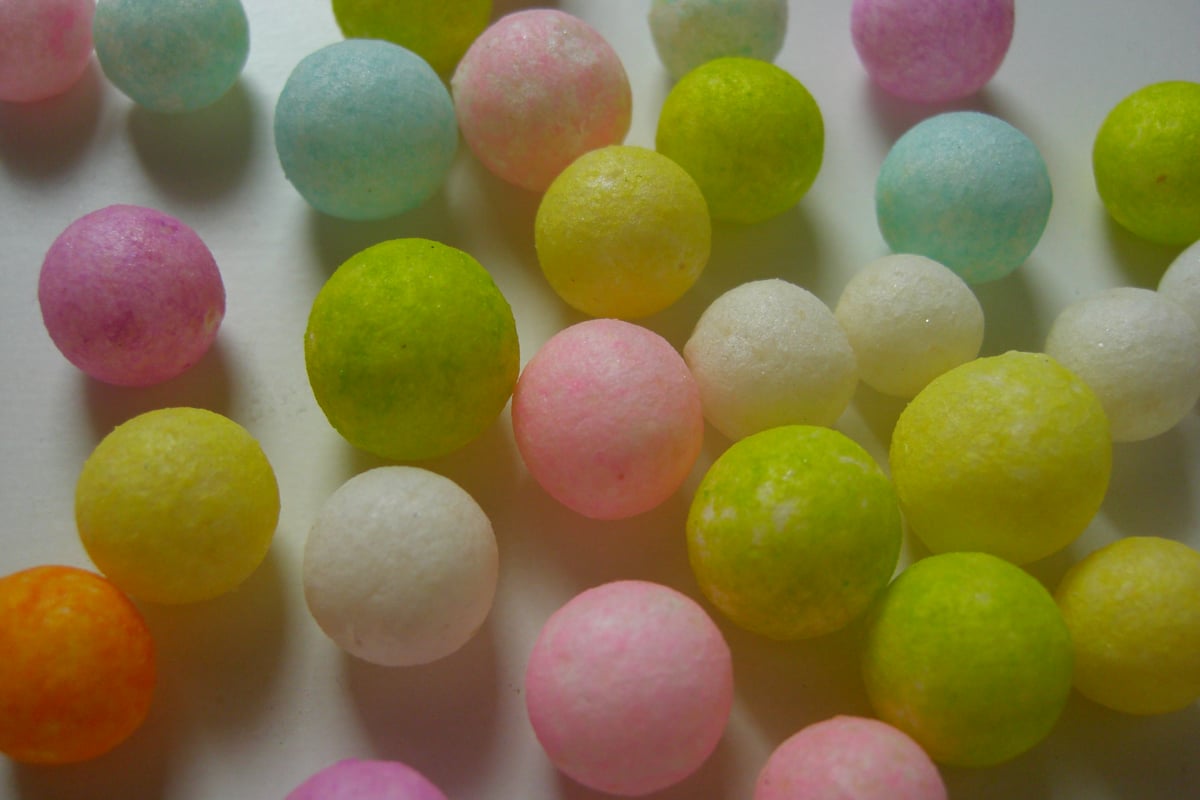
Oiri (Colorful Rice Puffs)
Oiri (Pastel-Colored Rice Puffs Given at Weddings)
Oiri are small, ball-shaped arare (rice crackers) made from glutinous rice, handed down mainly in the Seisan area in the western part of Kagawa Prefecture. They are round grains about 1 cm in diameter, in soft pastel colors such as pink, green, white and light blue. They are hollow inside and have a light texture that melts softly in the mouth, with restrained sweetness. In the Seisan area they have long been known as a wedding confection, handed out by brides to the neighbors of the family they married into or given as wedding favors (hikidemono). According to legend, they began when farmers presented arare in five colors at the wedding of a princess, the daughter of Ikoma Chikamasa, the lord of Sanuki. In recent years they have also been used as celebratory sweets for occasions such as childbirth and new homes, and they have grown popular as decorations for soft-serve ice cream and cakes.
Sanuki Wasanbon
Sanuki Wasanbon (Hand-Refined Sugar and Dry Confections of Kagawa)
Sanuki Wasanbon refers to wasanbon (fine Japanese sugar) made in places such as Higashikagawa City in eastern Kagawa Prefecture, and the higashi (dry confections) made with it. Wasanbon is a sugar made from a slender sugarcane called chikuto (native sugarcane), finished by draining off the molasses by hand; its grains are fine and it melts away smoothly in the mouth. Sugar making in Sanuki is said to have begun in the mid-Edo period when Matsudaira Yoritaka, lord of the Takamatsu domain, ordered research into it. Sakiyama Shukei, a physician who carried on this aspiration, is said to have succeeded in producing white sugar. Together with salt and cotton, sugar became one of the specialties known as the 'Sanuki Sanpaku' (Three Whites of Sanuki). Today, sugar mills and confectionery shops in Higashikagawa City still preserve the traditional method, and dry confections shaped like seasonal flowers and other motifs are enjoyed as sweets for the tea ceremony and as souvenirs.
Model Course
Central Takamatsu course: discover Kagawa Lacquerware, Takamatsu Hariko and temari, and taste Anmochi Zoni
At かがわ物産館 栗林庵, next to the East Gate of Ritsurin Garden, you can see and buy the prefecture's traditional crafts, such as Kagawa Lacquerware and Takamatsu Hariko. Take the Kotoden to Kawaramachi Station and head to the workshop of 讃岐かがり手まり保存会. The experience of stitching the 'asanoha' (hemp leaf) pattern starts from about 3,300 yen and requires a reservation at least three business days in advance (closed on Sundays and public holidays). At 甘味茶屋 ぶどうの木 in Hyakkenmachi, you can enjoy Anmochi Zoni, a New Year dish, all year round. For dinner, go to 寄鳥味鳥 on the Hyogomachi shopping street and choose Honetsukidori made with either oyadori (mature hen) or hinadori (young chicken).
Make a fan in Marugame, then visit ittobori and norizome along the approach to Konpira-san
At 丸亀うちわミュージアム in Nakazu-cho, Marugame City, you can make one Marugame Uchiwa under the guidance of Traditional Craftspersons and others (1,000 yen; reserve by 15:30 the day before; closed on Wednesdays). For lunch, have Honetsukidori at the shop where it originated, 骨付鳥 一鶴 丸亀本店, near JR Marugame Station. In the afternoon, head to Kotohira Town, where at 中野うどん学校 琴平校 you can experience making udon, from treading the dough to cutting the noodles (reservation required; from about 1,760 yen per person). On the approach to Kotohira-gu Shrine (Konpira-san), you can see works of Sanuki Ittobori at 山中象堂. 染匠 吉野屋, which dyes the nobori banners for Konpira Kabuki, is also in Kotohira Town.
Shodoshima Island course: tour hand-stretched somen makers and soy sauce breweries using wooden barrels
At なかぶ庵 in Yasuda, Shodoshima Town, you can tour a hand-stretched somen factory and try hashiwake, separating the noodles with chopsticks (about 600 yen, or about 1,100 yen with a meal; reserve by the day before). At nearby ヤマロク醤油, you can tour the moromi (fermenting mash) storehouse, built in the early Meiji era, for free without a reservation. Because the microbes that make soy sauce are vulnerable to natto bacteria, visitors are asked to avoid eating natto on the morning of their visit. マルキン醤油記念館 in Noma is housed in a renovated soy sauce factory from the early Taisho era, and you can also see soy sauce being brewed in wooden barrels through the windows (about 500 yen for adults). Also take a stroll through the streets of Hishio no Sato.
Eastern Sanuki (Tosan) course: from the home of Aji stone to Hiketa in Higashikagawa, tasting Sanuki Wasanbon
At 高松市石の民俗資料館 in Mure Town, Takamatsu City, you can see dioramas recreating stone cutting and transport, along with about 1,000 stonemasons' tools (200 yen for general admission; closed on Mondays). イサム・ノグチ庭園美術館, which is open by reservation only, is also near the Aji stone production area. Continue east to Higashikagawa City. 三谷製糖羽根さぬき本舗 in Umayado is a sugar mill founded in 1804, and 155 g of its wasanbon is reported to cost about 648 yen. At 讃州井筒屋敷, in the old townscape of Hiketa, you can try a mold-pressing experience in which you pack wasanbon into wooden molds to make dry confections.
Events
Shikoku Konpira Kabuki Oshibai
Every spring (the 39th performance in 2026 runs April 10–26) / Former Konpira Grand Theatre (Kanamaru-za), Kotohira Town
View details →Sanuki Takamatsu Festival
Every year in mid-August (August 12–14 in 2026; fireworks on the 13th, so-odori mass dance on the 14th) / Around Sunport Takamatsu and other areas of Takamatsu City
View details →